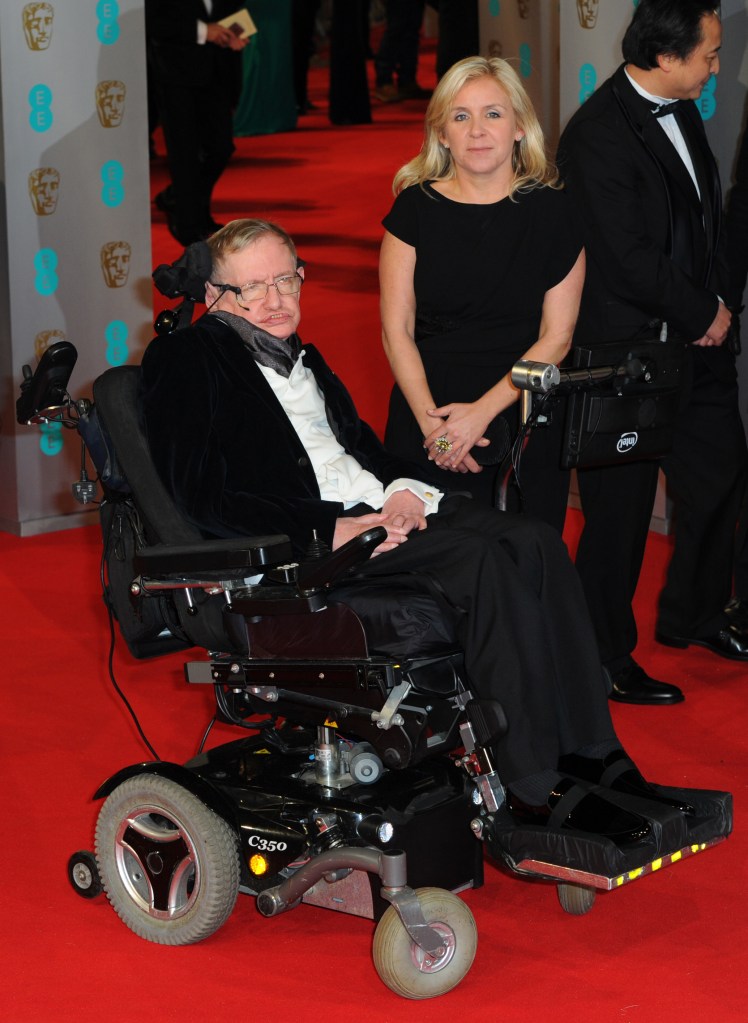
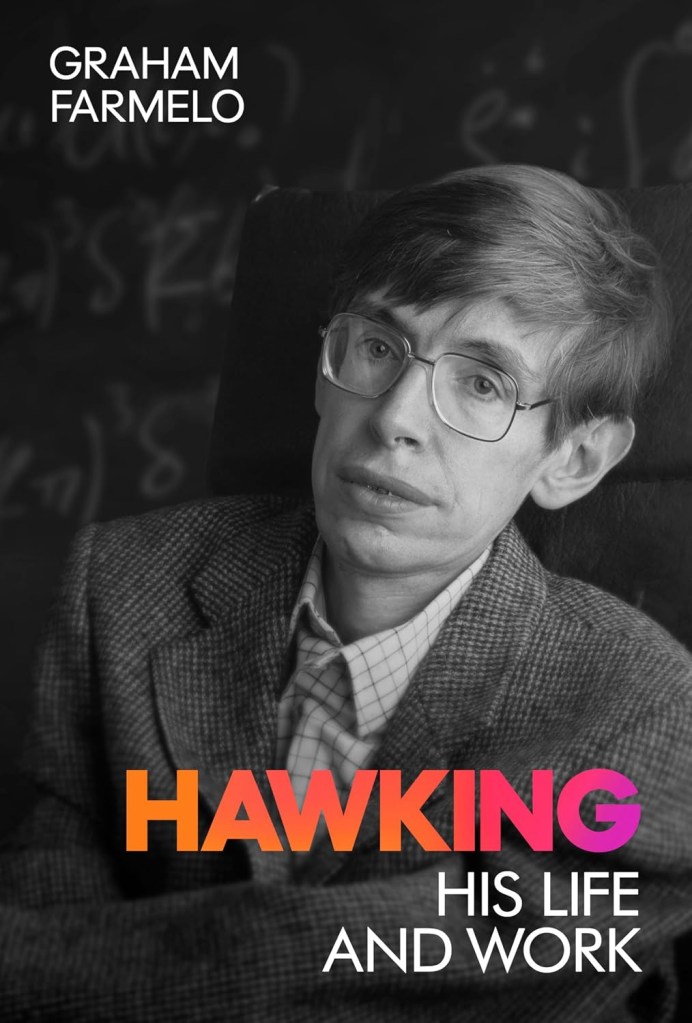
A new biography portrays Stephen Hawking as an authoritarian bully who was ruthless to colleagues and callous to loved ones despite his celebrated scientific genius.
Graham Farmelo’s “Hawking: His Life and Work,” published Nov. 24 by Bantam, draws on family journals, police records and interviews to paint a far darker portrait of the physicist than the public usually saw. The book reveals a man who frequented strip clubs, visited a swingers club, partied on Jeffrey Epstein’s private island, and repeatedly hurt those closest to him.
Hawking’s daughter Lucy, now a writer, recalled one Christmas morning in 1989 that crystallized his cruelty. “He gave us all our presents in the morning and then my dad made this big thing of going off with Elaine, which I thought, [and] still think, was unnecessarily brutal,” she said. The Elaine in question was Elaine Mason, a nurse who became Hawking’s mistress and eventually his second wife.
That holiday episode was no isolated incident. Hawking’s father, Frank, had noticed the selfishness decades earlier, writing in his journal that young Stephen tended “to bully [his younger sister] Mary and to be very selfish.” After one family holiday during which Stephen contributed almost nothing, Frank concluded bluntly, “Life was simpler without him.”
The physicist’s appetite for adult entertainment remained vigorous even as ALS gradually paralyzed him. He frequented London’s Stringfellows strip club, where owner Peter Stringfellow recalled offering him a choice between discussing the universe and watching the dancers. Hawking’s answer was “The girls.” At his 60th birthday celebration in 2002, a Marilyn Monroe impersonator serenaded him in a pink dress while he grinned from his wheelchair. “Marilyn and I go way back,” Hawking joked. The gala dinner featured high-kicking can-can dancers performing what Farmelo calls an “exuberant, raunchy routine.” Hawking also delivered a favorite line: “I won’t compare it to sex, but it lasts longer.”
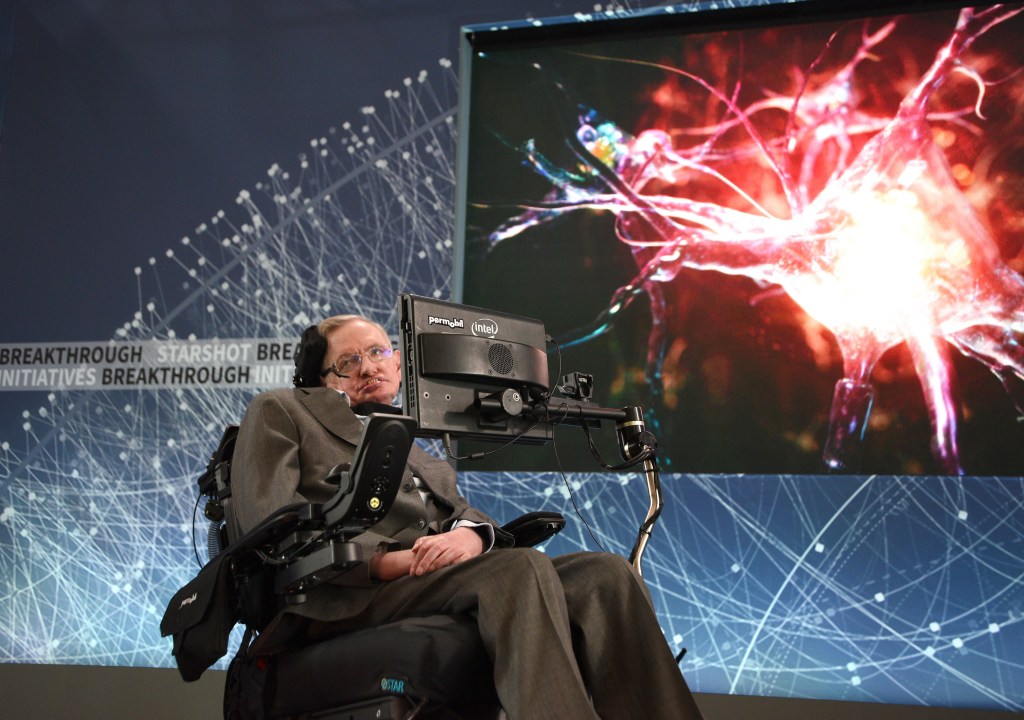
Cambridge University confirmed in 2012 that Hawking had once visited a California swingers club with friends, though it called reports of regular patronage “greatly exaggerated.”
His first marriage, to Jane Wilde, collapsed under the weight of his ego and infidelity. The couple wed in 1965, two years after his ALS diagnosis at age 21, and had three children. As Hawking lost the ability to walk, dress and feed himself, Jane took on much of his daily care. She later compared him to Shakespeare’s King Lear, “possessed of a massive and fractious ego,” She wrote, “From being authoritative in the past, he became authoritarian.”
By the late 1970s, Jane had grown close to Jonathan Hellyer Jones, a widower who helped care for Hawking. Stephen initially accepted their relationship, but his parents intervened brutally. Weeks after Jane gave birth to their third child, Timothy, in 1979, Hawking’s mother Isobel confronted her and demanded to know whether Jonathan was the baby’s father. Jane insisted Stephen was the father, but Isobel remained unconvinced. Frank took a more relaxed view, writing, “I am not disturbed about infidelity or [having] a cuckoo in our nest.”
The marriage’s final rupture came during a 1989 argument at the family’s French holiday cottage. Timothy, then a child in pajamas, crept downstairs and listened outside the door. He heard his father complain that Jane never kissed him on the lips, then deliver an ultimatum: “If Elaine goes, Jonathan goes.”
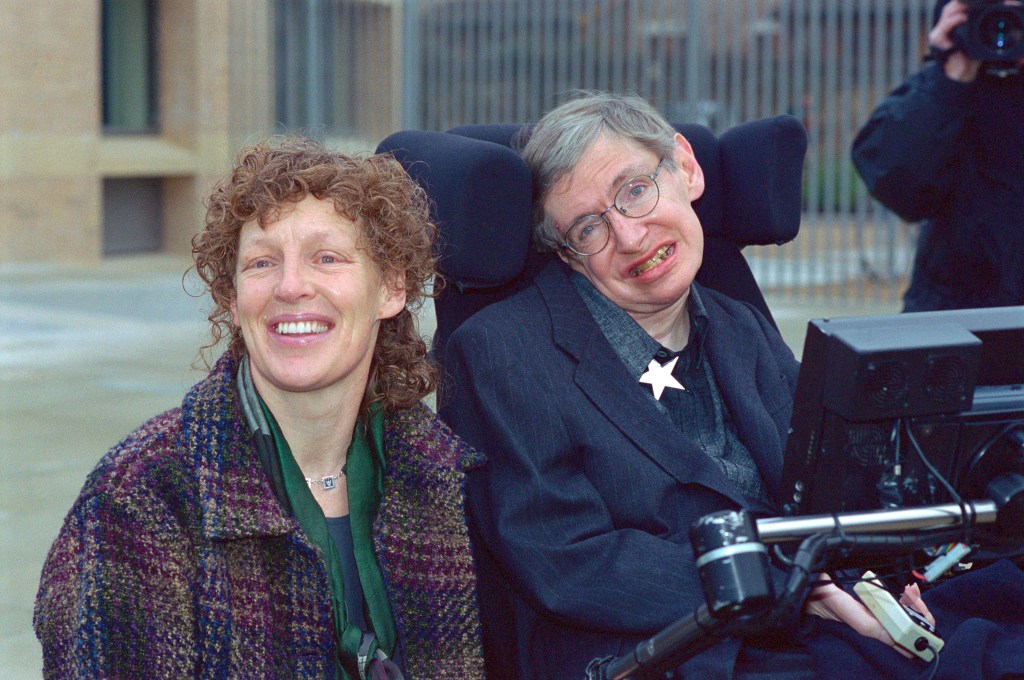
Hawking married Elaine in September 1995, but alarm spread quickly among family and caregivers. In 1999, after Hawking suffered several injuries, a nurse tried to contact his doctor on Christmas Day, apparently fearing domestic violence. Other nurses contacted university officials and Lucy, urging intervention. Two police investigations followed allegations that Elaine had physically assaulted Hawking, leaving him with cuts and broken bones.
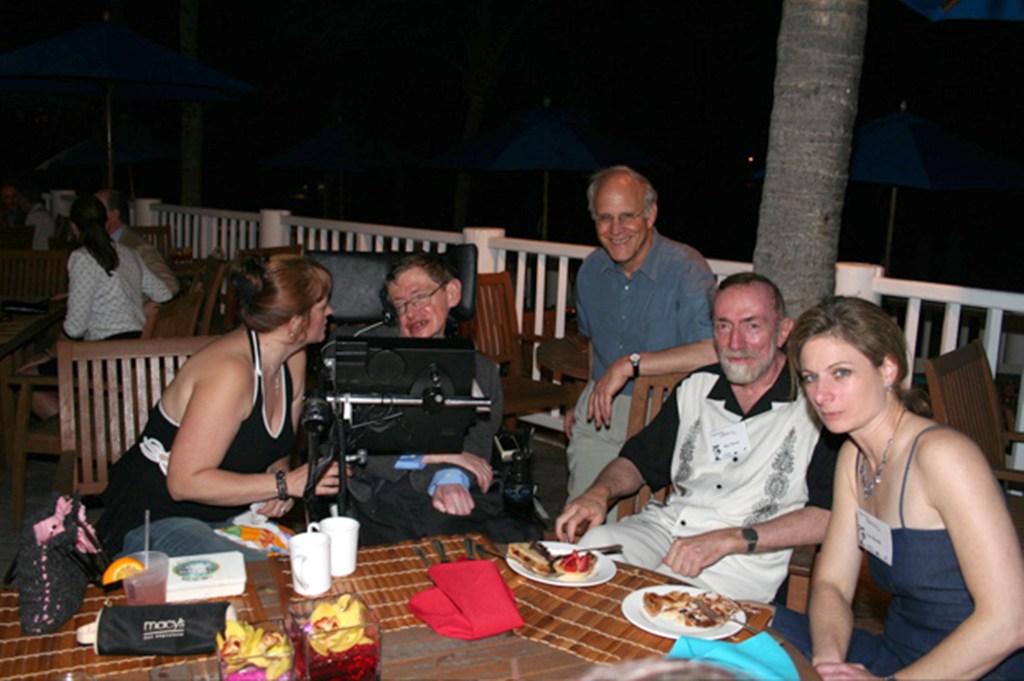
Hawking vehemently denied the allegations. “The stories in the media are completely false,” he said. “My wife and I love each other very much. It is only because of her that I am alive today.” Elaine also denied the claims. In March 2004, police concluded they could find “no evidence to substantiate any assertion that anyone has perpetrated any criminal acts against Professor Hawking.” Doctors noted his bones were unusually brittle, and medical records did not attribute injuries to abuse. Elaine was never charged, and the couple divorced in 2007. She later wrote to Hawking’s sister Mary that she had felt like “Stephen’s prisoner.”

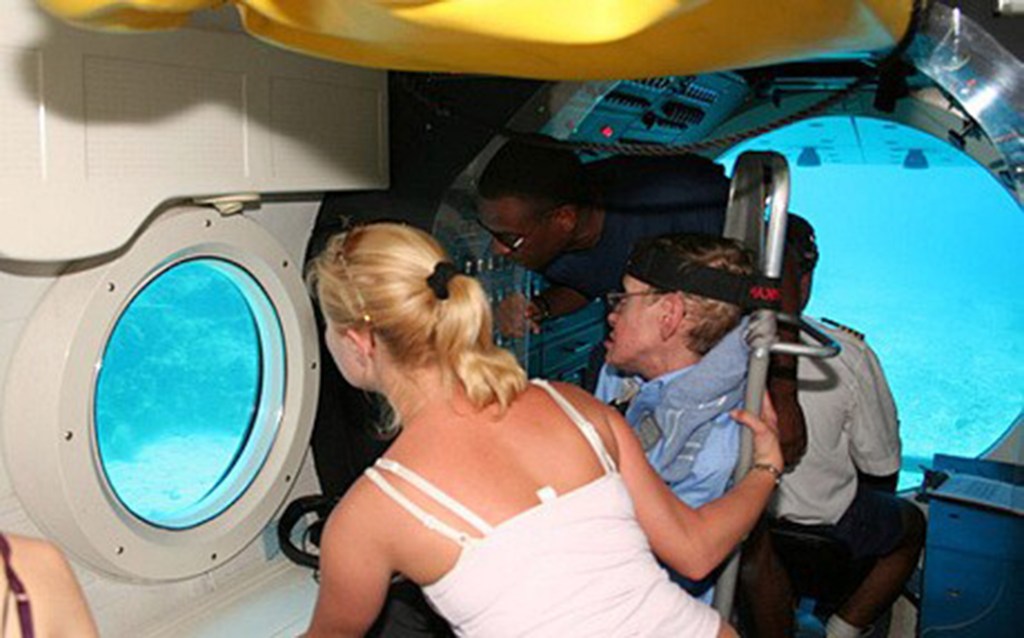
Hawking’s March 2006 trip to Epstein’s private island in the US Virgin Islands came through a physics conference organized by Lawrence Krauss and co-sponsored by Epstein’s foundation. Scientists attended a barbecue there, and Hawking took a submarine excursion with his caregivers’ help. Epstein later recalled in a 2017 text exchange reported that he had “duct-taped” the physicist’s head to a chair before loading him into the submarine. Caltech physicist Kip Thorne, who attended, told Farmelo that Epstein “appeared to be a sort of science groupie.” Within weeks, allegations of Epstein’s sexual abuse of underage girls became public. Thorne said the scientists witnessed no such behavior.
Hawking’s name resurfaced in 2024 in an unsealed email where Epstein discussed discrediting a claim that Hawking had participated in “an underage orgy.” The released records provided no evidence supporting the claim. A 2026 photograph from Epstein files showed Hawking reclining between two bikini-clad women, identified by his family as caregivers. Farmelo says the picture “had no connection to Epstein” and was taken in Florida in 2007, though the family has offered a different account of its location and date.
The physicist could be equally brutal in professional disputes. In the 1990s, Cambridge student Andrew Farley produced research suggesting information swallowed by black holes might not disappear forever, contradicting Hawking’s position. Rather than debate the young researcher, Hawking repeatedly recommended the university remove Farley from its PhD program. Farmelo calls it “a disturbing example” of Hawking’s authoritarian streak, describing the efforts to have Farley expelled as “an extreme position to take, by any standards.” Farley completed his doctorate, but Farmelo writes that his confidence as a gravity theorist “had been shattered.” In 2004, Hawking publicly reversed his position and conceded that information was not permanently lost in black holes.
Hawking’s stubbornness extended to life-threatening risks. In 1985, he insisted on traveling to China despite warnings it could endanger him. “Even if I die as a result of going up to the Great Wall, I’m still going to China,” he declared. Farmelo told The Post that Hawking couldn’t travel along the Wall in his wheelchair on that trip, but when he returned in 2006, “a local cable company obliged, modifying the cable car so that he and his wheelchair could be lifted up to the Wall.”
The scientist’s family relationships remained strained to the end. By 2003, his mother Isobel described him as “a different person from the one I knew.” Mary complained he “made no effort to communicate with either of us, except when we were of use,” while their adopted brother Edward called him “very cold.” Isobel offered her own bitter diagnosis: “I suppose what in other people would just be bad manners is excusable great-mannishness in him. Certainly I should not put up with the way he treats me, if it were [done by] anyone else.”
Hawking died in March 2018 at age 76, more than half a century after doctors predicted his death. When police investigated the abuse allegations in 2004, his friend Thorne offered perhaps the clearest summary of the willfulness that both sustained and scarred him. “Although Stephen may appear helpless, he is one of the least helpless people I know,” Thorne told police. “He is in as firm control of his life and his own decisions as he [ever] was.”