

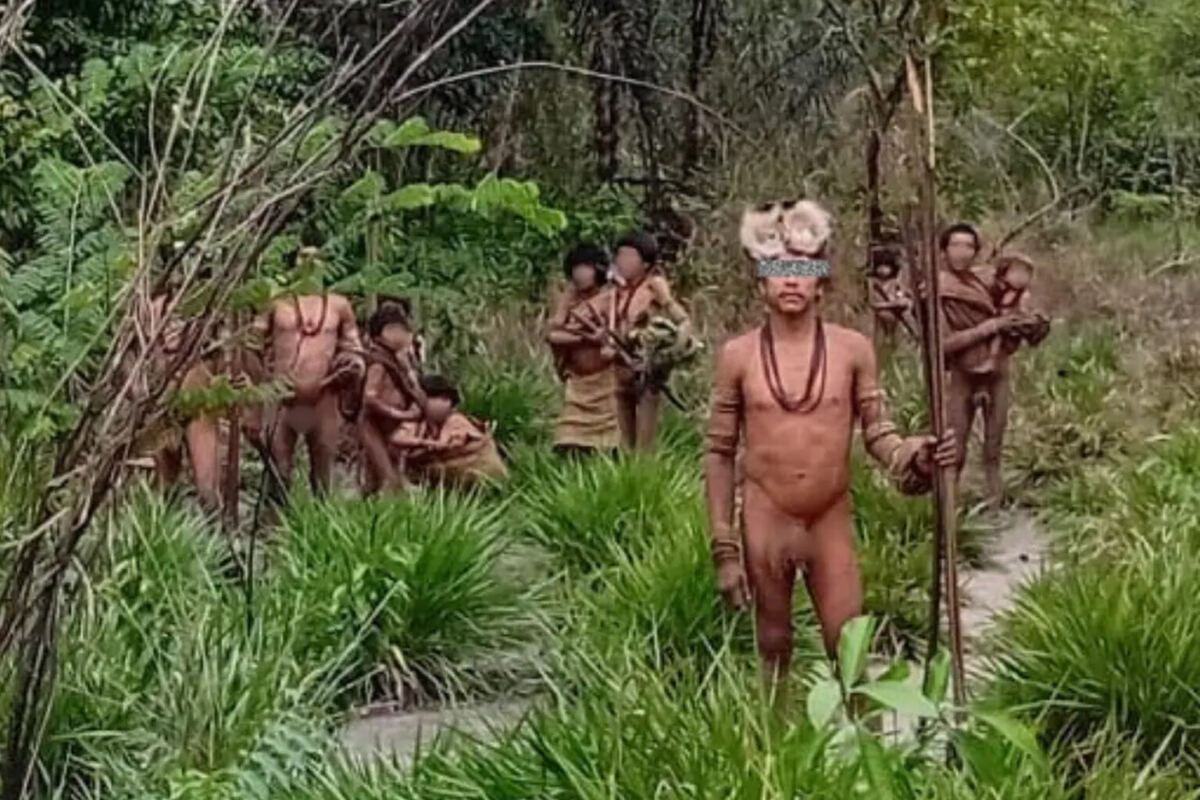
About 20 uncontacted Awá Indigenous people emerged from the Brazilian rainforest to approach a government outpost on Monday in a rare encounter that advocates call a dire warning.
The group traveled to the village of Tawari in Brazil’s northeast state of Maranhão and accepted yams before returning to their territory, according to human rights group Survival International. Images released by the organization show tribe members holding long wooden spears at the forest’s edge, while neighboring Indigenous Guajajara (Tenetehar) people documented the encounter.
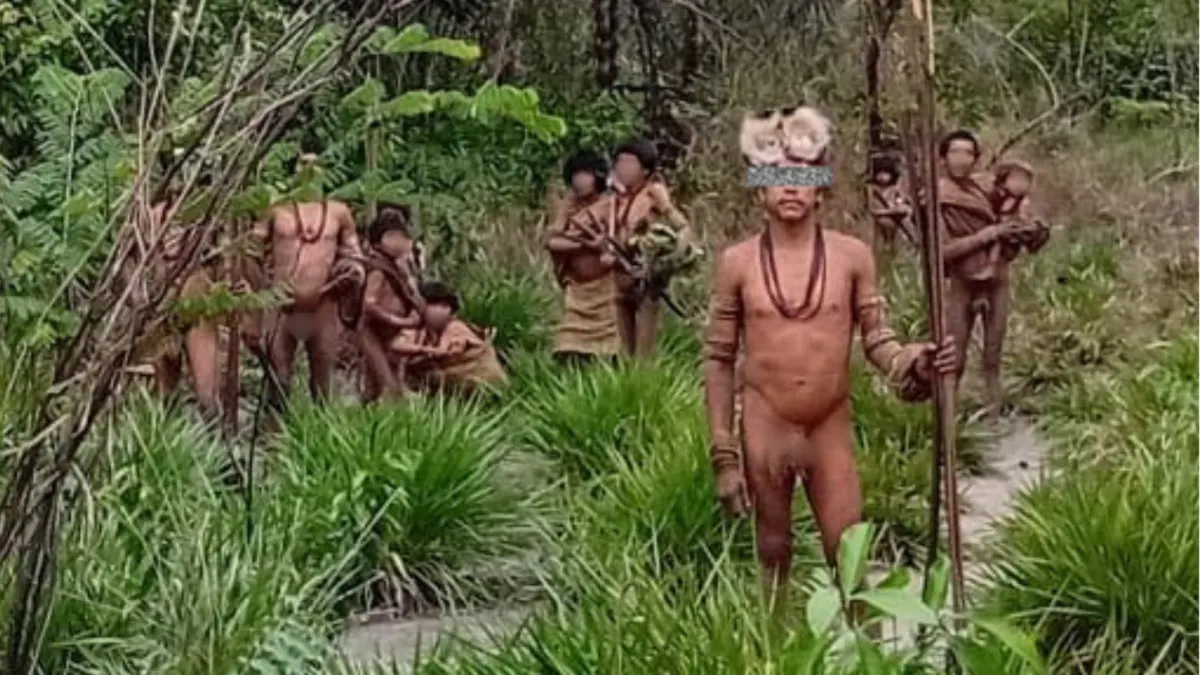
“This is a troubling indication of how the continued invasion of unconnected peoples’ forests put otherwise self-sufficient Indigenous people in real danger,” Survival International Director Caroline Pearce said.
Sarah Shenker, who leads the group’s Brazil arm, delivered an even sharper assessment.
“This is a crisis moment really and a wake-up call,” she said.
The Awá are expert hunter-gatherers who have survived as one of the last uncontacted peoples, using bows and arrows to hunt armadillos and gathering wild honey and babassu nuts across roughly 1.2 million acres known as Arariboia. Their nomadic way of life depends entirely on the forest’s resources, yet illegal loggers, hunters and cattle ranchers have pressed in from all sides in recent years.
“The uncontacted Awá are under extreme pressure as intruders encroach from all sides of their territory, driving them into an ever-smaller island of the Amazon rainforest, surrounded by destruction,” Pearce said.
A team of Guajajara people called the Forest Guardians has fought for years against these invaders, stepping in where government protection failed. The work has proven deadly; many Guardians have died in recent years defending the territory.
“The situation in the forest is challenging: climate change, fires, deforestation and land encroachment are having a direct impact on their lands and the Awá way of life, which depends exclusively on hunting and gathering,” the Forest Guardians said in a statement.
They added that they have worked to protect the Awá “even at the cost of losing warriors in battle,” and demanded immediate action from authorities. The Guardians specifically asked Survival International to release the encounter images to spotlight the urgent need to shield uncontacted peoples’ territories.
Indigenous organization COAPIMA reinforced that message.
“This highlights the importance of protecting uncontacted Indigenous peoples, respecting their autonomy and safeguarding their territorial rights,” the group said.
The encounter carries particular weight given Survival International’s long campaign history with the Awá. From 2012 to 2014, the organization ran an unprecedented push to protect a neighboring Awá territory, during which the group was described as “Earth’s most threatened tribe.” Monday’s contact suggests those threats have only intensified.
Pearce directed her appeal straight to Brazilian leadership.
“The Brazilian government must commit the resources necessary to protect Arariboia from the loggers and ranchers who are razing it, in flagrant defiance of the law,” she said.
The Awá’s decision to seek food from outsiders marks a dramatic break from their isolation. Survival International noted that escalating invasions of their territory likely forced the move, transforming a self-sufficient people into ones dependent on emergency assistance.