

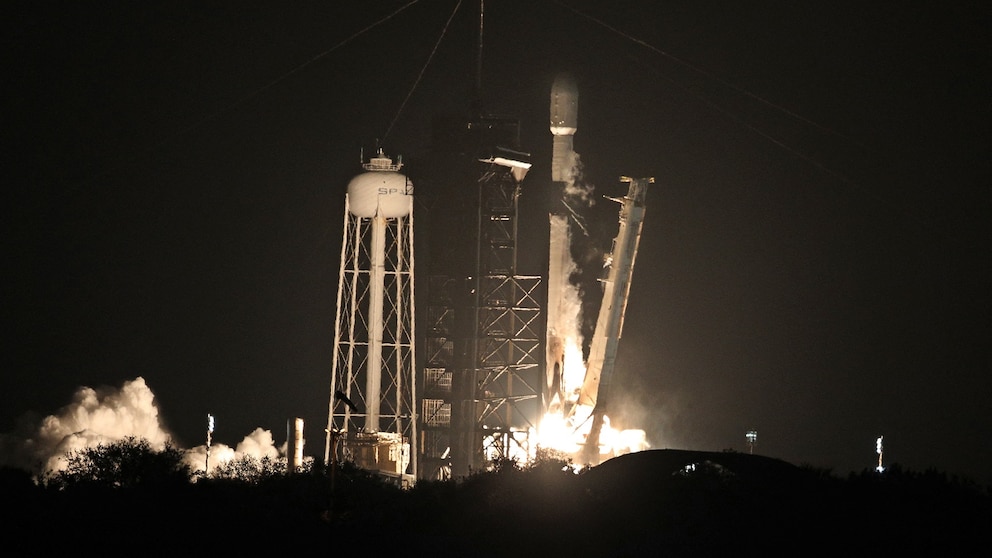
A drifting SpaceX Falcon 9 rocket is on a collision course with the moon, with impact expected on August 5 early in the morning Eastern Time near Einstein Crater on the lunar near side.
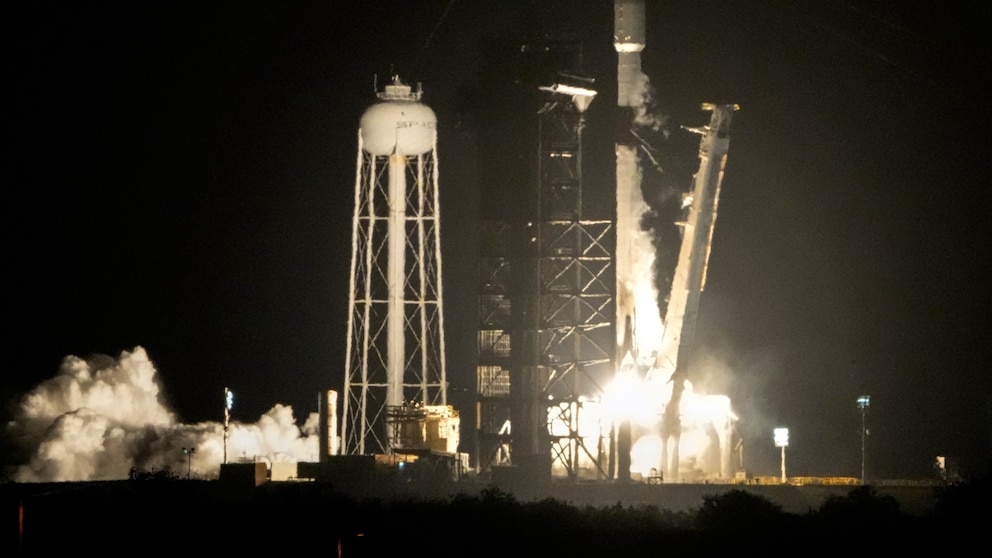
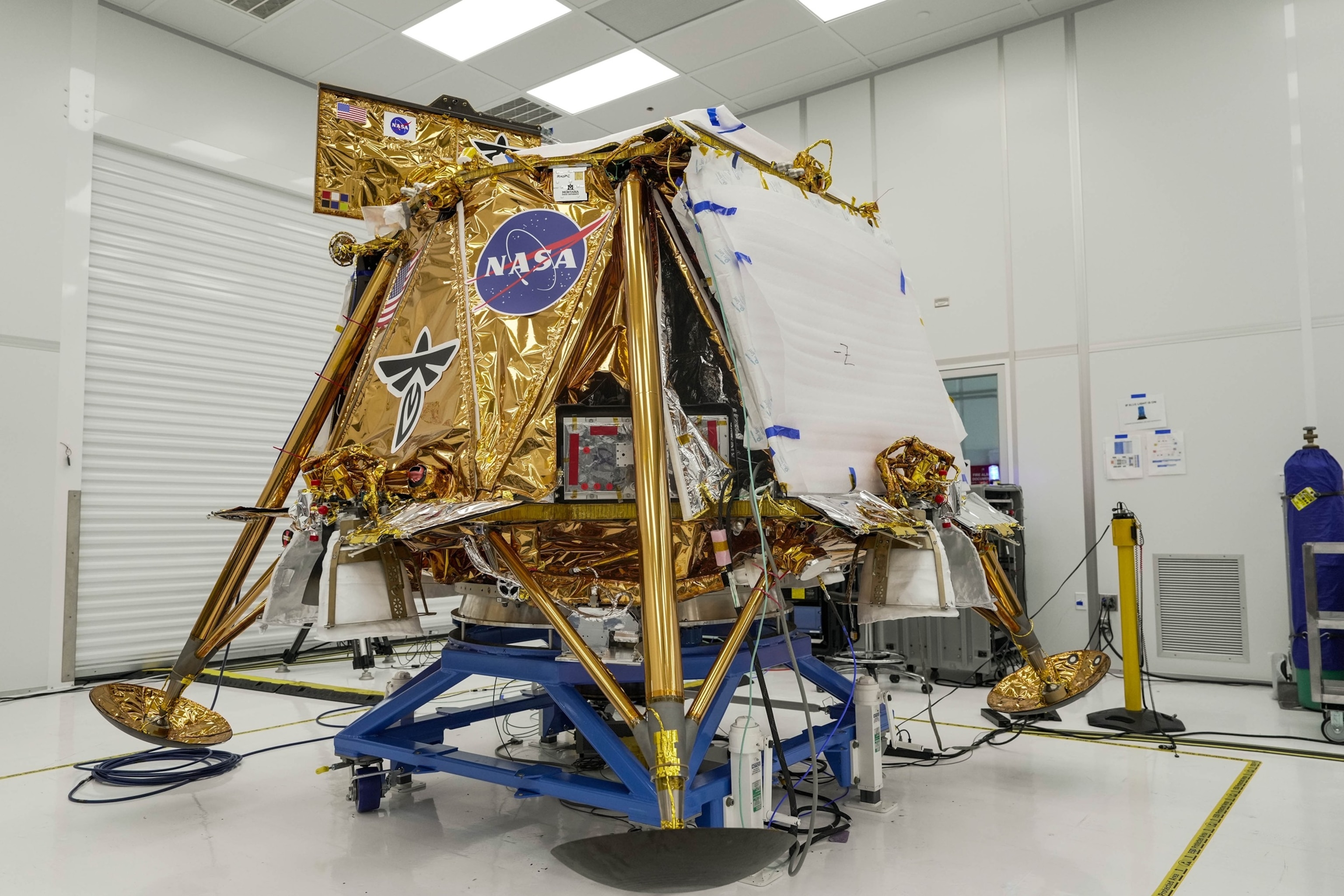
The rocket’s upper stage will strike the moon at approximately 5,400 miles per hour—seven times the speed of sound—after spending more than a year tumbling through space following a January 15, 2025 launch. The roughly five-ton piece of debris originated from a mission carrying Firefly Aerospace’s Blue Ghost 1 lunar lander and ispace’s Resilience lander toward the lunar surface. Blue Ghost successfully landed on the moon in March 2025, but the rocket’s upper stage remained abandoned in a chaotic, moon-crossing orbit after completing its mission, lacking the fuel to either return to Earth or escape into deep space.
Space tracking expert Bill Gray of Project Pluto was the first to calculate the collision trajectory and has been monitoring the object. Computer models developed by researchers suggest the impact will create a crater roughly 20 to 30 meters wide and launch a massive plume of lunar dust several kilometers above the surface. Because the rocket is a hollow metal shell rather than a solid object, it will be crushed on impact rather than penetrating deeply into the lunar surface. The resulting dust cloud will be what researchers are most eager to observe.
It was never SpaceX’s intent to hit the moon. However, space experts said the crash could have been avoided if the upper stage had been nudged into orbit around the sun instead. The incident represents only the second known accidental crash of a dead rocket into the moon. A Chinese rocket segment created a pair of craters on the lunar far side in 2022. This time, fortunately for astronomers, the impact will occur on the moon’s visible near side, packing energy equivalent to three tons of TNT.
The impact flash, lasting less than a second, will likely be too dim to see with the naked eye. However, the stream of ejected material could stretch for several miles into space and remain visible to telescopes for tens of minutes. The collision will occur in daylight hours on the moon’s sunlit western limb, making observation challenging from Earth. Eastern portions of the United States and Canada, as well as much of South America, should have the best viewing opportunities if the plume becomes visible.
Scientists view this collision as a rare scientific opportunity. Because researchers know precisely the rocket’s size, speed, and impact location, the event will provide invaluable data to calibrate computer models of crater formation and lunar dust behavior. The ejecta plume dynamics from the impact can be studied in detail, yielding insights that improve understanding of how natural meteorite collisions shape planetary surfaces. Benjamin Fernando of Los Alamos National Laboratory and his colleagues have published research encouraging both professional and amateur astronomers to observe and document the event.
The impact will also test new methods for pinpointing exactly where objects strike the moon, which could prove crucial for future lunar seismic experiments and science operations. Additionally, researchers are using this event to study the hazards that space debris poses to future astronauts and equipment on the lunar surface. Computer models suggest that ejected particles could travel up to 1,000 kilometers from the impact site, presenting potential risks to future lunar infrastructure.
While the current impact poses no immediate danger to anyone, experts warn it highlights a growing regulatory concern. As governments and companies race to establish permanent lunar bases, there is almost no practical framework for coordinating activities that reshape the lunar environment or managing orbital debris around the moon. With NASA planning to return astronauts to the lunar surface as early as 2028 and private companies increasingly dispatching objects into space around Earth and moon, questions of safety and responsibility are becoming difficult to ignore.
The United States and China are racing to land astronauts on the moon in the coming years, and both SpaceX and Blue Origin are competing to provide lunar landers for NASA’s Artemis missions. As activity increases on and around the moon, the possibility grows that one mission could unintentionally affect another through debris impacts. A cloud of high-speed lunar dust created by a landing could damage equipment, contaminate scientific experiments, or even endanger astronauts working on the lunar surface.
Experts like Jonathan McDowell of the Harvard-Smithsonian Institute for Astrophysics note that while this particular impact will not be a problem at the current level of lunar occupation, the pattern is concerning. As lunar activity accelerates, preventing rocket stages from being left in chaotic orbits will become essential. The August collision serves as both a scientific opportunity and a cautionary reminder that space debris management and regulatory frameworks for lunar activities must be developed proactively before the moon becomes crowded with human operations and infrastructure.