

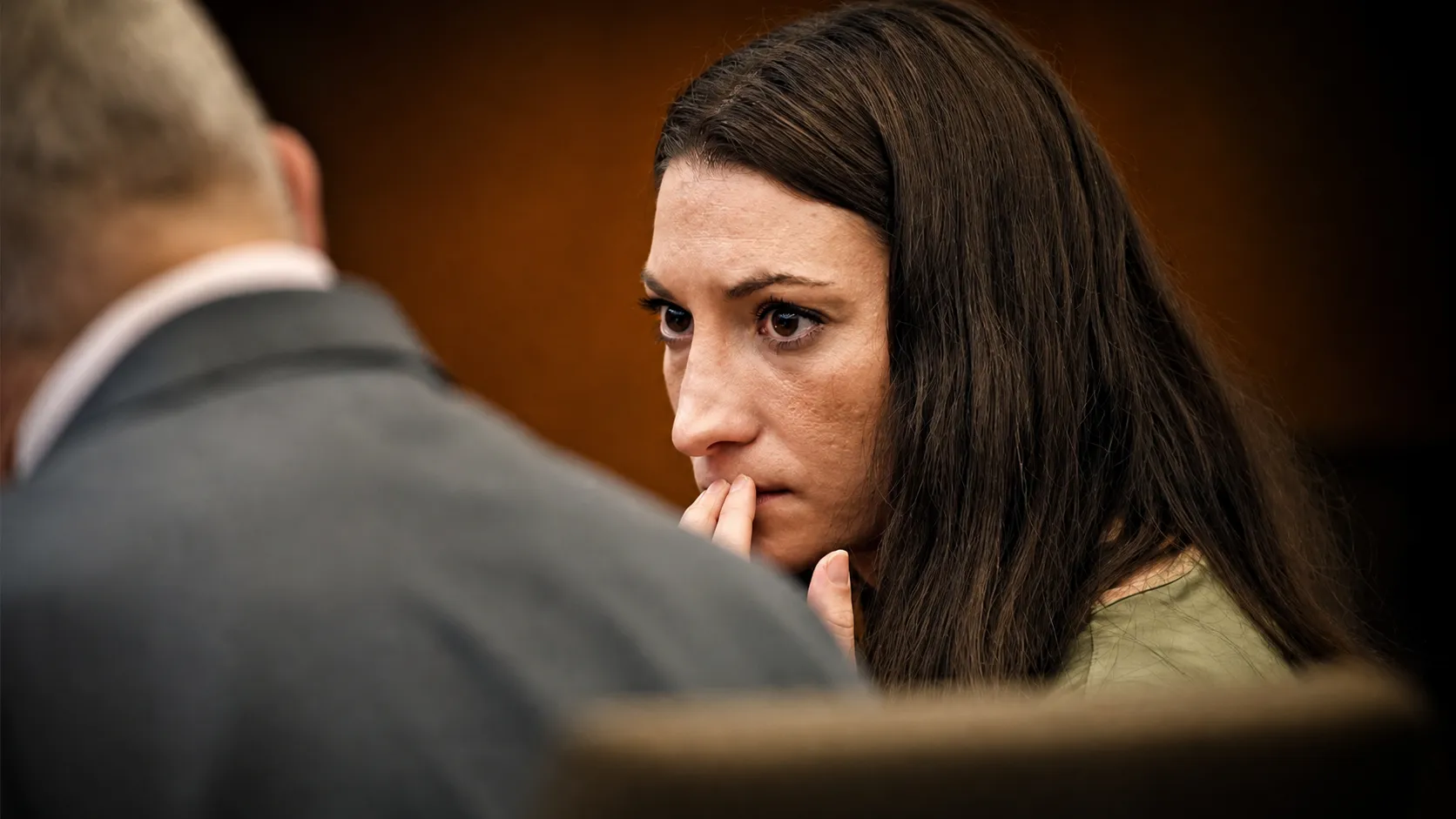
The trial of a Massachusetts mother accused of killing her three young children began Monday with opening statements marking the start of what experts say will be a test of the controversial insanity defense and the severity of postpartum mental illness. Lindsay Clancy, 35, has pleaded not guilty to three counts of first-degree murder in the deaths of her children: 5-year-old Cora, 3-year-old Dawson, and 8-month-old Callan, who died in January 2023.
The case hinges on a fundamental dispute: whether Clancy was a mother acting with deliberate premeditation or a woman in the throes of a severe psychiatric emergency who could not control her actions. The jury must decide not just whether she caused her children’s deaths, but whether she was criminally responsible for them.
The core facts of what happened on January 24, 2023, are not contested. Clancy strangled all three of her children in the basement of their Duxbury home using exercise resistance bands. She then cut her wrists and neck before jumping from a second-story window in a suicide attempt that left her partially paralyzed. When her husband Patrick arrived home from a quick errand to pick up takeout and medication, he discovered the tragedy and called 911.
The prosecution alleges that Clancy’s actions were deliberate and meticulously planned. Prosecutors say she intentionally sent her husband to a restaurant farther away than usual and asked him to stop at a pharmacy, giving herself approximately 25 minutes to carry out the killings. They argue the evidence demonstrates premeditation, extreme cruelty, and full awareness of what she was doing. In the days before the tragedy, prosecutors note that the day of the deaths began seemingly normally: Clancy took one of her children to the pediatrician and built a snowman with her kids in the yard.
But Clancy’s defense presents a starkly different narrative. Her attorneys argue that she was not in her right mind, suffering from postpartum psychosis—a rare but severe psychiatric emergency that impairs a person’s ability to distinguish reality from delusions. The defense claims that Clancy heard a voice telling her to kill her children and herself, and was unable to resist these hallucinations. They argue this mental illness made her incapable of understanding the wrongfulness of her actions.
Her husband Patrick has indicated he supports this perspective. In an interview with a major magazine in 2024, he stated: “I wasn’t married to a monster. I was married to someone who got sick.” Patrick Clancy is expected to be a key witness for the defense, though prosecutors have indicated he will testify.
The medical evidence surrounding Clancy’s mental health will be central to the case. In the months leading up to the tragedy, Clancy experienced severe mental health deterioration after the birth of her third child. She reported debilitating anxiety, insomnia, auditory hallucinations, and suicidal ideation. She was prescribed approximately a dozen psychiatric medications including antidepressants, sedatives, benzodiazepines, and antipsychotics between October 2022 and January 2023. She checked herself into a psychiatric hospital twice for treatment, yet her condition worsened.
Clancy has filed a malpractice lawsuit against her medical providers, alleging they failed to properly diagnose and treat postpartum psychosis, prescribing multiple medications with insufficient oversight while releasing her from inpatient care before her symptoms were adequately addressed. She was ultimately diagnosed with postpartum severe bipolar disorder after her arrest.
Legal experts have noted that successfully arguing an insanity defense is difficult, particularly in cases involving harm to children. Jurors often view such pleas with skepticism and are reluctant to accept them even when evidence of mental illness is strong. The trial is expected to feature competing testimony from psychiatric and medical experts who will debate whether Clancy’s mental state made her incapable of understanding her actions or resisting the impulse to harm.

Several procedural issues preceded the opening statements. Clancy’s attorney filed motions to limit public access to sensitive evidence including the 911 call recording, autopsy photos, and crime scene photographs. During a heated hearing before opening statements, Clancy’s lawyer called the prosecution’s strategy “reprehensible” for what he characterized as trying to inflame the jury’s emotions. The judge allowed the 911 call to be heard and a jury viewing of the Duxbury home where the children died, though the current home owner has opposed the visit.
The case has drawn national comparisons to other high-profile instances where mothers have been charged in the deaths of their children. It is similar in some respects to the trial of Andrea Yates, the Texas mother who drowned her five children in 2001. Yates initially was convicted but the conviction was overturned on appeal. A jury found her not guilty by reason of insanity in a 2006 retrial, and she remains institutionalized at a state hospital.
The trial is being heard by Judge William Sullivan in Plymouth Superior Court and is expected to last six to eight weeks. A jury of 18 was seated following jury selection that began in June. Clancy faces a mandatory life sentence if convicted. She is currently being held at Tewksbury Hospital in Massachusetts where she remains partially paralyzed from her suicide attempt.