

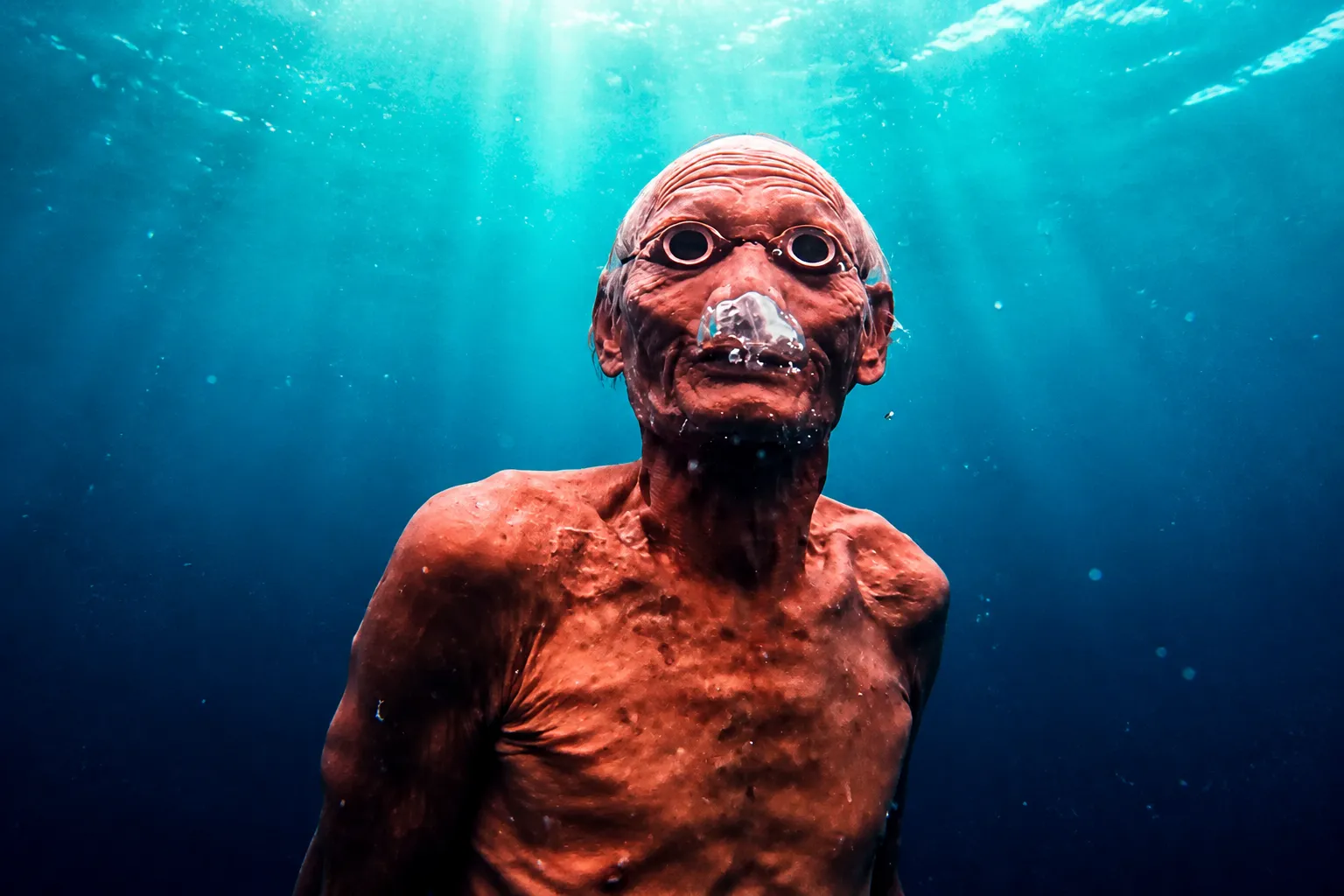
The Bajau people’s centuries-old ability to stay underwater for extraordinary lengths of time has been traced to a genetic mutation that enlarged their spleens, but the same Western contact that helped scientists document the adaptation now threatens to erase the culture that produced it.
Melissa Ilardo, a University of Copenhagen researcher and first author of the study, said’s Inside Science programme that the Bajau have spent possibly thousands of years living on house boats, traveling through the waters of South-East Asia and visiting land only occasionally. “So everything they need, they get from the sea,” she said.
Ilardo, who traveled to Bajau villages to examine residents firsthand, found their spleens were roughly 50 percent larger than those of a neighboring land-based population. The organ acts as a biological reservoir for oxygenated red blood cells, contracting during dives to release a sudden oxygen boost.
“There’s a human dive response that’s triggered by holding your breath and submerging yourself in water. You can trigger it by submerging your face in cold water,” Ilardo explained. “Your heart rate slows down, you have peripheral vasoconstriction where the blood vessels in your extremities get smaller to preserve the oxygenated blood for your vital organs and then the last thing is a contraction of the spleen.”
She continued: “The spleen is a reservoir for oxygenated red blood cells, so when it contracts, it gives you an oxygen boost. It’s like a biological scuba tank.”

The Bajau, numbering approximately 1.2 million worldwide, spend about eight hours daily diving using traditional wooden goggles and weighted belts. Ilardo noted they dive repeatedly, spending roughly 60 percent of their time submerged, with individual dives ranging from 30 seconds to several minutes and reaching depths exceeding 70 meters.
Co-author Prof Rasmus Nielsen, from the University of California, Berkeley, said the research team searched for genetic variants that appeared at much higher frequency specifically in the Bajau compared to other populations. They identified the gene PDE10A, which correlates with the enlarged spleen size and is known in mice for regulating a thyroid hormone that controls spleen development.

Nielsen added: “It’s a wonderful example of how humans can adapt to their local environments, but there may be some medical interest in this. There’s been a lot of interest in understanding hypoxia adaptations – adaptations to low oxygen levels.”
He continued: “By studying the Bajau, we can figure out: what are some of the genes that help predict differences in people in how they respond to acute low oxygen levels?”
The researchers have also raised the possibility that the Bajau adaptation might share an origin pattern with Tibetan high-altitude adaptations, which derived in part from interbreeding with Neanderthals, though this remains speculative.
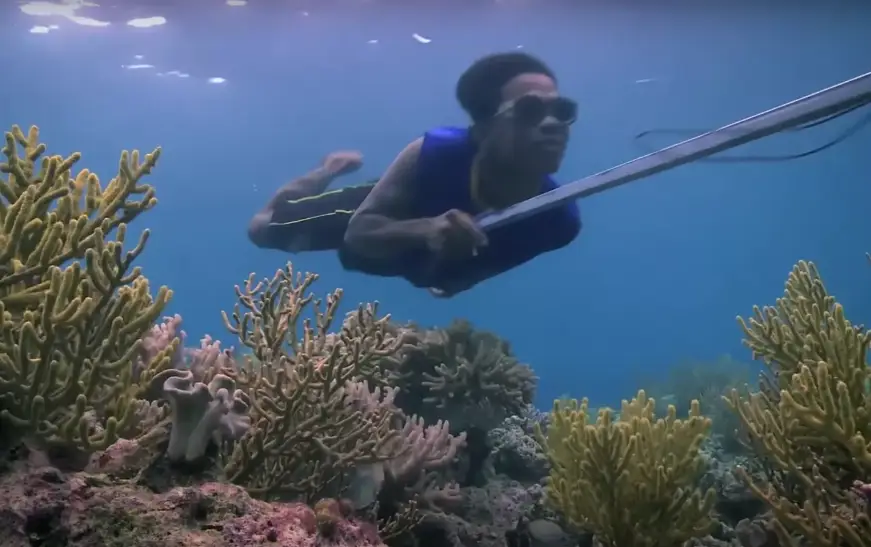
While scientists celebrate the genetic discovery, Santarawi Lalisan, an elder statesman of the tribe, told Giuseppe from Project Happiness that their culture is dying due to Western influence. He said: “A lot of plastic has arrived here because today the Badjao go to the supermarket and here they use plastic and no longer paper. In the past, the Badjao only used paper when they were buying something.”
The plastic pollution now filling the waters around their stilt homes has made the traditional diving and fishing lifestyle increasingly difficult to maintain. The Bajau, known to neighbors as “sea nomads,” have built their homes on stilts in open waters near Indonesia, Malaysia and the Philippines, sustaining themselves through diving, spearfishing and shellfish collection for more than a thousand years.
The average untrained person can hold their breath underwater for roughly 30 to 60 seconds, with extended training pushing that to a few minutes. The Bajau routinely remain submerged for up to 10 minutes, a capacity that evolved through generations of selective pressure on their aquatic way of life.
Ilardo’s fieldwork required direct collaboration with Bajau villagers willing to undergo ultrasound examination of their spleens, bridging traditional knowledge and modern genomic analysis to document one of the clearest known examples of recent human evolution in action.