

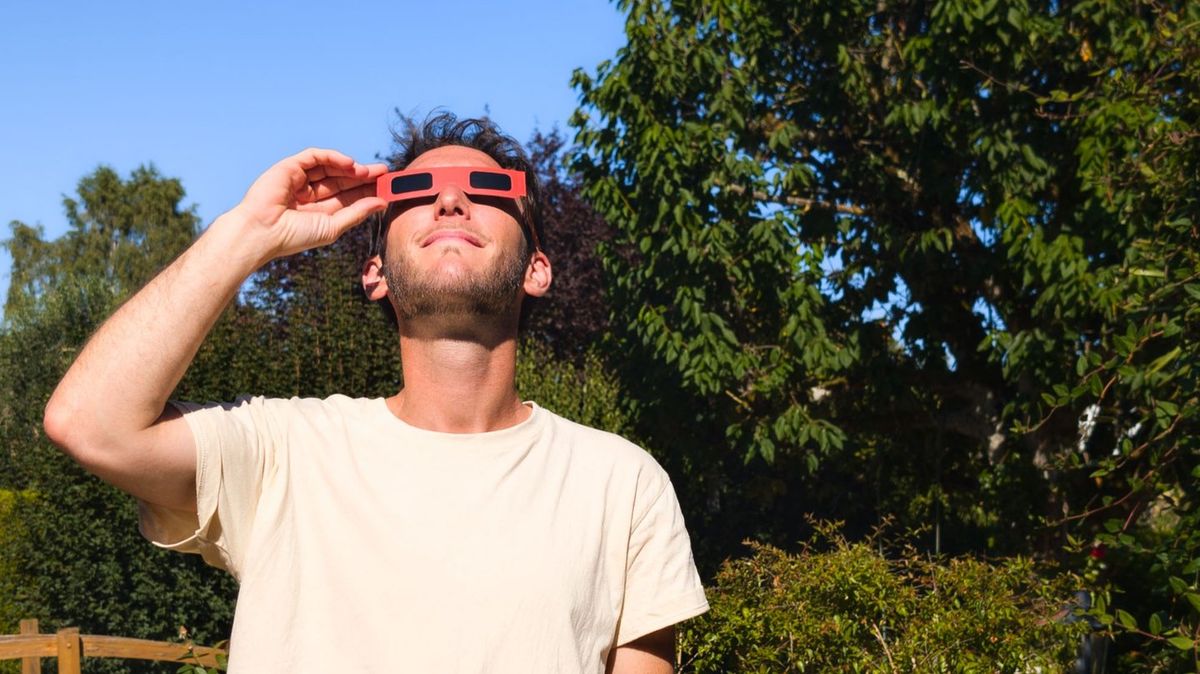
Four major sky events are due to overlap at once, and some countries will have a far better view than others.
If your last physics class feels like a distant memory, a solar eclipse happens when the Moon moves between Earth and the Sun, either fully or partly blocking the Sun from view for people watching from Earth.
A total solar eclipse is scheduled for August 12, 2026, at 12:15 UTC, which is now only two days away.
That would already be a big event on its own, but this one is expected to coincide with the Perseid meteor shower, a new moon, and a planetary alignment. It will be the first total solar eclipse visible from mainland Europe since 1999.
For anyone who is not deeply familiar with stargazing, here is a simple breakdown of what may be visible.
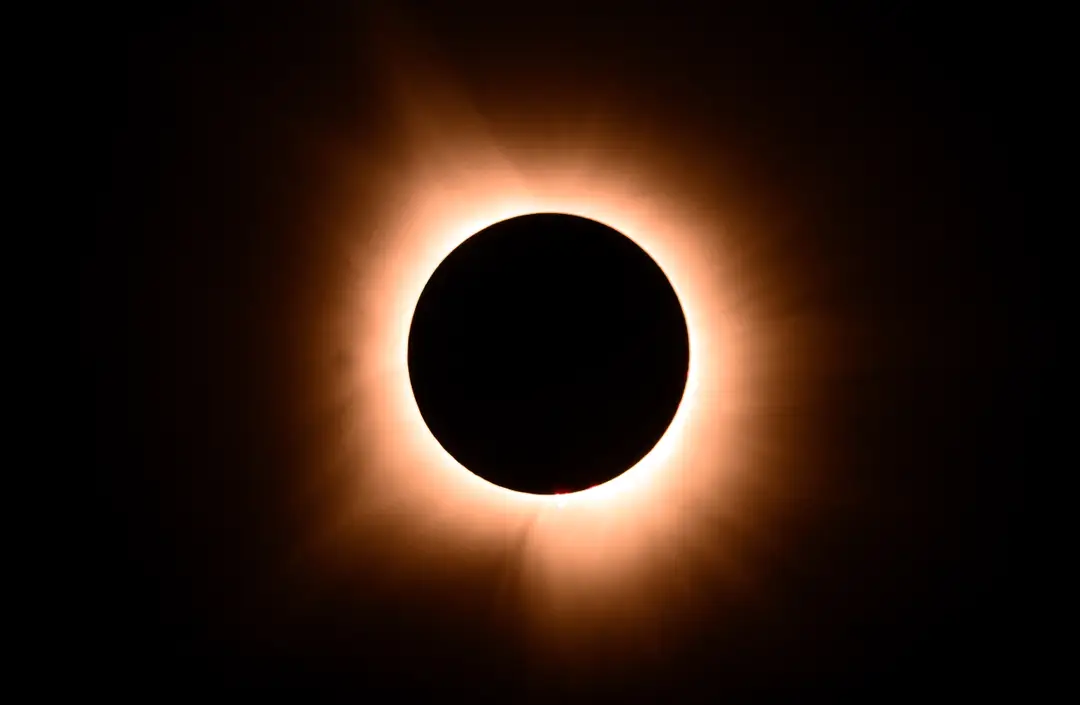
The Perseids are a meteor shower, often described as shooting stars, created by debris from Comet Swift-Tuttle.
Swift-Tuttle has an orbital period of 133 years.
The shower gets its name because the meteors, which appear as bright streaks from burning debris, seem to come from the direction of the constellation Perseus.
According to RMG, the shower is usually visible from mid-July, and in 2026 it will be active from July 17 through August 24.
The American Meteor Society says the best time to watch will be August 12 and 13, immediately after the total solar eclipse. The peak is predicted for 14:53 UTC on August 13, 2026, making the early morning hours of August 12 and 13 the best viewing windows.
IFL Science notes that this is especially unusual because it may be the first recorded occasion when both the Perseid meteor shower and a total solar eclipse occur on the same day. The mathematical odds of that specific triple alignment are small enough that August 12, 2026 is the only date in the current decade when it occurs. Under ideal dark-sky conditions on the new moon night, observers could potentially see up to 100 meteors per hour, since the new moon eliminates light pollution from the sky.
As if that were not enough, a six-planet alignment is also expected this week.
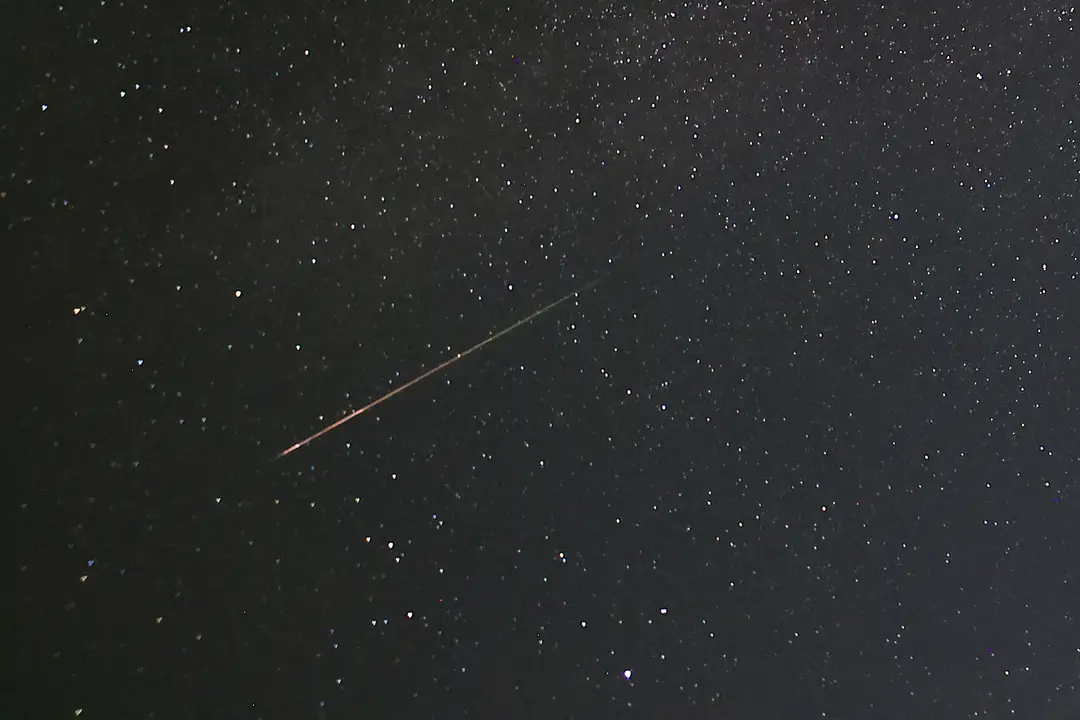
StarWalk reports that Jupiter, Mercury, Mars, Uranus, Saturn, and Neptune should appear lined up in the sky on August 12. The planets will appear spread across a large part of the sky rather than in a tight line, forming a loose arc along the ecliptic plane.
The Planetary Society says the alignment will happen in the pre-dawn hours and continue across several nights afterward. The alignment is not a one-time event; the planets will be worth watching on the mornings before and after August 12 as well, though the arrangement will change from day to day.
There is also a new moon due on August 12 at 1:37pm Eastern Time.
So where will people have the best chance of seeing all of this?
🪐 One planetary alignment — two perspectives!
On August 12, 2026, six planets — Jupiter, Mercury, Mars, Uranus, Saturn, and Neptune — will gather in the pre-dawn sky. ✨
But here’s the trick: they aren’t actually lined up in space! 🌌 The planets are spread across their… pic.twitter.com/HKSBlPhg60
— Star Walk (@StarWalk) August 9, 2026
AFAR reports that the Perseids, one of the Northern Hemisphere’s most eagerly awaited displays, are best seen from northern parts of the US, Canada, much of Europe, and northern Asia.
The path of totality for the eclipse will stretch across northern Siberia, northern Spain, northeast Portugal, the Arctic, Greenland, Iceland, and the Atlantic Ocean.
Countries expected to get a partial eclipse include the Balkans, Italy, Great Britain, Ireland, France, North Africa, and Portugal. Parts of northern North America, West Africa, and the rest of Europe should also be able to catch at least some of the spectacle.
For the clearest view, it is still best to get away from cities and head into the countryside, where artificial light pollution is less likely to interfere.
As for the planetary alignment, Mars and Saturn should be easier to spot, while Mercury will be difficult without a clear horizon and Jupiter may be even harder to pick out. Binoculars will be needed for Mercury and Uranus. Neptune will require a telescope, so anyone feeling inspired to revisit their old astronomy hobby may want to go and find one. For US skywatchers, the best viewing window in the pre-dawn hours is around 5:18–5:34 AM in New York and 5:28–5:46 AM in Los Angeles, with a clear eastern horizon essential to spot the low-hanging planets like Mercury and Jupiter.