

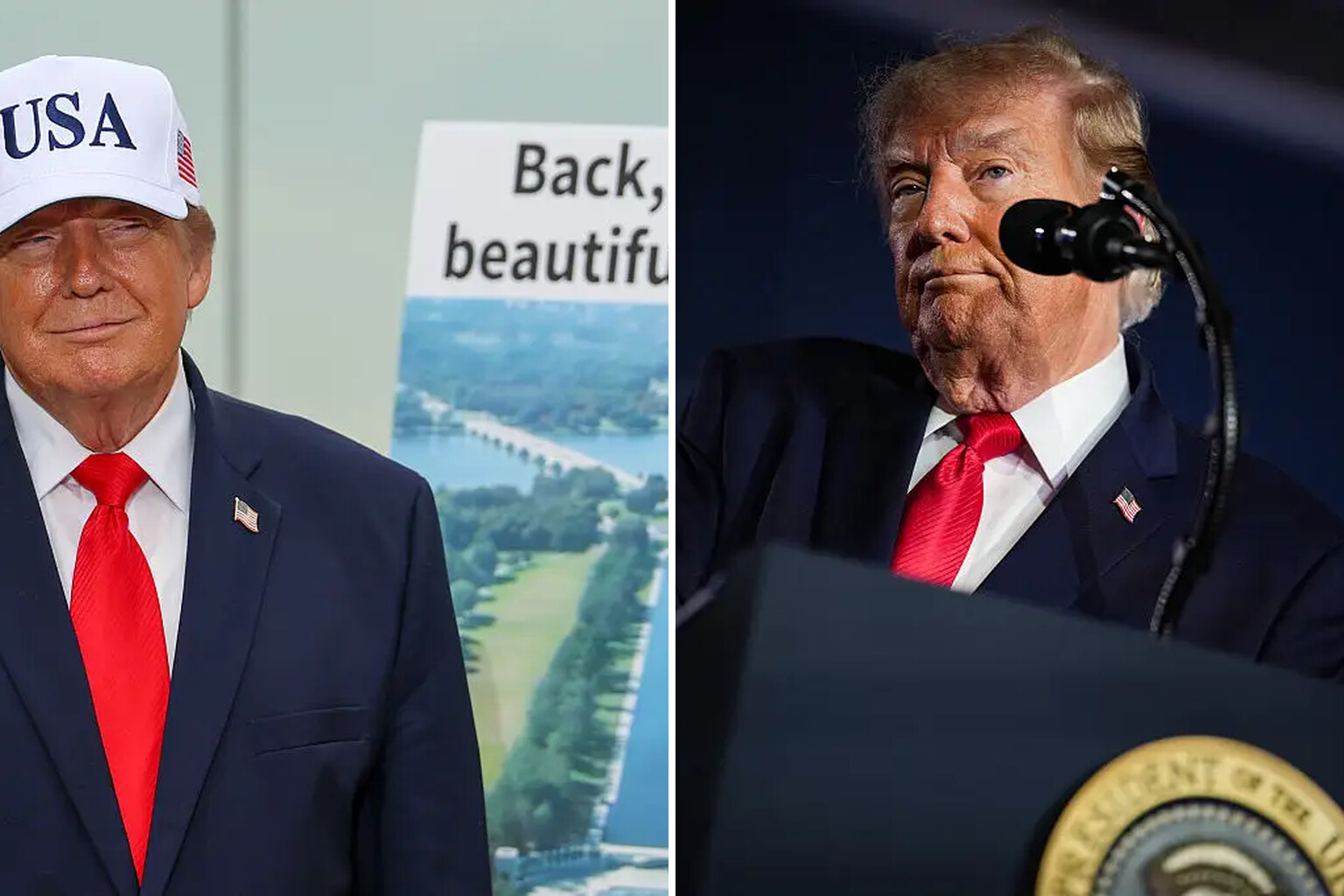
Donald Trump faces the prospect of a third impeachment after Democrats seized full control of Congress in Tuesday’s midterm elections.
The Democratic Party, 47, has secured both chambers of Congress following a dramatic election night that flipped key Republican strongholds across the country. At the time of writing, Democrats hold 54 Senate seats — including two allied independents — against Republicans’ 44, a net gain of seven seats. They also clinched the 218 House seats needed for a majority.

The newly elected Congress will convene on 3 January 2027, giving Democrats the procedural power to launch investigations and potentially pursue impeachment proceedings against the 80-year-old president. Until that date, Republicans retain their existing congressional powers, meaning any immediate removal effort would still require GOP senators to turn against their own party leader.
Trump could face impeachment over allegations of abusing presidential powers or violating the US Constitution. Democrats have previously scrutinised his decision to launch military strikes against Iran without congressional authorisation. His administration’s handling of the Jeffrey Epstein files could also come under investigation, alongside questions of whether Trump has improperly used federal agencies against political opponents or defied court orders on immigration.
Josephine Liu, co-founder of geopolitical consulting firm GC NEXUS, weighed in on the strategic calculus facing Democrats. She posted on her platform:
“But impeachment is not simply a mechanism for removing a president. It can also become a source of sustained political pressure. Investigations, subpoenas and public hearings could consume the administration’s attention, resources and political capital, even without a Senate conviction.”
Liu continued her analysis by noting the volatile political dynamics Trump brings to any confrontation:
“Trump, however, could turn those proceedings into a political confrontation of his own. That makes impeachment a double-edged sword: it could constrain his presidency, but it could also distract Democrats from delivering their own agenda.”
Removing Trump from office would require a two-thirds majority in the Senate, demanding substantial Republican support that remains far from guaranteed. Liu pressed deeper into the strategic dilemma facing Democratic leadership:
“But I think there is a bigger question for Democrats: Is removing Trump really their ultimate objective, or do they want to change the political direction of the entire administration? Even if Trump were removed, JD Vance would become president. Democrats would not automatically regain the White House.”
The electoral map revealed dramatic Democratic inroads into traditionally Republican territory. Senate contests in Texas, Kansas and South Carolina all flipped to Democratic candidates. Additional pickups in North Carolina, Ohio, Iowa and Maine helped secure the Senate majority. Republicans had entered election night controlling both chambers, making the results a stark reversal of their governing position.
Liu also raised questions about the party’s longer-term vision beyond immediate accountability measures:
“And that raises another question: Who is their candidate, and what is their alternative vision for governing America? Democrats have demonstrated that they can unite to win congressional elections, but they have not yet settled on a presidential candidate for 2028.”
She concluded her assessment with a pointed distinction between tactical and strategic victory:
“Impeachment may be a tool for political accountability, but it is not a strategy for taking back the presidency. Removing Trump is one thing. Replacing Trumpism is another.”
The full election picture developed overnight as polls closed across America, with results first coming through from 11pm UK time on Tuesday. Some closely contested House races remain unresolved, with final counts potentially extending across several days. Midterm elections occur halfway through a president’s four-year term, allowing Americans to elect members of Congress without selecting a new president. All 435 House seats were contested alongside 35 Senate elections this cycle.
Liu warned of the risks inherent in a partial or failed impeachment push:
“This is not a political move Democrats can afford to get halfway right. A failed attempt could end up strengthening the very president they are trying to constrain.”
The next Congress convenes on 3 January 2027 in Washington, D.C.