


A New York writer who spent Memorial Day weekend in an East Village hospital room after an overseas trip says her eyesight may never fully recover.
The patient, who chronicled her ordeal for the outlet, developed a corneal ulcer after wearing contact lenses continuously through an 11-hour international flight and 24 hours of travel without sleep. She also swam and showered in them during a luxury yacht vacation in Greece, habits she had maintained without incident for years.
Two days after returning home, she awoke with pain and light sensitivity in her right eye. The condition escalated rapidly. When she reached Mount Sinai’s emergency eye clinic, her vision in that eye had turned to a sheet of white.

Dr. Masako Chen, an ophthalmologist who oversees the resident clinic at New York Eye and Ear Infirmary of Mount Sinai, later told the patient her case fell on the “mild to moderate side” at a facility accustomed to far worse. “We’re a tertiary referral center, so we see a lot of really bad ulcers,” Chen said.
The patient underwent a painful sampling procedure in a windowless hospital room, an ophthalmologist steering a small blade toward her cornea to collect material for testing. She panicked about tears diluting the antiseptic; the doctor simply doused her with more.
Kathryn A. Colby, chair of the department of ophthalmology at NYU Grossman School of Medicine, explained the mechanism to the Post. “When you have a little break in that protective barrier — the epithelium of the cornea — it makes you vulnerable to the organisms that are normally on your ocular surface,” she said.
Contact lens misuse can both create the abrasion and harbor the infectious organism, Colby noted. In this case, over-wearing contacts while flying likely nicked the eye, allowing germs accumulated from swimming in the sea or confined in airplane cabin air to bloom into infection.
The treatment regimen proved grueling. The patient spent two days taking potent antibiotic eye drops every hour, including through the night. “No sleep tonight!” the doctor instructed. She then visited the hospital daily for five days before tapering to every other day, then weekly. Colby noted that in the past, patients like her would have been admitted as inpatients rather than trusted with home care.
“Your course is very typical, and a good one too,” Chen told her. “You responded to medication, we tapered off slowly, changed you to a regular commercial antibiotic, added a steroid here and there to reduce inflammation and you healed up with a small scar.”
The patient described her corneal ulcer as “gnarly,” a medical resident’s term, and noted that at one point she could not see out of her right eye at all. While her pain remained tolerable, Colby said corneal abrasions can rank with kidney stones and childbirth in intensity. Chen described the typical presentation: “The eye is red, they’re sensitive to light, they want to spend time in the dark, they can’t open their eyes, it’s a little bit swollen.”

The consequences extended for months. She could not swim for two months or wear contacts for ten weeks. She canceled travel plans, extended work deadlines, and developed plantar fasciitis from switching to land-based exercise. She described herself in June as barely able to see or walk while navigating foot traffic to the L train.

The patient has since made permanent changes. She now uses daily disposable contacts, wears prescription goggles for swimming, and has embraced glasses despite a severe negative 9.5 prescription that limits style options.
Colby delivered blunt warnings about water exposure. “There is no safe way to swim with contact lenses, or shower, or use a hot tub,” she said, citing microorganisms lurking in water.
The patient acknowledged that her long history of contact lens misuse without incident actually testifies to corneal resilience. “All these people do these bad things to it, and we don’t all walk around with infections,” Colby said.
Still, the patient gives corneal ulcers “zero stars” and urges others to clean contacts well, change them often, and remove them when flying, sleeping, swimming, or showering. From her now slightly hazy view, she said, taking this resilient tissue for granted isn’t worth the risk.
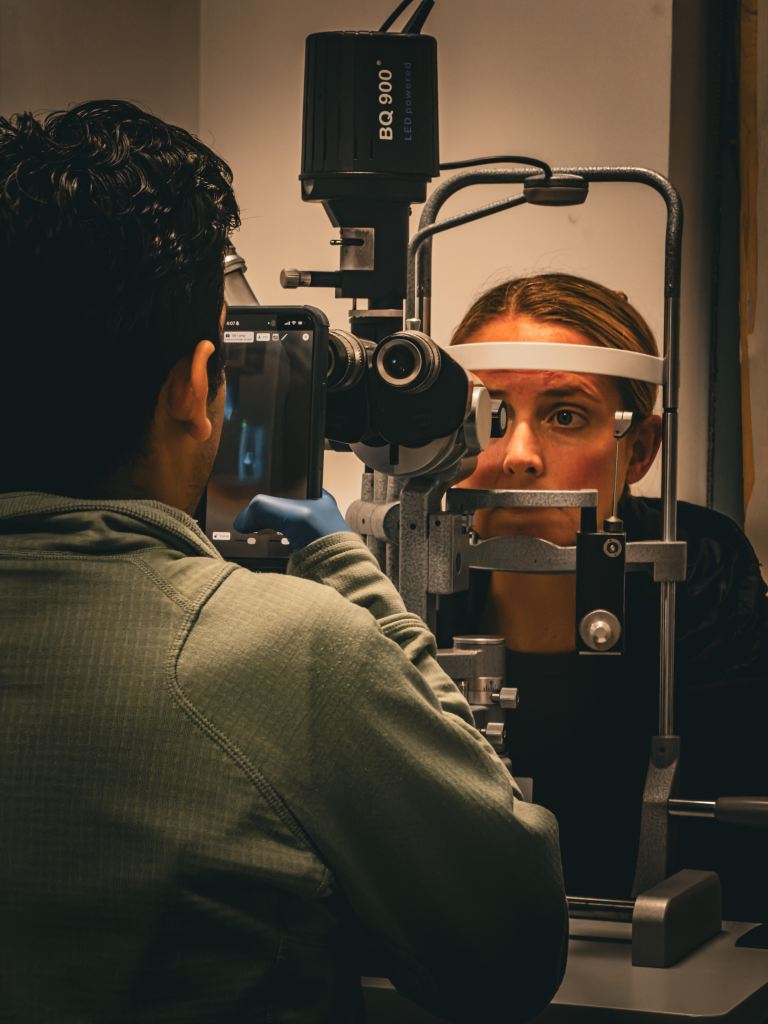
In the most severe and rare cases, corneal ulcers can lead to complete vision loss or even loss of the entire eye. Treatment-resistant amoeba infections may require corneal transplants. The patient was tested for the specific pathogen causing her infection but never received an answer; the treatment succeeded regardless.
She initially dismissed ChatGPT’s warning that her symptoms constituted a medical emergency, her eye “rolling” at the bot’s advice. After generic antibiotic drops at CityMD failed to halt progression, she landed at Mount Sinai’s specialized clinic.
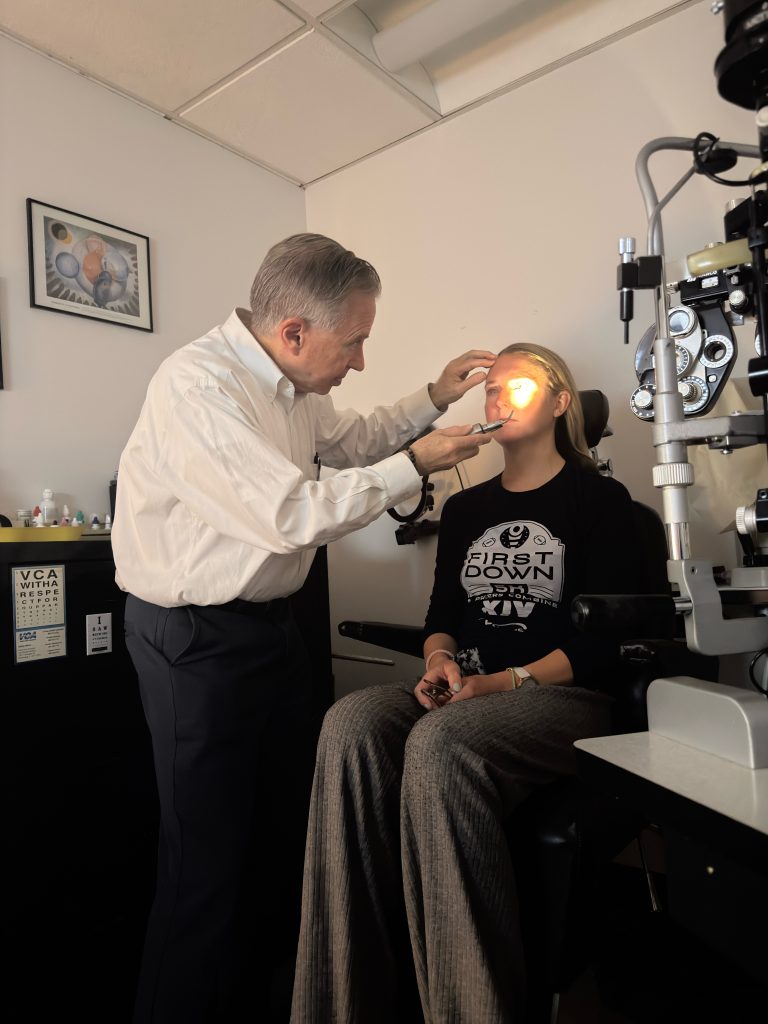
The patient, who described her pre-illness circumstances as “the lap of luxury” aboard a Greek superyacht, found little sympathy from the ophthalmologist scraping her cornea. “How far you’ve fallen,” the doctor remarked, unimpressed by the champagne-soaked backstory.
If she returns to yacht-invite status, she vowed, she will do so wearing glasses.