

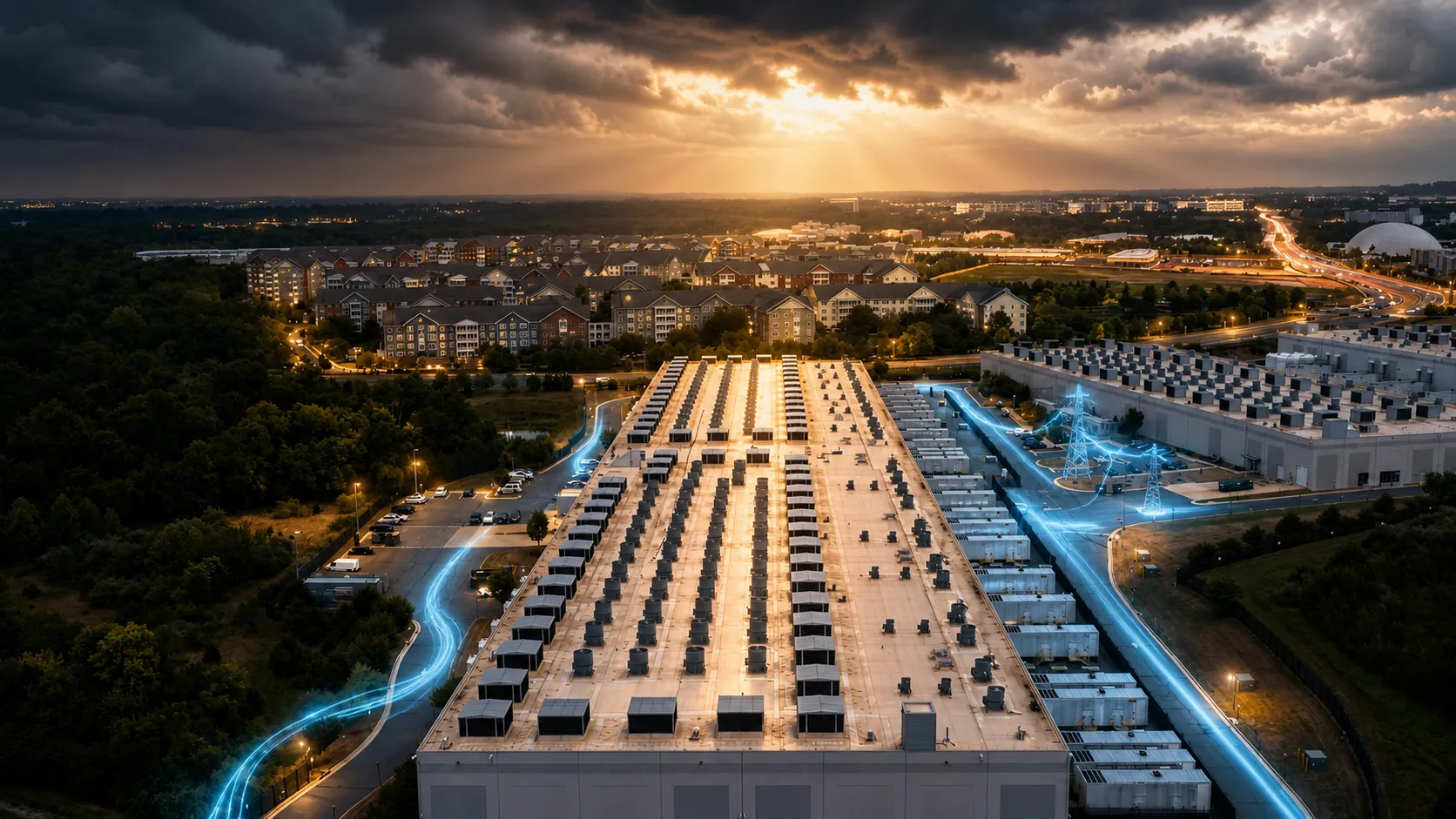
American consumers are facing a new wave of inflation driven by the massive buildout of artificial intelligence infrastructure, with prices already climbing for consumer electronics and electricity bills expected to keep rising into 2028 and beyond. The trend is emerging as a significant challenge for the Federal Reserve as it tries to bring price growth back down to its 2% target.
The gusher of investment in data centers—likely topping $700 billion this year—to power artificial intelligence has made memory chips, computer processors, and other equipment more expensive, while simultaneously driving up electricity costs. Economists expect these inflationary pressures to persist at least through the end of 2026, complicating the Federal Reserve’s ability to maintain price stability without raising interest rates further.
The immediate impact is becoming visible in consumer prices. Just four large tech companies—Google parent Alphabet, Amazon, Meta Platforms, and Microsoft—are expected to invest $720 billion this year, mostly on data centers. Those facilities require enormous quantities of semiconductors, and chip supplies have run low as manufacturers redirect production toward high-bandwidth memory used in AI servers. Economists at JPMorgan Chase estimate that the cost of some computer memory chips will have soared by as much as 400% between 2024 and the end of this year.
Americans are already seeing higher prices for consumer electronics, including laptops, smartphones, video game consoles, and computers. In late June, Apple announced substantial price increases for Macs and iPads, with some products rising by up to $300 or as much as 25%. The company called the surge in demand for memory and storage chips an “unprecedented challenge,” noting it had never seen component prices increase “this much, this quickly.” On the same day, Microsoft announced Xbox console price increases of $100 to $150, set to take effect August 1. Both Sony and Nintendo have already raised prices on gaming consoles as well.
Dell, HP, and other major computer manufacturers have similarly raised prices. Prices for computer software and accessories increased nearly 15% in May compared with a year earlier, while wholesale prices for electronic components and accessories jumped 27% in the same period—signals that more price increases are on the way for consumers.
The impact on overall inflation measures may be relatively modest in the short term, with many economists forecasting that AI investment will boost core consumer prices by roughly a half-percentage point by the end of this year. However, this could be enough to keep inflation above the Federal Reserve’s preferred rate, offsetting declines in other areas as the impact of tariffs continues to fade and rental costs cool. Core inflation, according to the Fed’s preferred measure, was 3.4% in May, and some economists expect it may decline only slightly by year-end, remaining well above the Fed’s 2% target.
Another significant channel through which AI is raising inflation is through its enormous demand for electricity. AI data centers are driving utilities across the United States to expand power generation capacity—an expensive undertaking that is being passed along to consumers. Electricity prices rose 5.9% in May compared with a year earlier, a bigger increase than overall inflation of 4.2%. After dropping back to about 2% annually in early 2025 following pandemic-era spikes, electricity price increases have accelerated sharply.
Goldman Sachs economists forecast that electricity prices will rise 6% this year and next, and an above-average 3% in 2028. Data centers are projected to account for nearly half of U.S. Electricity demand growth through 2030. While prices for computer chips could peak this year and then decline, experts expect electricity demand from AI will continue pushing up utility costs well into 2028 or beyond.
The confluence of these inflationary pressures has caught the attention of Federal Reserve officials, who have identified AI-driven demand as a growing concern. In its June meeting minutes, released in early July, the Fed explicitly cited “AI-related price pressures” as a driver of core goods inflation. The central bank noted that while AI could eventually boost productivity and ease inflation, that effect would likely take time to materialize. Federal Reserve Bank of New York President John Williams said that among inflation drivers, he is most focused on demand driven by artificial intelligence, and indicated that sustained inflationary pressure from AI could force the central bank to raise interest rates.
Cleveland Federal Reserve President Beth Hammack observed that hyperscalers—the massive tech companies building data centers—”will pay almost any price” for critical equipment, driving up costs across the technology sector. As a result, markets have shifted expectations, with some economists now forecasting additional rate hikes before year-end to combat persistent inflation.
Mark Zandi, chief economist at Moody’s Analytics, succinctly described the dynamic: “AI is juicing up inflation. Chips go into everything, so prices for almost all consumer products are going to go up. Pressure on prices are going to be significant.”
The situation reflects a broader challenge facing the economy. The AI infrastructure boom is consuming enormous quantities of semiconductors, electricity, and other resources simultaneously, creating supply bottlenecks that ripple across multiple industries. Chipmakers have redirected production capacity toward advanced chips for AI systems, leaving fewer consumer-grade chips available for smartphones, laptops, and other devices. Construction workers building data centers are in high demand, pushing up wages in electrical trades by 6.5% annually—nearly double the rate for all private-sector workers.
Dario Perkins, an economist at TSlombard, noted the broader implication: “We do know what effect AI is having on inflation now, and it is inflationary, not deflationary.”
The current wave of AI-driven inflation follows earlier waves of price increases stemming from tariffs and the gas price spike that resulted from the U.S.-Iran conflict. The Federal Reserve typically “looks through” temporary price increases rather than hiking rates to fight them, but an ongoing series of temporary shocks could threaten to create more sustained inflation. This dynamic has made inflation a focal point of political concern as the 2026 midterm elections approach, with rising utility bills becoming a visible squeeze on household budgets.
For consumers planning major purchases, the outlook offers little relief. Analysts expect memory chip prices to remain elevated and potentially rise again through 2027. Higher electricity costs are baked into forecasts for the remainder of the decade. While the artificial intelligence technology driving all this infrastructure investment promises significant long-term productivity gains, economists warn those benefits remain years away, leaving households and policymakers to grapple with higher costs in the near term.