

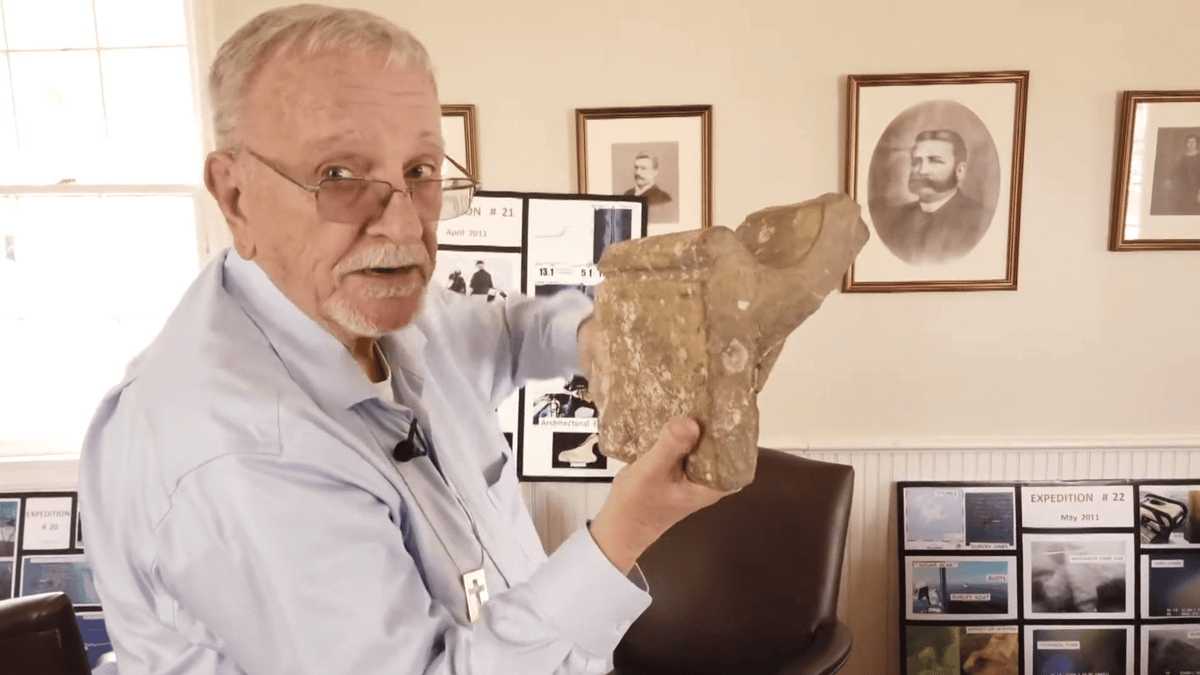
An amateur archaeologist says he has uncovered an extraordinary find off the eastern coast of the United States.
George Gelé, a retired architect who now pursues archaeology as a hobby, believes he has identified a 12,000-year-old city beneath the water off Louisiana. However, his idea has not been confirmed by professional historians or archaeologists.
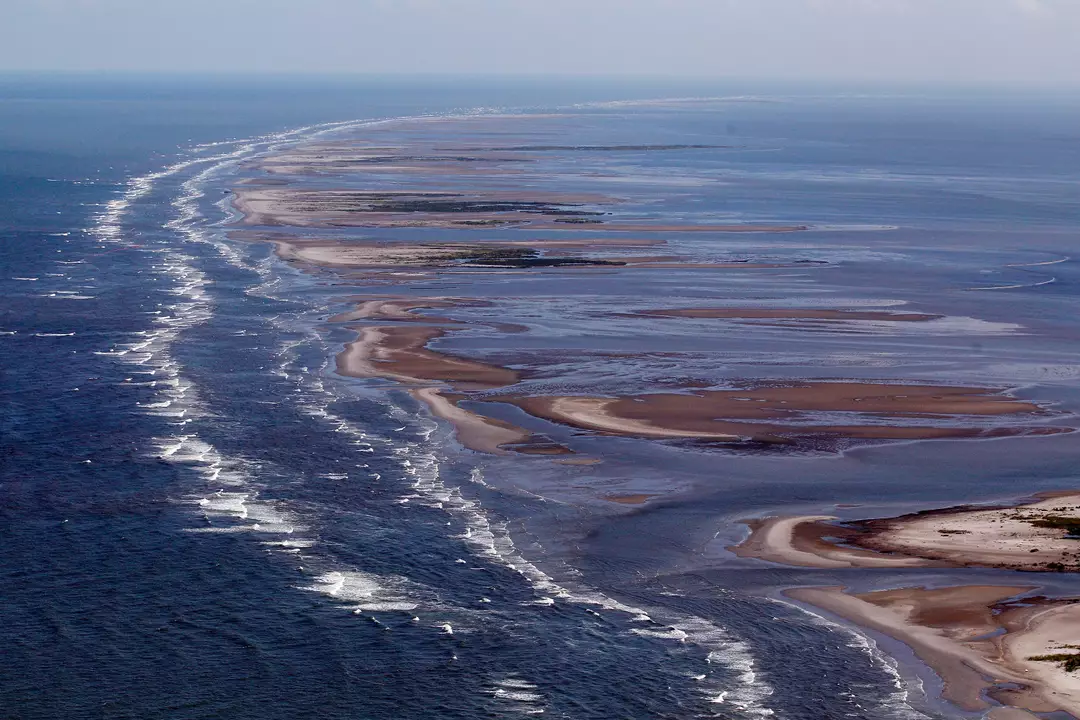
Gelé reports making roughly 44 expeditions to a location in the Chandeleur Sound in the Gulf of Mexico, around 50 miles east of New Orleans. He has given the supposed site the name ‘Crescentis’.
The Chandeleur Sound has attracted attention because it contains substantial granite formations—rock that is not commonly found occurring naturally in either Mississippi or Louisiana.
According to Gelé, these granite masses are not random deposits at all, but massive submerged pyramids that he believes were constructed by a long-lost civilization.
Speaking to CBS affiliate WWL-TV, he said: “What’s down there are hundreds of buildings that are covered with sand and silt and that are geographically related to the Great Pyramid at Giza.
“Somebody floated a billion stones down the Mississippi River and assembled them outside what would later become New Orleans.”
He says he has been investigating the area for nearly half a century and has collected sonar readings of the seabed that, in his view, indicate pyramid-like structures reaching about 280 feet in height.
Gelé also alleges the formation produces bursts of electromagnetic energy, which he claims can interfere with navigation instruments as boats pass overhead.
He further argues the location dates to the end of the Ice Age, when rising seas submerged what were once coastal areas—though he has not published his conclusions in any peer-reviewed scientific journal.
During many of his trips, Gelé has been accompanied by local shrimper Ricky Robin, who says he has experienced unusual compass behavior when traveling across the area Gelé points to.
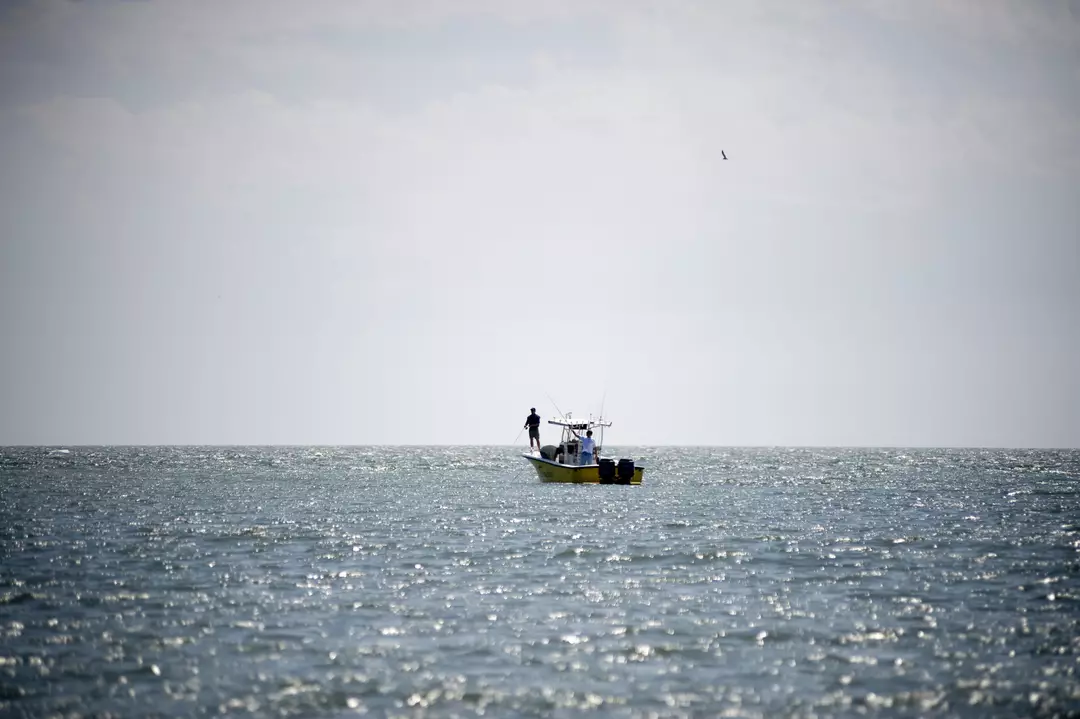
“Everything will go out on your boat, all your electronics,” Robin told WWL-TV. “Like as if you were in the Bermuda Triangle. That’s exactly what we got here.”
Not everyone is persuaded by the ancient-city explanation. In 2011, local newspaper The Advocate quoted archaeology professor Rob Mann, who offered a more modern possibility.
Mann suggested the granite may be linked to efforts in the 1940s to create an artificial reef.
Artificial reefs can be made by depositing large stones on the seafloor or intentionally sinking vessels, often with the goal of encouraging marine life and improving fishing conditions.
Speaking at the time, Mann said: “I think simply searching underwater at this point won’t give us any more answers.
“When the historical archive work is done, looking at records and newspapers, that’s when we will know what it is.”