

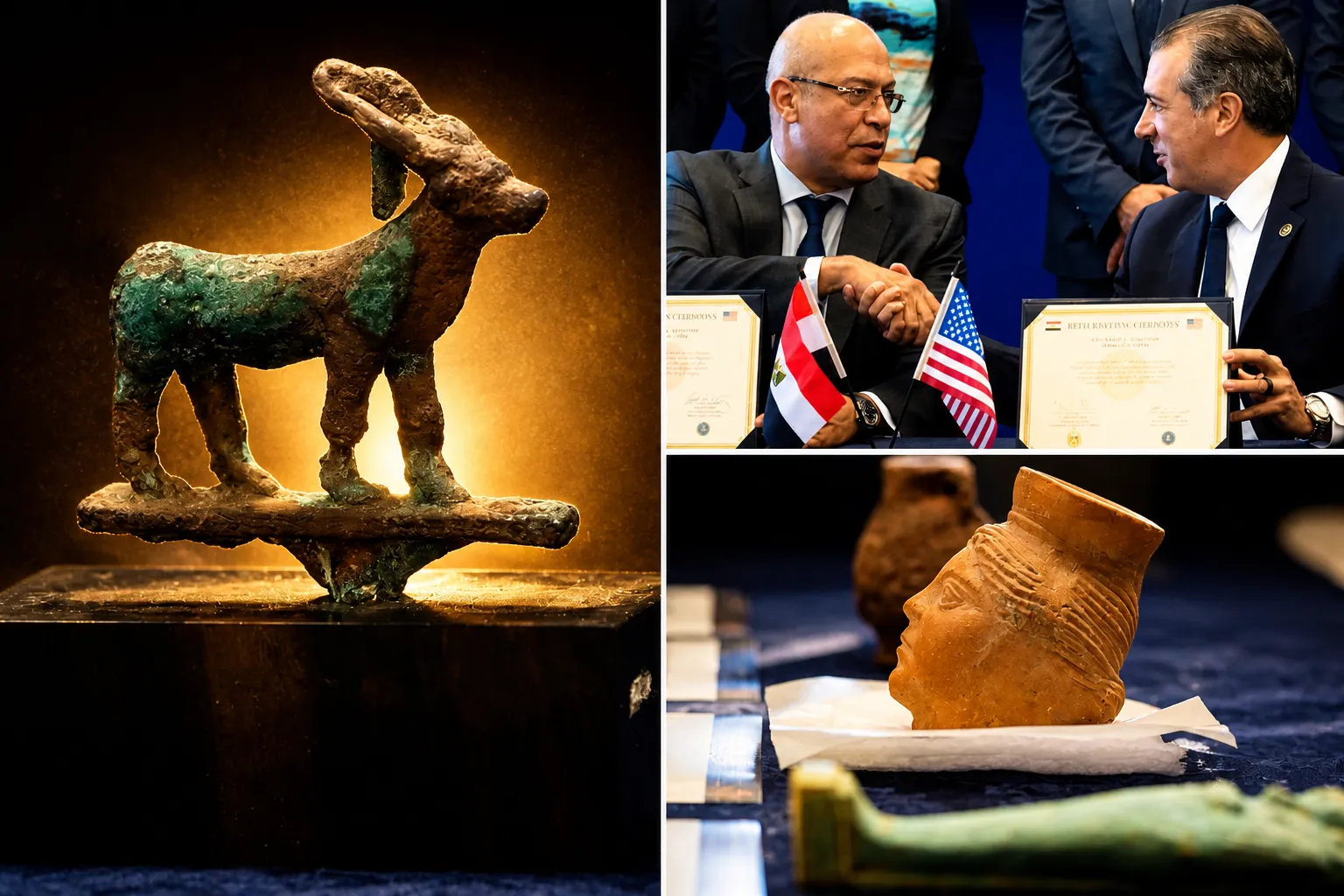
The FBI returned 48 stolen ancient Egyptian artifacts to Egyptian officials on Friday after tracing them to an illicit trafficking network.
The handover ceremony in Los Angeles marked the end of a probe that found the objects had been smuggled out of Egypt and brought into the United States without legal documentation. FBI Assistant Director in Charge Patrick Grandy, who oversees the bureau’s Los Angeles field office, led the repatriation effort alongside Egypt’s Consul General Dr. Hossam Aly.
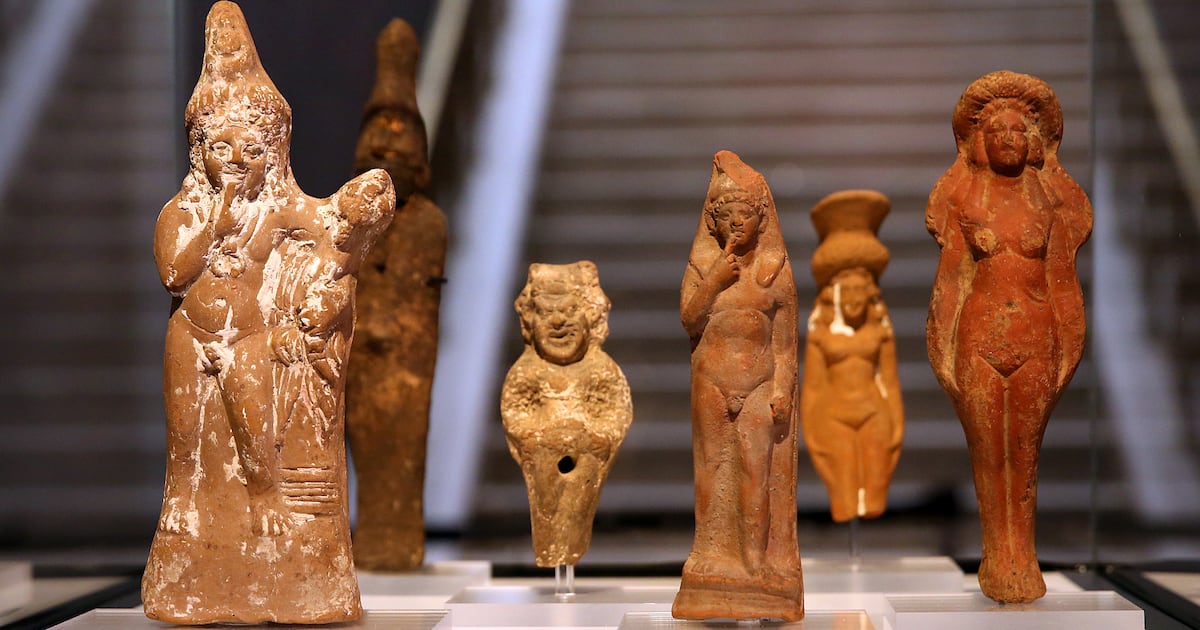
The collection includes carved figures, amulets and tomb equipment spanning the Pharaonic, Roman and Coptic periods. FBI analysis found no record that any of the 48 pieces had ever been legally removed from Egypt. Investigators with the bureau’s Art Crime Team traced every item to illicit trafficking operations.
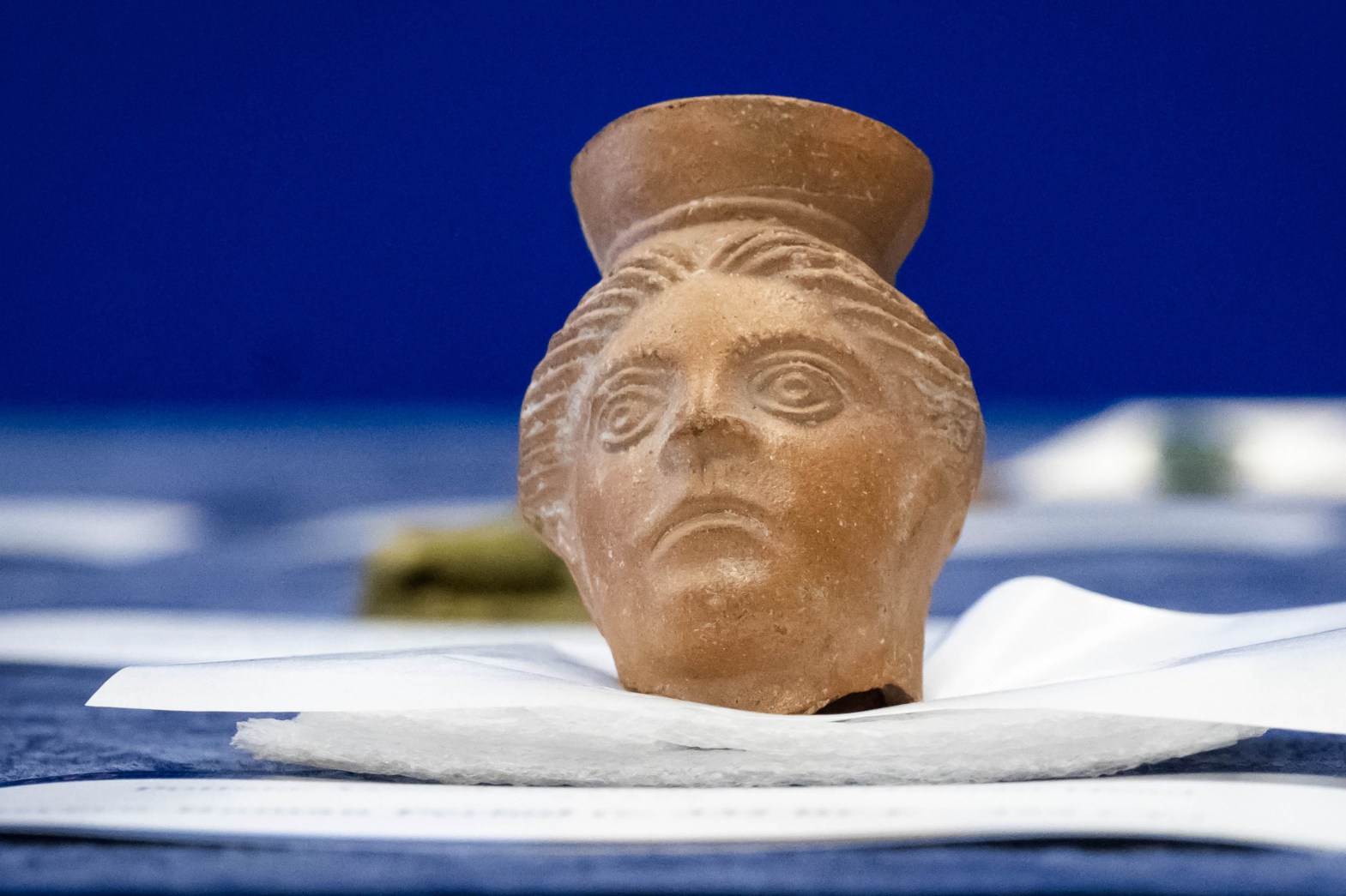
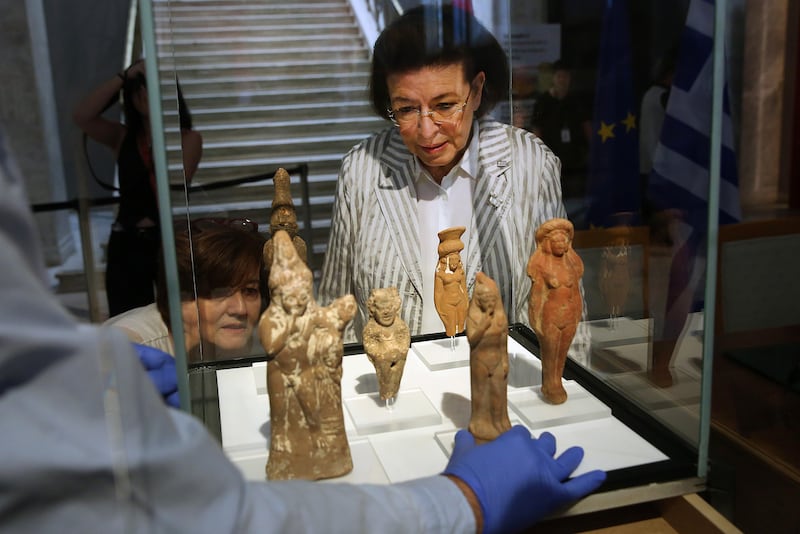
The case came to light after the artifacts’ most recent possessor conducted research and discovered their entry into the US was questionable. That tip triggered the FBI investigation that ultimately determined all 48 objects had been illegally trafficked. The original suspected trafficker is now dead, but authorities say the case remains active.
“The suspected trafficker is now dead,” Grandy said, adding that the investigation “remains open while authorities work to identify potential co-conspirators and locate other artifacts that may have been illegally obtained.”
With assistance from the US Department of State, antiquities experts and the FBI’s legal attache in Cairo, investigators confirmed the artifacts originated from Egypt and belonged back there.
“With the assistance of the US Department of State and antiquities experts, along with the FBI’s legal attache in Cairo, it was confirmed that all 48 objects originated from Egypt and should rightfully be returned to the people of Egypt,” Grandy stated.
Dr. Aly emphasized the cultural significance of the returned items. The artifacts were an “integral part of the history and cultural heritage of Egypt and its people,” he said.
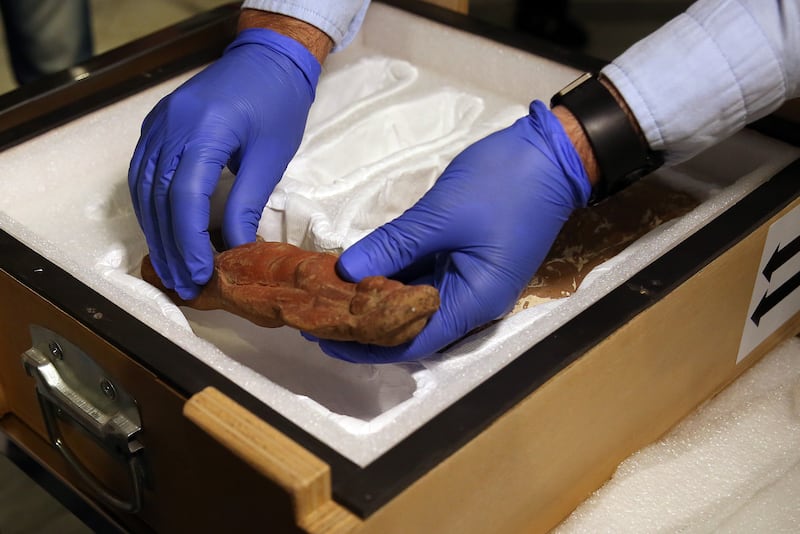
The FBI has long warned that the underground market for ancient treasures carries national security implications. Illicit trafficking of cultural property directly serves as a primary source of funding for transnational criminal and terrorist organizations, according to the bureau.
The FBI launched its Art Crime Team in 2004 as cultural-property crimes surged worldwide. The unit’s agents receive specialized training to investigate art and cultural-property crimes, with two team members stationed in Los Angeles. The team has recovered more than 20,000 items collectively valued at more than $1 billion.
US law enforcement has returned more than 5,000 cultural artifacts to Egypt over the past decade. Some investigations lead to prosecutions, while others run into the statute of limitations. Either way, the FBI says recovered objects ultimately go back to the citizens of the country they came from.
The Los Angeles return comes amid a broader surge in international repatriation efforts. In April, Manhattan District Attorney Alvin Bragg announced the return of 13 antiquities to Egypt collectively valued at nearly $2 million, twelve of which had been seized from the Metropolitan Museum of Art. Egypt’s Consul General Tamer K. El Miligy noted at that ceremony that the partnership between US authorities and Egypt in combating antiquities trafficking spans more than 15 years.