

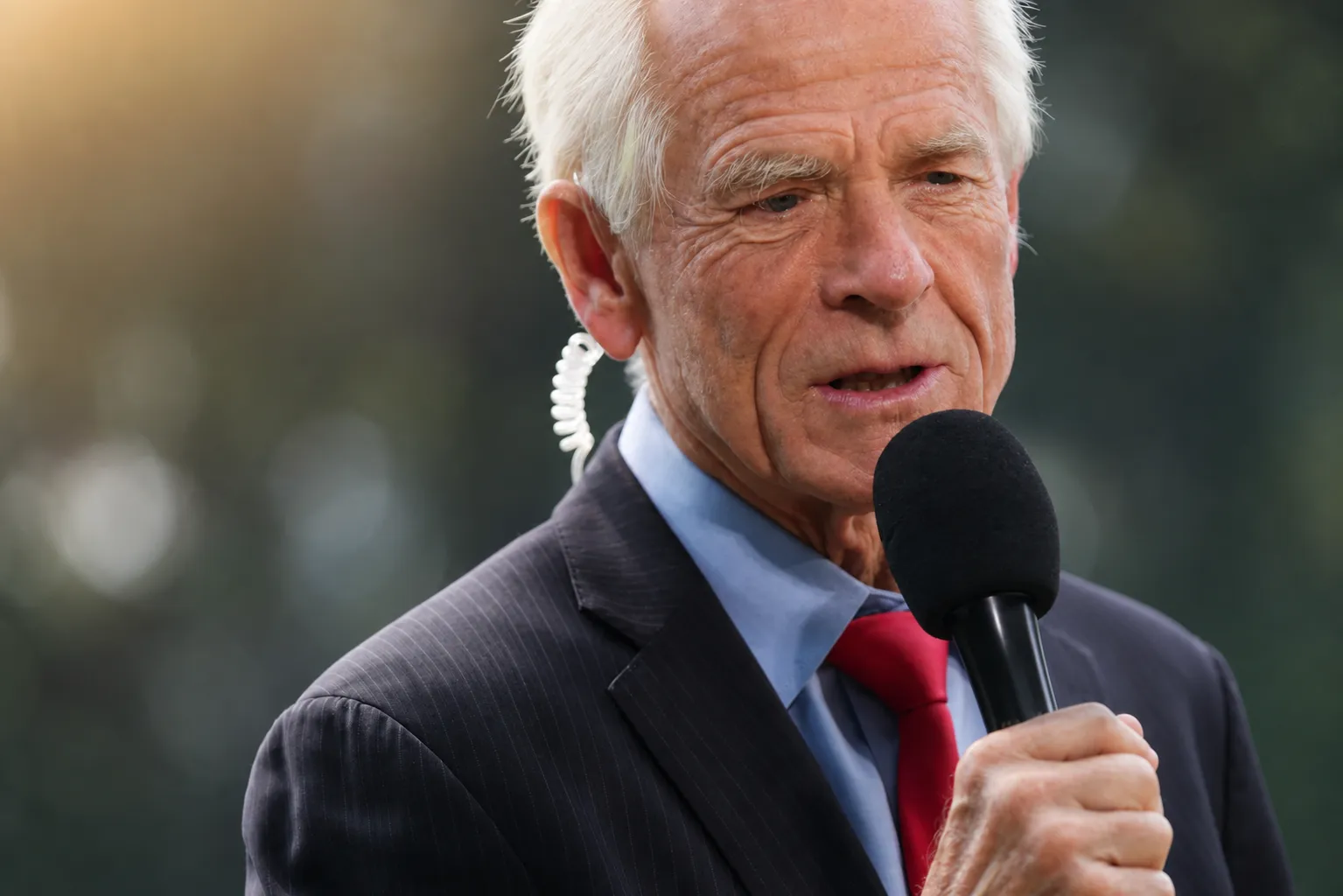
A federal appeals court on Tuesday upheld White House adviser Peter Navarro’s convictions for defying a subpoena from the House committee that investigated the January 6, 2021, attack on the Capitol. The three-judge panel from the U.S. Court of Appeals for the District of Columbia Circuit issued a unanimous ruling, rejecting Navarro’s central legal argument that he was shielded from complying with the congressional demand.
Navarro had maintained that President Trump invoked executive privilege to prevent him from cooperating with the committee, which required him to turn over documents and testify about his role in efforts to overturn the 2020 election. However, the court found that Navarro could not prove Trump had actually invoked such privilege. The judges ruled that a defendant in a contempt case must present evidence that a president actively invoked executive privilege, not simply claim it themselves.
“In short, Dr. Navarro has acknowledged that even if executive privilege had been invoked, that would not have excused his categorical failure to comply with the Select Committee’s subpoena,” wrote Circuit Judge Patricia Millett in the opinion.
The court’s analysis emphasized an important principle of constitutional law: a court cannot simply accept a defendant’s word that a president invoked privilege because doing so would impermissibly blur the lines of separation of powers. The judges wrote that “the authority to invoke executive privilege rests with a president or his designee,” and found no evidence that Trump had done so in Navarro’s case.
The appeals court also noted that Navarro initially asserted executive privilege unilaterally, without consulting with or receiving direction from Trump. Testimony from both an attorney and an adviser for Trump indicated that Trump never formally decided Navarro should be shielded by the privilege. The court affirmed that Navarro’s book and public comments about his activities could not be considered privileged since they were made in a private capacity after he had left government service.
Navarro, who served as trade adviser during Trump’s first term and is serving in a similar role in his second term, was convicted in September 2023 of two counts of criminal contempt of Congress. He was sentenced to four months in prison and fined $9,500, a sentence he has already completed. He reported to federal prison in Miami in early 2024.
The appeals decision marks another failure by Trump advisers to overturn legal consequences stemming from the January 6 Capitol riot. It also comes as the Trump administration has declined to defend Navarro’s appeal, making it unusual that his legal team argued alone before the three-judge panel.
The case stemmed from Navarro’s refusal to comply with a February 2022 subpoena from the House committee investigating the Capitol attack. The committee sought documents and testimony related to Navarro’s publicly stated role in what he called the “Green Bay Sweep,” a plan he outlined in a 2021 book. The strategy involved pressuring then-Vice President Mike Pence to delay certification of Electoral College votes from battleground states, with the goal of allowing Republican-controlled state legislatures to revisit their election results.
In his book titled “In Trump Time,” Navarro described the Green Bay Sweep as the “last, best chance to snatch a stolen election” from the Democrats. He had taken credit for developing this plan with Steve Bannon, another Trump confidant who also faced contempt charges and conviction. When the House committee sent Navarro the subpoena, he responded that his “hands are tied” and invoked executive privilege.
The House committee issued the subpoena demanding that Navarro produce documents by February 23, 2022, and appear for a deposition on March 2, 2022. He complied with neither demand. After Navarro refused to cooperate, congressional leaders voted to hold him in contempt and referred the matter to the Justice Department, which brought formal charges against him.
The three judges on the appellate panel—Millett, Cornelia Pillard, and J. Michelle Childs—were all nominated to the court by Democratic presidents. The original trial judge, U.S. District Judge Amit Mehta, was nominated by President Barack Obama. Notably, only hours after his release from prison, Navarro appeared at the Republican National Convention and told the crowd that “I went to prison so you won’t have to.”
The court made clear in its decision that when the subpoena was issued and Navarro was charged and tried, both Congress and the executive branch—during the Biden administration—were aligned in seeking accountability. The unanimous appellate ruling now closes another legal avenue for Navarro, though experts have suggested he could potentially seek review by the Supreme Court, which declined to keep him free while his appeal was pending.