

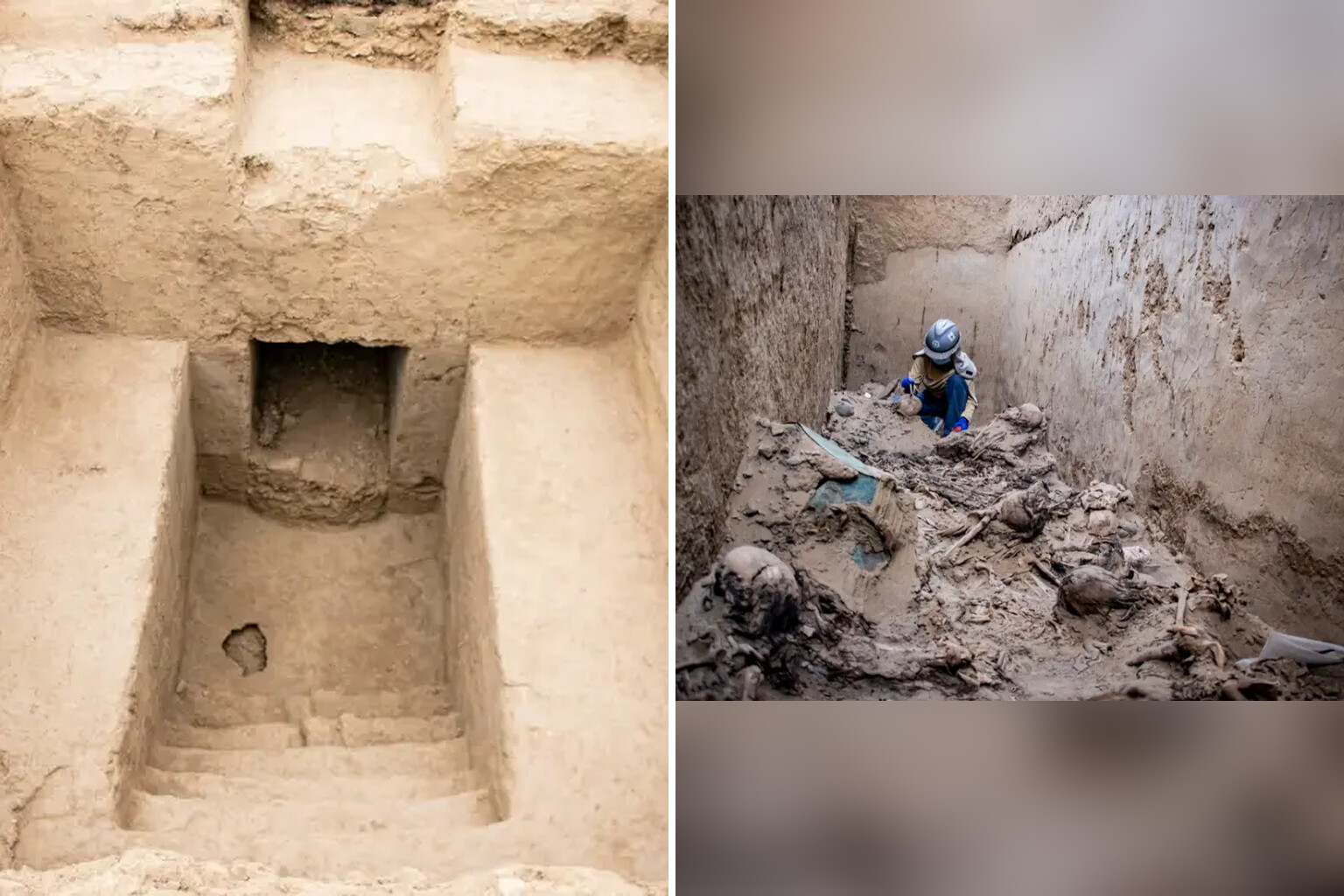
Archaeologists in Peru have uncovered a hidden tomb that lay untouched underground for roughly 600 years, revealing what researchers are calling an unprecedented window into Chimú elite burial practices.
The discovery was announced last month on X by Peru’s Ministry of Culture. Researchers working in La Libertad found an exceptionally well-preserved mausoleum believed to have been built for prominent members of the Chimú kingdom, which flourished between approximately 900 and 1470 CE. The Chimú were one of Peru’s major pre-Hispanic cultures, and their capital, Chan Chan, has been a UNESCO World Heritage site since 1986.
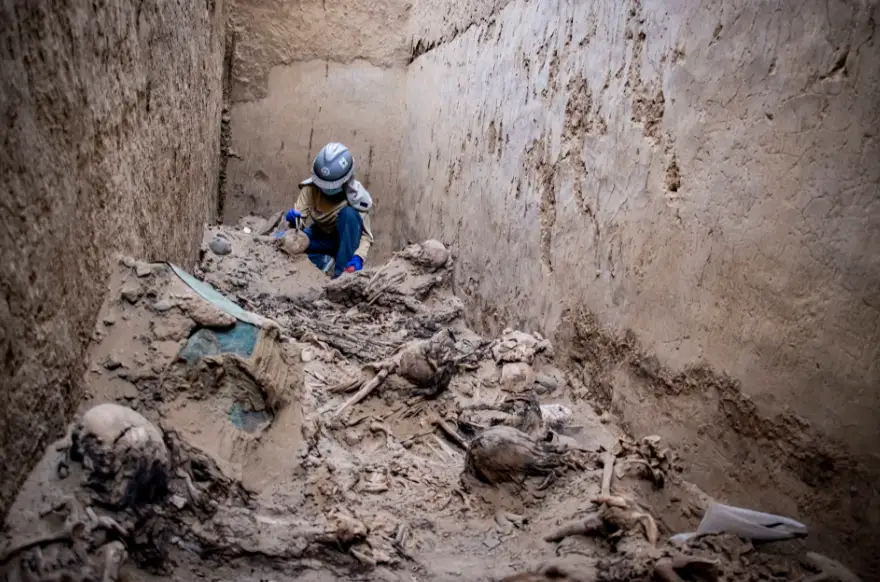
Inside the tomb, researchers found the skeletal remains of 38 different people. The remains of one person were found within the main chamber, while secondary areas contained weapons, metal emblems and the skeletons of 20 others. Eighteen more bodies were discovered on the platform. Many of the skulls featured traces of red pigment, thought to possibly be cinnabar, a red mineral made of mercury sulphide that was considered a “sacred pigment” during this period.
Henry Gayoso Rullier, head of research for the Chan Chan Archaeological Complex, told The Art newspaper:
“This pigment, likely mercury sulfide, known as cinnabar, is present across the Central Andes. It was used in pottery, murals, on warriors’ bodies, in sacrifices and on funerary masks covering the bodies and faces of the deceased.”
Jorge Meneses, the archaeologist responsible for the project, explained that the discovery reveals significant details about the funerary practices of the Chimú elite. He noted that the central chamber represents a kind of final record of a much longer cultural process.
“The central chamber can also be understood as a final photograph of a much longer process: the veneration of an ancestor belonging to a group politically linked to the Chimú Kingdom,” he explained.
Meneses added in a statement:
“What we knew came from looted platforms. Today we have the historic opportunity to study individuals and artifacts intact after 600 years.”
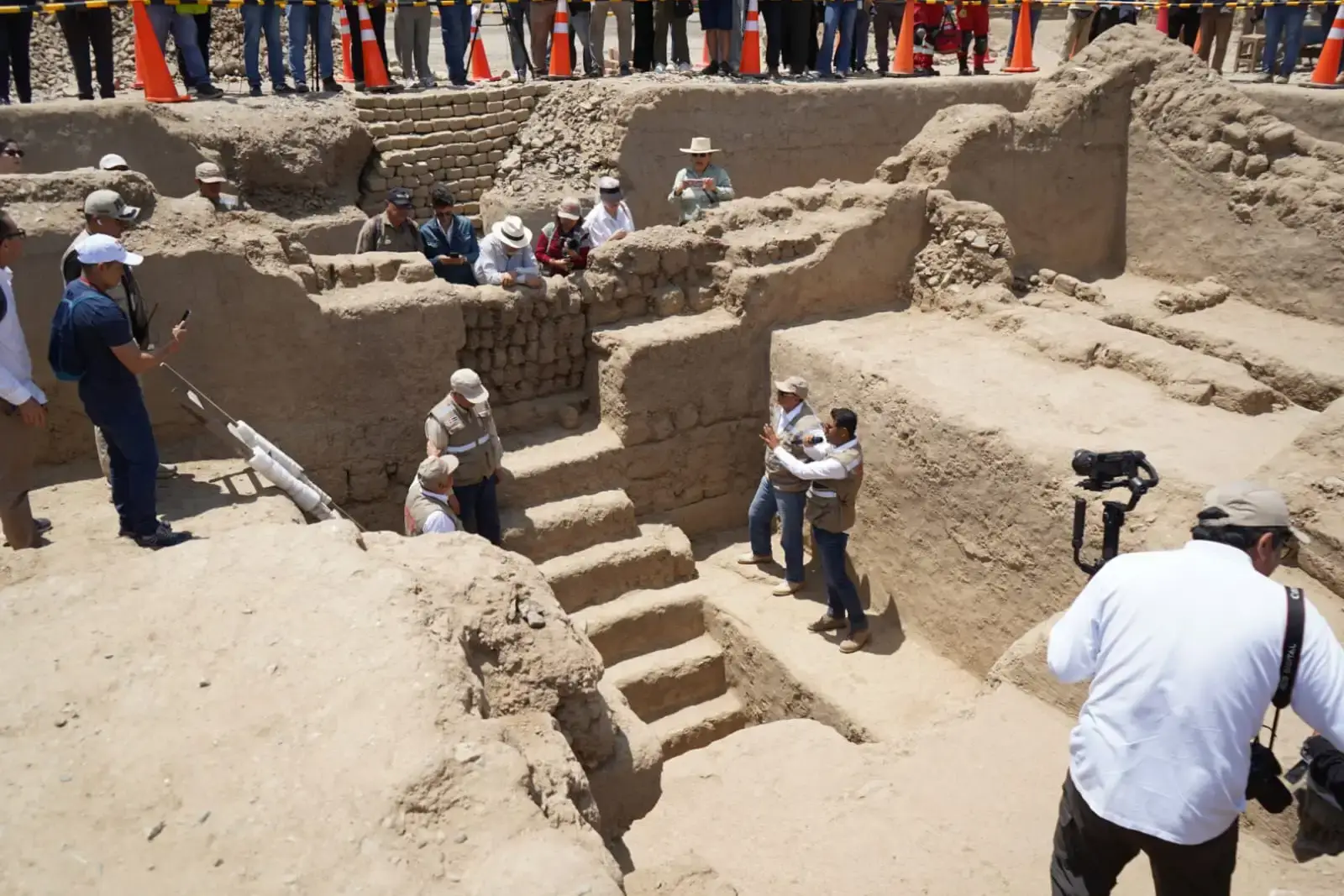
The religious significance of the burial practices extends beyond simple interment. Meneses elaborated that Andean cultures maintained active relationships with the dead.
“In the Andean conception, death did not necessarily mean the end of the relationship with the deceased,” he said.
The tomb also yielded approximately 60 ceramic pieces that scientists believe featured stylistic choices of the Inca civilization, which emerged long after Chimú culture had declined. This suggests possible continuity or later reuse of the sacred space.
Sinthya Cueva, Chan Chan’s research programme director, outlined the next steps for the recovered materials.
“Bioanthropological studies can reveal the age, sex and diet of the remains, along with biological connections between them,” she explained.
The 600-year period of undisturbed preservation makes this find particularly valuable for researchers. Previous knowledge of Chimú burial practices came largely from looted sites, leaving significant gaps in understanding. The intact condition of this mausoleum offers scientists their first opportunity to study complete contextual relationships between bodies, artifacts and architectural features.
The remains and objects are currently under analysis at the site.