

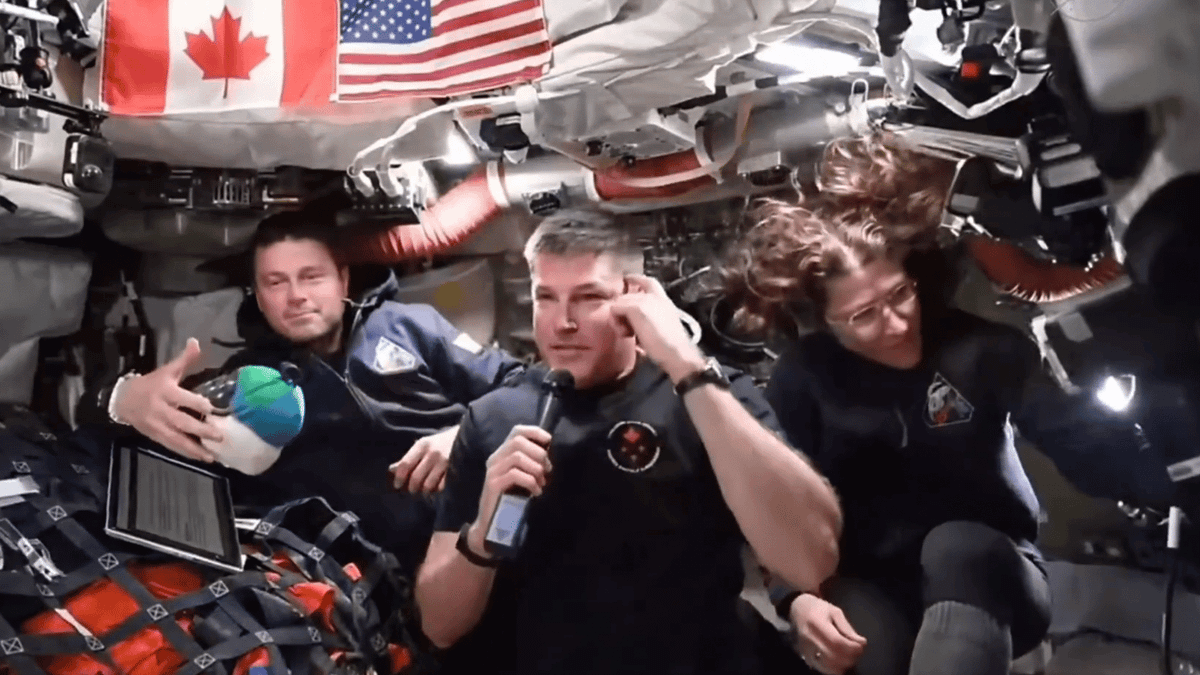
NASA’s Artemis II astronauts have found themselves shutting down another online conspiracy, even as they continue their journey toward the Moon.
Reid Wiseman, Victor Glover, Christina Koch, and Canadian astronaut Jeremy Hansen launched from Earth on April 1 and are currently in space.
As the first crew venturing to the Moon since Apollo 17 in 1972, the mission is historic. But alongside the excitement, the astronauts have also had to contend with a familiar problem: social media speculation that turns routine science into “proof” of something sinister.
This time, the debate is about what they can—or can’t—see in the sky.
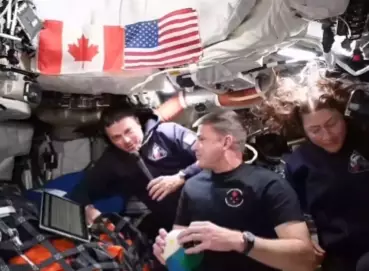
The conversation started during a livestream when someone asked the crew: “I wonder, do you still see stars in outer space?”
Hansen explained that while he has seen stars in space, he was surprised by how few he could make out compared with what he expected.
He said: “Yeah, I was actually just talking to my crewmates about that today. I’ve definitely seen stars in outer space, and I was saying I haven’t as many as I thought I would. Reid?” Wiseman then offered the straightforward reason: intense sunlight can overwhelm both cameras and human vision, much as it does on Earth.
That’s also why stars aren’t visible in a bright daytime sky from the ground, but become clear once the sky darkens on the night side of the planet.
He said: “We have so much illumination from the sun on the moon and the earth right now, it is hard at times to see stars, just like when you walk out in the daytime, you see a blue sky but no stars.”
Despite that, some viewers remained unconvinced.
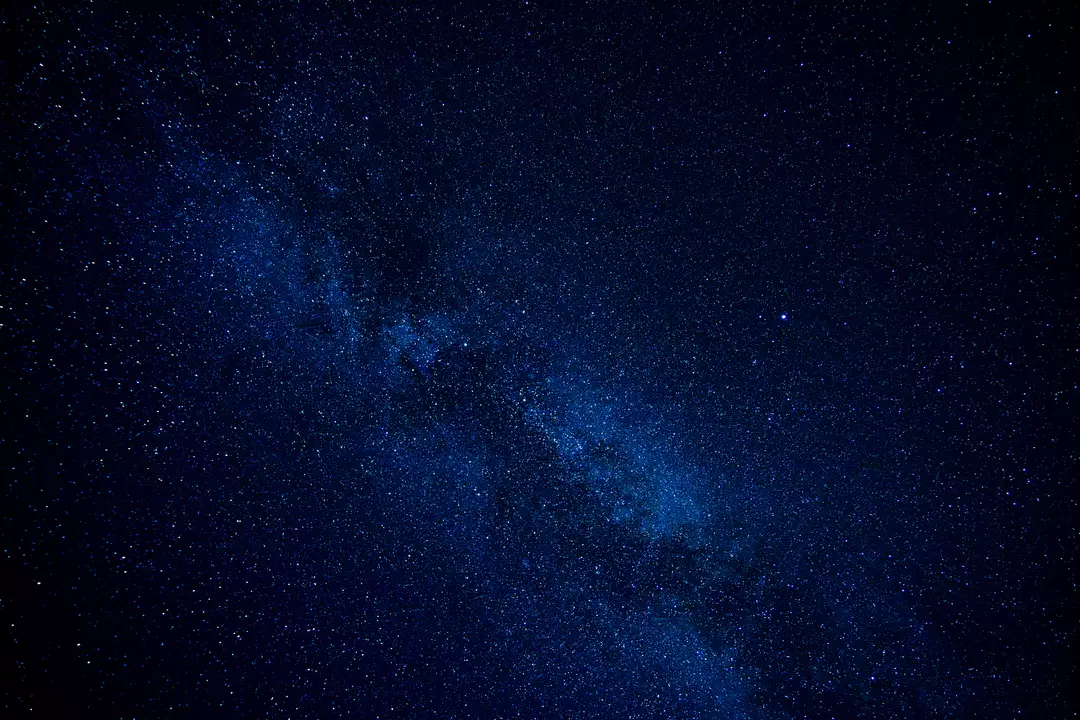
One X user argued that the crew should be able to see stars more easily because they’re closer to them, writing: “It’s hard to see stars in space but not inside earth? Yet y’all are miles closer? real ones know the earth is flat, encased under a firmament. Nobody can leave this place. The sun and moon are literally inside the earth.”
The post then went further, including a slur aimed at the crew.
As Emily Lakdawalla wrote in a 2019 piece for The Planetary Society, the effect is comparable to trying to photograph a person standing beside a brightly lit window—the strong light source dominates the exposure, making dimmer details harder to capture.
The same principle applies to human eyesight: distinguishing faint points of light becomes difficult when your view is competing with a powerful nearby source like the Sun reflecting off spacecraft surfaces and surrounding objects.
Even with a clear explanation, the discussion shows how quickly misunderstandings can turn into viral claims—regardless of how basic the underlying science may be.