

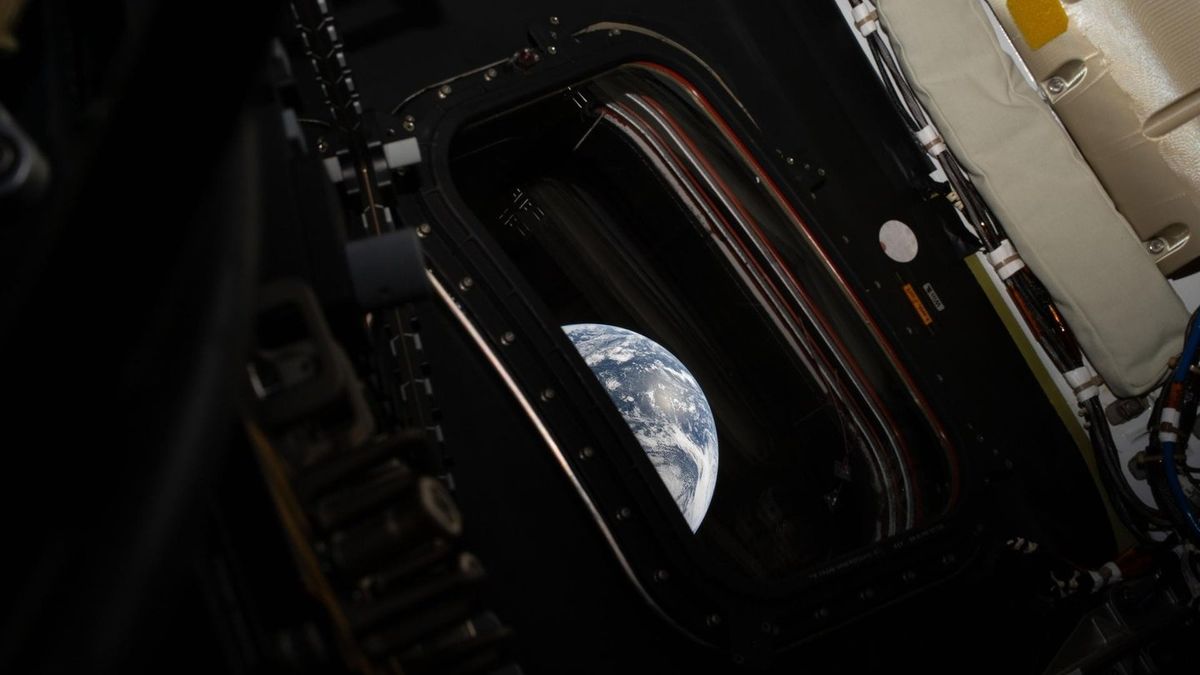
A tense stretch of radio silence during Artemis II ended with a striking call back to Earth from the Orion spacecraft after contact was restored with NASA Mission Control.
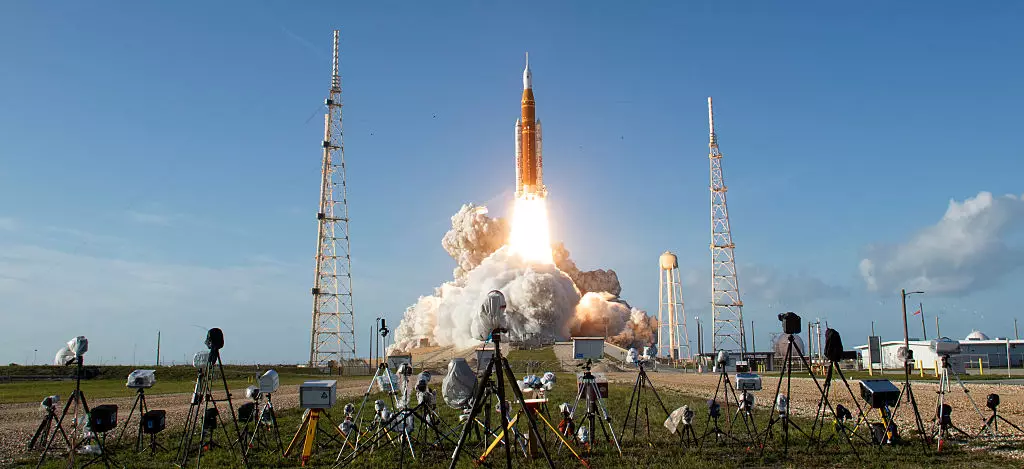
NASA astronauts Reid Wiseman, Victor Glover, Christina Koch, and Jeremy Hansen lifted off on Wednesday (April 1) for a lunar flyby mission, with a planned return to Earth on April 10.
After a smooth outbound journey, Orion — NASA’s deep-space crew capsule built for missions beyond low Earth orbit — swept past the far side of the Moon on Tuesday, reaching its closest point to the lunar surface before turning onto the trajectory home.
That far-side pass also meant an unavoidable communications blackout. With the Moon between the spacecraft and Earth, radio contact dropped, leaving the crew and flight controllers separated for a nail-biting 40 minutes.
Mission Control monitored the spacecraft’s progress and waited for the link to come back. When the silence finally ended, it was Koch who broke through first.
“Houston, Integrity, comm. check.”
“It is so great to hear from Earth again.”
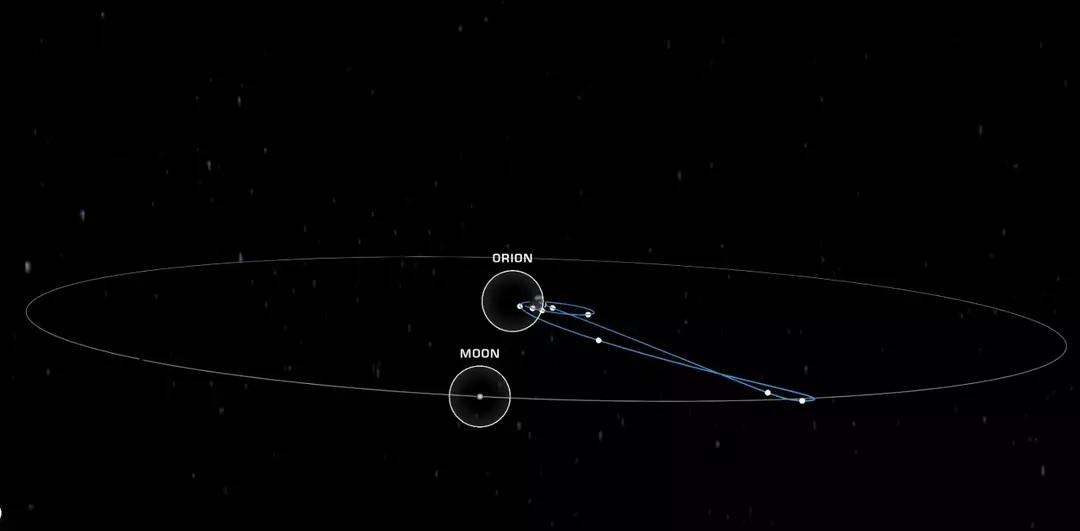
During the blackout, Orion had to operate autonomously. With no ability to receive instructions from the ground, the capsule relied on onboard systems to time commands and fire its engines properly, placing the spacecraft on its Earth-bound path without real-time support from controllers.
On the ground, engineers followed the telemetry they could see and awaited confirmation by voice. Once communications returned, the steady stream of data and Koch’s call brought clear relief in Houston.
At 1:57pm ET, Orion reached 252,757 miles from Earth — a distance that pushed the crew beyond the previous benchmark for human spaceflight distance. In doing so, the four astronauts surpassed the Apollo 13 record set in 1970, becoming the farthest-traveling humans in history.
Artemis II also marks the first human voyage to the Moon’s vicinity since Apollo 17 in 1972 — the last Apollo mission to land astronauts on the lunar surface.
With the flyby complete, Orion is now transmitting its stored data back to Earth. Engineers and scientists are downloading everything collected onboard — including performance readouts, navigation details, and imagery — to analyze in the days ahead.
NASA has also released numerous photos and videos captured during the flyby. The new lunar images have been described as some of the sharpest ever produced, and the crew briefly marked the milestone before returning to their normal workload.
Alongside its technical objectives, the mission is also carrying a selection of symbolic items — a continuation of a tradition that has accompanied US human spaceflight since the 1960s. Among the mementoes aboard Orion are the following:
During the uncrewed Artemis I mission in 2022, NASA flew tree seeds into space that were later planted at 236 sites across the United States.
Now, Artemis II is carrying soil samples collected from around the roots of 10 of those “Moon Trees,” which NASA says are ‘representing the full cycle of exploration: launch, flight, growth, and return to space again’, NASA explains.
The spacecraft is also carrying an SD card filled with names submitted through the agency’s Send Your Name to Space campaign, which invited the public to be included in the mission in a small but lasting way.
According to NASA, the kit also includes ‘a variety of flags, patches, and pins to be distributed after the mission to stakeholders and employees who contributed to the flight’.
On loan from the Smithsonian’s National Air and Space Museum, a one-inch square of muslin from the Wright brothers’ 1903 flight is traveling with the crew — more than 120 years after the first powered flight.
After Orion returns to Earth later this week, the fabric piece is expected to be sent back to the museum to rejoin related swatches already preserved there.
An American flag is also onboard, though it’s far from new to spaceflight. The 13-by-8-inch flag has previously flown on STS-1 and STS-135 — the first and last Space Shuttle missions — and it also traveled on NASA’s first crewed test flight of SpaceX’s Crew Dragon.
Another flag is making its first trip beyond Earth after decades of waiting. It had originally been set to fly on the cancelled Apollo 18 mission, and is now finally getting its long-delayed journey.
“The flag serves as a powerful emblem of America’s renewed commitment to human exploration of the Moon, while honoring the legacy of the Apollo pioneers who first blazed the trail,” NASA explains.
Also aboard is a small piece of lunar-history documentation linked to Ranger 7 — launched on 28 July 1964 — which became the first US mission to successfully reach the Moon’s surface and return 4,308 high-resolution images.
NASA explained that the 4-by-5-inch negative ‘represents a major turning point in the race to the Moon that will be echoed today through the success of Artemis’.