

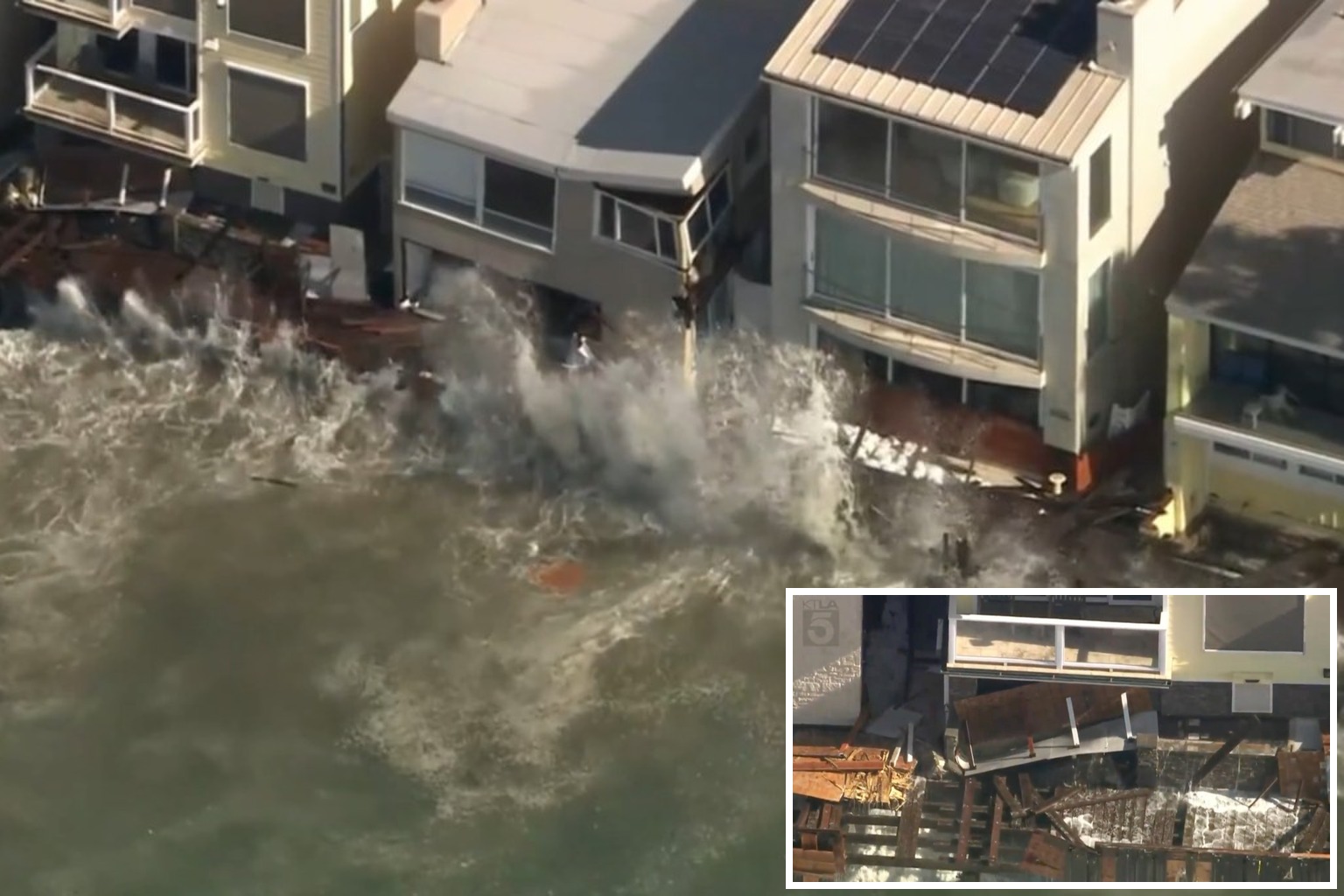
A Southern California beachfront home teetered on the edge of collapse Friday as powerful waves from former Hurricane Rachel chewed through the Long Beach Peninsula boardwalk.
The property, located along the vulnerable coastline, had already been red-tagged by officials a day earlier as erosion accelerated beneath its foundation. Two neighboring homes received yellow tags warning of structural instability, fire officials confirmed. All three buildings stood unoccupied when the worst of the storm surge struck shortly after 9 a.m.
KTLA helicopter footage showed massive sections of the splintered boardwalk breaking free and drifting into the Pacific as high tide peaked. Floodwaters submerged nearby streets and patios, leaving behind a landscape of twisted lumber and undercut sand.
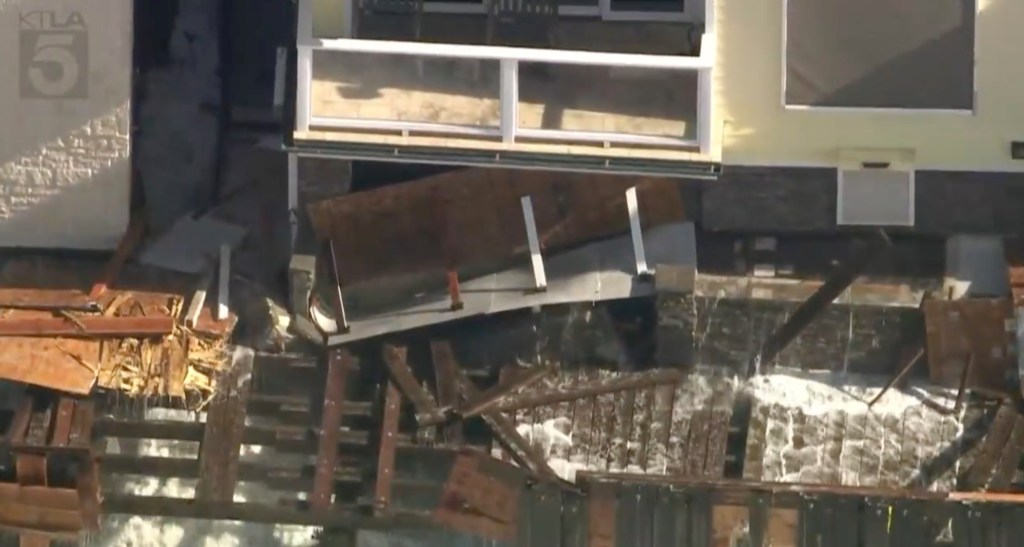
Rich Prickett, reporting from the station’s helicopter, delivered a grim assessment of the destruction unfolding below him.
“This is easily the most damage I have seen over the past couple of weeks,” he said.
Prickett watched the infrastructure dissolve in real time as the morning wore on.
“Now the entire boardwalk is just starting to shred away, and now some of these homes are being impacted even more severely,” he continued.
The damage capped two weeks of escalating coastal erosion along the peninsula, with each successive tide taking a deeper bite from the shoreline. What began as localized undermining of beach access walkways had progressed to direct threats against residential structures.
Crews spent Friday evaluating whether the three tagged properties and surrounding residences would require mandatory evacuation. The assessment came under pressure from forecasters warning that conditions remained dangerous and could worsen dramatically.
The National Weather Service projected Monday’s storm surge would reach approximately 7 feet, a height that would compound the already compromised structural integrity of oceanfront properties. Stronger swells building Sunday night into Monday threatened to coincide with peak high tides, creating a period of maximum coastal vulnerability.
Officials had not issued evacuation orders by Friday afternoon but emphasized the situation remained fluid as damage assessments continued. The combination of red and yellow tags indicated a sliding scale of structural risk, with the single red-tagged property facing imminent danger of failure.
The Long Beach Peninsula, a narrow strip of land buffering inland areas from Pacific storm energy, has long faced acute exposure during tropical and hurricane remnant events. Former Hurricane Rachel’s trajectory delivered sustained wave energy to a coastline already softened by weeks of above-normal surf.
Emergency responders monitored tide gauges and erosion markers throughout Friday, tracking how rapidly the undercutting advanced toward additional homes. The shredded boardwalk, once a recreational amenity, now served as visible evidence of how quickly protective barriers could convert into debris hazards.
The weekend forecast called for continued elevated surf as Rachel’s remnants tracked northward, keeping the peninsula in a zone of enhanced wave action through at least Monday.