

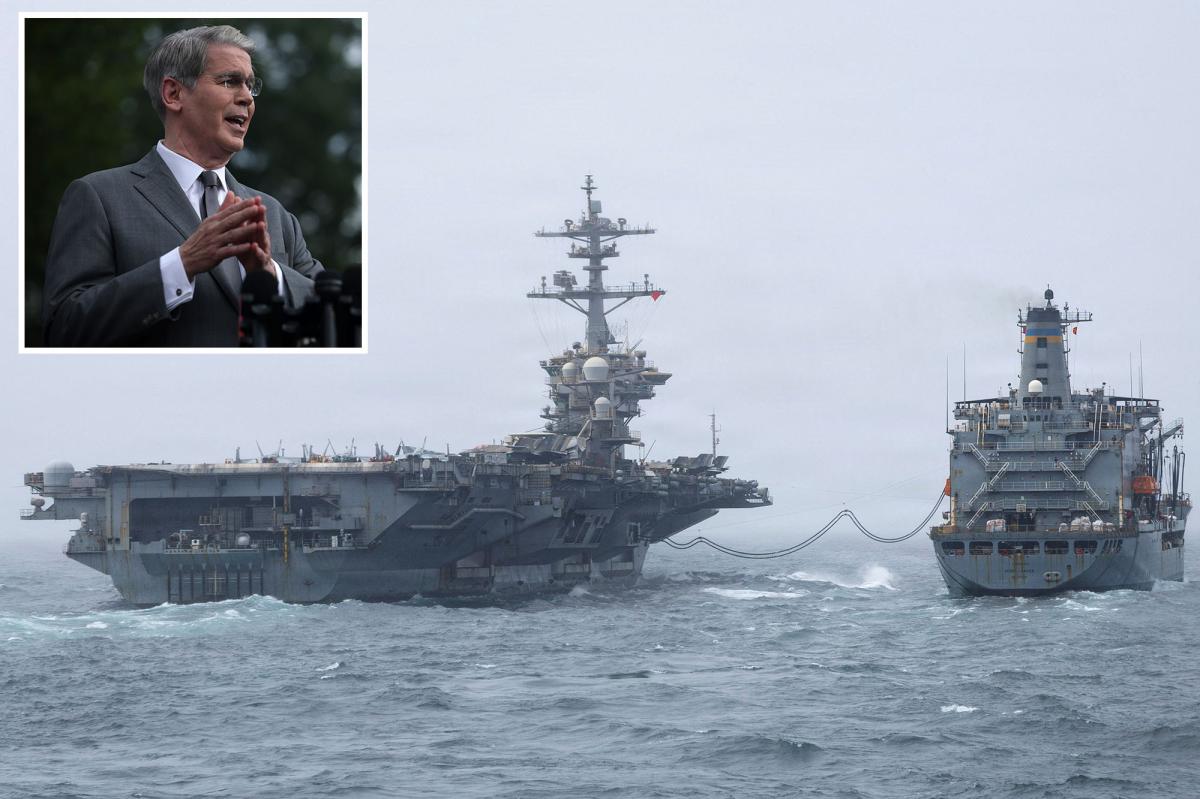
Treasury Secretary Scott Bessent issued an ultimatum to U.S. Allies Thursday, declaring they must choose sides in the escalating economic campaign against Iran.
Bessent, 63, told CNBC’s “Squawk on the Street” that the Trump administration will deploy secondary sanctions to punish any country or company that continues doing business with Tehran. The warning came as the administration prepares to unveil what Bessent described as the toughest sanctions in history at a Monday press conference.
“If you insist on doing business with them — either transferring money, buying their oil, doing seaborne ship transfers — then the US Treasury and the US government will put its full might and force toward enforcing against you,” he said.
“It is time for our allies and the rest of the world to make a decision, and we are going to squash the economy of this murderous regime.”
Bessent framed the upcoming measures as a decisive escalation of the “maximum pressure” policy President Trump reinstated after returning to office. The strategy has intensified dramatically since U.S. Military operations against Iran began in February.

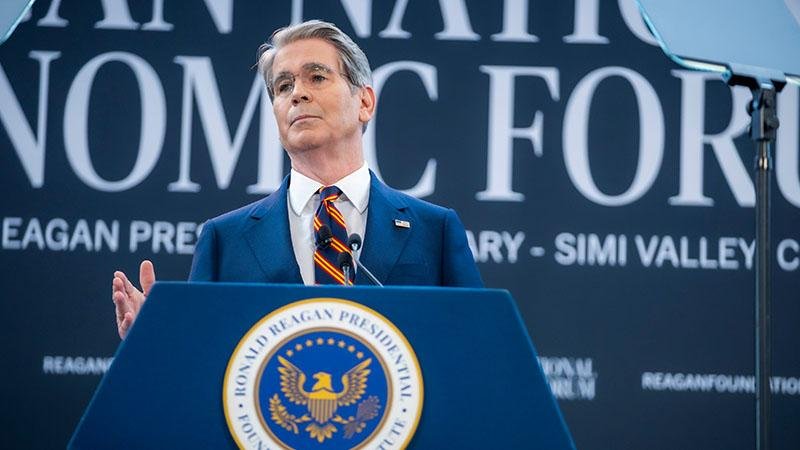
The secretary outlined a dual-track approach combining the existing maritime blockade with unprecedented financial restrictions. “It is a one-two punch. We have the blockade, and we are going to have the toughest sanctions in history,” he continued.
Bessent expressed absolute confidence in the strategy’s effectiveness, citing recent precedents. “I will tell you this will work. It worked in Venezuela once we put up the blockade. It is working in Cuba right now, and it is going to work in Iran — and we are going to collapse this regime.”
The sanctions will specifically target Iran’s ability to fund its military and proxy networks, Bessent explained. “These toughened sanctions will curtail their ability to project power through their proxies. It will mean that they cannot pay the military, and we have substantial inflation, both food inflation and ordinary inflation in Iran.”
The “you’re either with us or against us” language echoes the Bush administration’s post-9/11 rhetoric, but Bessent applied it explicitly to economic alignment. His threat of secondary sanctions means third-party nations could face exclusion from U.S. Markets if they maintain trade with Iran.
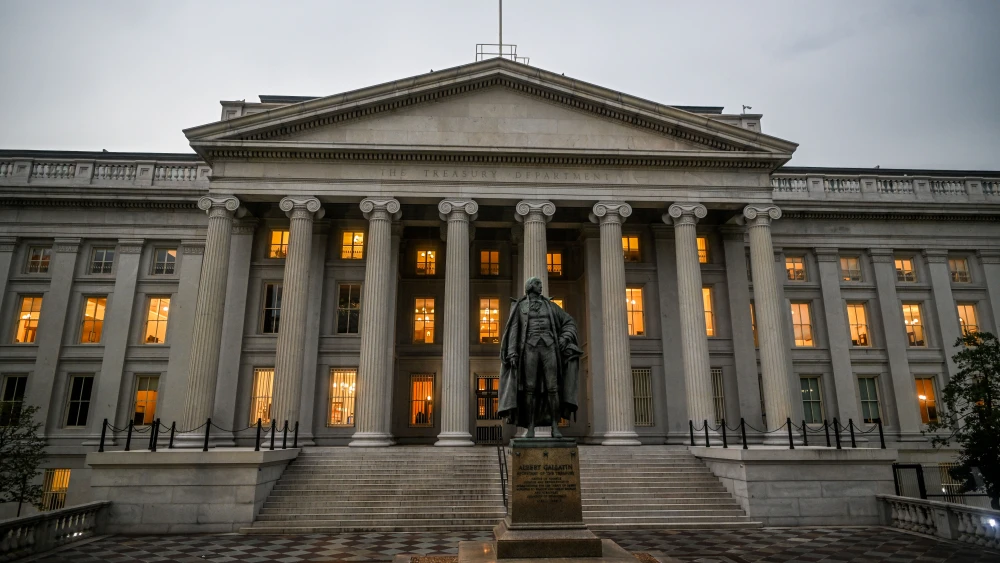
The timing connects to months of stalled negotiations through which Trump has sought to dismantle Iran’s nuclear program. Military action began in February after diplomatic efforts faltered, and the administration has since pursued what Bessent has termed “Economic Fury” alongside the Pentagon’s “Operation Epic Fury.”
Bessent’s uncompromising stance follows his earlier social media pledges regarding the conflict. In a June 11 post on X, he wrote: “The Iranian regime will lose the zero-sum game it is playing. Any damage it inflicts on our allies in the Gulf will be paid for with funds extracted from Iranian Accounts.”
He added in that same post: “Any tolls paid to the Persian Gulf Strait Authority will be offset by funds extracted from their accounts.”
The secretary has previously urged European partners to intensify efforts against Iranian financing networks. At a May conference in Paris, he told allies that Washington is “too often” alone in confronting Tehran’s financial infrastructure and called on governments to “step up and join us in rooting out the financing that sustains” terrorism.
Trump announced in late June that he had canceled planned strikes against Iran at the last minute after discussions reached the highest levels of Iranian leadership. “I have, as President of the United States of America, cancelled the scheduled strikes and bombings against Iran this evening,” he wrote in a statement posted to Truth Social. He said the deal was approved by multiple regional partners including Israel, Saudi Arabia, UAE, Qatar, Turkey, Pakistan, Bahrain, Kuwait, Jordan and Egypt, though the agreement was never finalized and the blockade remained in place.
Trump followed that announcement with a threat of future military action, writing that the U.S. Would hit Iran “VERY HARD TONIGHT” and eventually “take Kharg Island, and other oil infrastructure points, and assume total control of their Oil and Gas Markets.”
The economic pressure has already severely constrained Iranian trade. A Chamber of Commerce official warned this week that land routes cannot replace blocked maritime commerce, noting that replacing a single ship would require roughly 2,500 trucks. Iran receives approximately 400 to 500 ships carrying essential goods annually, making overland alternatives impractical.
The rial has plummeted and inflation has soared, with food prices nearly 134 percent higher than a year earlier as of June data. Former Treasury official Miad Maleki told Eye for Iran that the post-war economic reality may pose the greatest threat to regime stability.
Bessent’s Monday announcement will detail the specific mechanisms of the new sanctions regime.