


Bryan Johnson, the entrepreneur known for spending vast sums in an effort to slow down aging, has suggested he may be rethinking the very experiment that turned him into a public figure.
Writing on X on Wednesday, July 29, the 48-year-old acknowledged that his long-running pursuit of longevity may have gone beyond what he originally envisioned.
“Been thinking things over and wonder if I’ve taken this whole longevity thing too far,” he wrote.
The remark comes shortly after Johnson shared that he had been diagnosed with a rare autoimmune illness, and just days after unveiling plans to create a clone of himself for future research. Together, those updates have prompted fresh debate over whether his anti-aging obsession is reaching uncomfortable territory.
Johnson recently said he has autoimmune gastritis (AIG), a long-term condition in which the immune system attacks the stomach lining.
As a result, the cells that produce stomach acid are damaged, making it harder for the body to absorb iron and vitamin B12 properly.
There is no approved cure for AIG at present. Treatment typically focuses on symptom control, watching for complications including stomach cancer, and addressing deficiencies with iron or B12 supplements.
The condition remained undiagnosed for over a decade, despite Johnson’s extensive health-tracking efforts. He had reported chronically low ferritin levels for at least 11 years before the condition was confirmed through endoscopy with biopsies and elevated anti-parietal cell antibodies.
been thinking things over and wonder if i’ve taken this whole longevity thing too far
— Bryan Johnson (@bryan_johnson) July 30, 2026
Rather than simply live with the diagnosis, Johnson said he planned to ‘try and solve it’ using intensive medical tracking and experimental therapies, mirroring the direct, self-driven strategy he has applied to the rest of his health regimen.

Johnson’s public image has been built around an intensely measured lifestyle involving large numbers of daily supplements, rigid eating habits and even plasma-based procedures, all with the aim of slowing or reversing the body’s aging process.
That narrative took another unusual turn last week when he announced on July 21 that he was developing what he called a “clone” of himself, called ‘Baby Bryan’. However, the process is not actual human cloning. Johnson used induced pluripotent stem cells (iPSCs) created from his blood cells, which are reprogrammed to behave like embryonic stem cells. He claimed that the cells, which currently exist in a petri dish, might one day provide organs, blood and other biological material to support his own life extension efforts.
Johnson said the stem cells could allow him to test therapies on the clone, grow organs for transplantation, develop new treatments, and inject young cells into his body. He noted that because the cells would be derived from his own DNA, they would be less likely to be rejected than donor organs.
The announcement sparked intense backlash on social media, with critics raising concerns about the ethics of the approach and questioning whether treating potential cellular material as disposable parts for anti-aging purposes was appropriate.
Seen in that context, Wednesday’s post stood out to many observers as an uncommon moment of hesitation from someone usually unwavering in his commitment to his ‘unique’ practices.
Responses on X were divided, with some people urging him to keep going despite the criticism.
One wrote: ‘Person who is truly spiritual will never wish to live forever. And nobody who becomes more spiritual/religious ever regrets it.’
Others took the opportunity to challenge the broader goal behind his years of experimentation.
A third user wrote: “Bryan, you are a scout. One of the first to actually challenge an idea. But sadly the idea of ‘not dying’ is unattainable. Choose something realistic. Living to 115-120 should be the goal.”
In another post, Johnson argued that the hostile reaction to his diagnosis said more about people’s discomfort with his attempt to push against the limits of aging than about the condition itself.
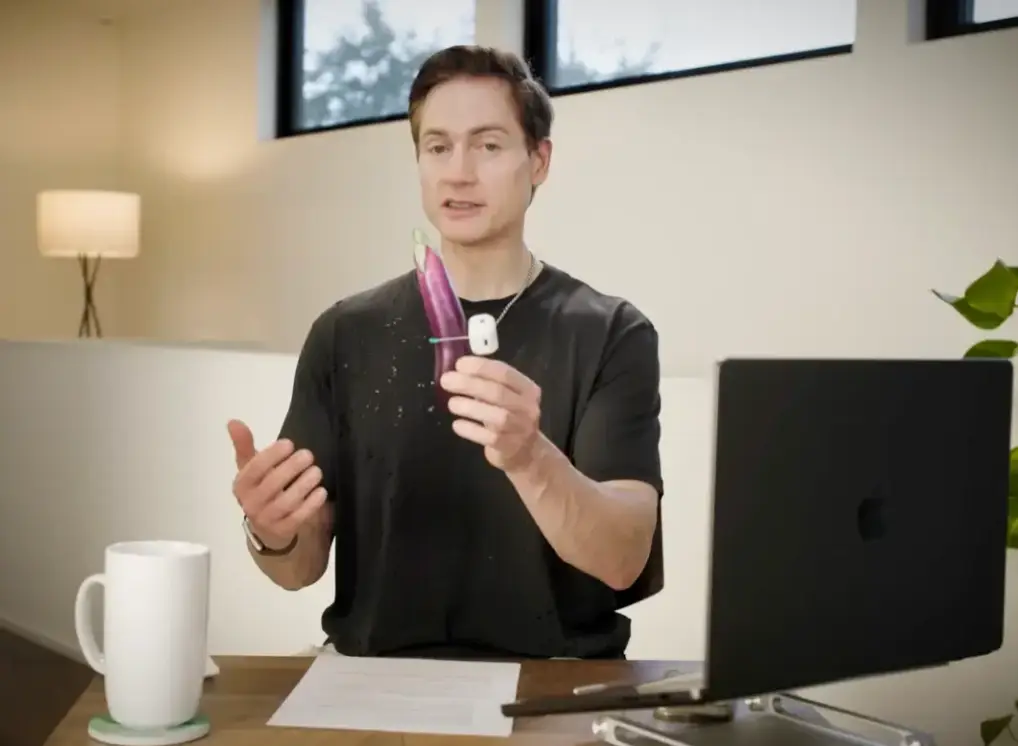
His anti-aging efforts have also extended to highly personal experiments. Johnson has openly documented attempts to restore what he describes as his ’22-year-old penis’, using everything from semen testing and circulation checks to Botox and shock wave therapy.
He has claimed the process helped reduce his ‘erection age’ by more than half.
Johnson has also drawn criticism for comparing his own ‘erection data’ with that of his 19-year-old son.

He first went viral in 2023 when he revealed that he, his then-17-year-old son and his 70-year-old father had participated in what he called ‘the world’s first multigenerational plasma exchange’.
During that procedure, a litre of Johnson’s blood was removed and its plasma separated before he received an infusion of the same volume of plasma from his son.
Later, after reporting ‘no benefits’, Johnson said he was ‘no longer injecting my son’s blood’.
He added that he had since ‘upgraded’ to ‘total plasma exchange’.

Some of Johnson’s more publicized experiments have involved psychedelic drugs. Last year, he posted about a trip after taking 5g of magic mushrooms and later said he was ‘happy to be alive’. He also said the experience had ‘changed’ him, though ‘probably not as you’d expect’.
He also described the aftermath of taking 27mg of 5-MeO-DMT, known as the ‘world’s most powerful’ hallucinogenic, saying the experience left him ‘stunned beyond comprehension’.

More recently, Johnson offered a glimpse into his daily schedule, saying his morning routine alone lasts four hours and 46 minutes.
“My morning routine is always evolving as we update protocols. This is what I’m experimenting with right now,” he writes on his website.
1. Wake up around 5 am
2. Oral hygiene
3. Light in eyes
4. Breath work
5. Pre-workout nutrition
6. Exercise
7. Sauna
8. Red/NIR light therapy
9. Focused shockwave therapy on joints
10. Shower
11. Hair growth serum
12. Skincare
13. Breakfast