


Auburn University mechanics cracked a decades-long aviation mystery after spotting “blue goo” inside a critical engine component, exposing a design flaw in America’s most widely used training aircraft that had been linked to unexplained crashes since 2001.
Steven Brandon, an FAA-certified aircraft technician, said the warning signs had circulated among mechanics for more than twenty years. “Mechanics have been talking about it since the 2000s; it’s just gotten more noticeable,” he told the Wall Street Journal.
The Cessna 172S Skyhawk, a single-engine, four-seat plane, serves as the default trainer for flight schools across the country, with at least 3,000 currently registered in the US. The 172S variant features a more powerful redesigned engine than earlier 172 models, but that upgrade came with a critical change: engineers repositioned a servo to the underside of the motor.
Any time the engine shut down, residual fuel in the system could drain downward toward or into that servo. Ring-shaped rubber seals around a venturi airflow meter were meant to block fuel from reaching air-only chambers. When those seals failed, fuel contamination could scramble the servo’s signals, jam moving parts, and trigger sudden engine power drops.
The Auburn team used fuel dye to trace the leak. When they found “blue goo” — evaporated fuel residue — inside the servo, it confirmed their theory. They discovered the substance in 40 out of 44 Cessna 172S aircraft in their fleet.
Fast turnaround times at busy flight schools amplified the danger. Leaked fuel might evaporate in roughly thirty minutes, but during peak summer operations, Auburn aircraft sometimes sat on the ground for twenty minutes or less between practice flights.
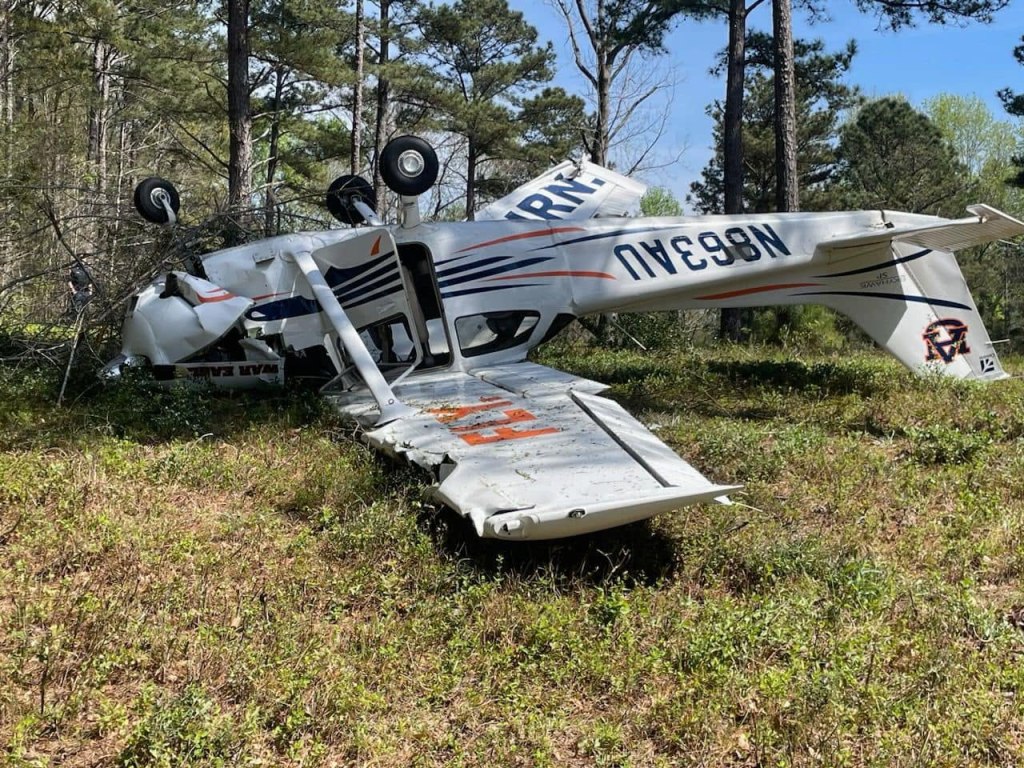
The investigation gained urgency after a string of 2024 crashes involving sudden unexplained power loss. Flight student Aliya Applin survived a March crash. Others were not as fortunate. In September, flight instructor Frederic Hewett, 37, and student Roger Shimizu, 45, died when their Cessna 172 crashed and burned at San Diego’s Montgomery-Gibbs Executive Airport after the engine appeared to stall.
Stunned by the scale of contamination across their fleet, maintenance specialist Marlin Priest pushed Auburn’s team to reach out to other flight academies. At least one reported it had filed multiple technical reports to the FAA about the servo issue and received no response.
“The NTSB and the FAA allowed the manufacturer to do all the testing. That’s kind of like putting the fox in the hen house and asking him to guard the chickens,” Priest told the WSJ.
The problem had surfaced in crash reports dating back to 2001, yet the Federal Aviation Administration never launched a full investigation. As many as 8,000 aircraft worldwide could carry the defect, according to the WSJ report.
General aviation’s safety record underscores the stakes. Small private planes have an accident rate 34 times higher than commercial flights, and general aviation accidents prove 11 times deadlier than car and light truck crashes, based on a WSJ analysis of National Transportation Safety Board data.
Textron, which manufactures the aircraft, issued a statement saying, “We remain committed to working alongside the FAA and our customers in our mission to provide the flying public with a general aviation system built on transparency, safety and confidence.”
The NTSB said in a statement that the accident engine “was initially examined at an aircraft recovery facility under the supervision of an FAA inspector.” The board noted that servo contamination was identified during that examination, but added it could not “endorse or confirm” whether investigators considered pilot error the likely cause before its final report.

The FAA has not announced any mandatory fleet-wide inspection or airworthiness directive targeting the Cessna 172S servo configuration.