

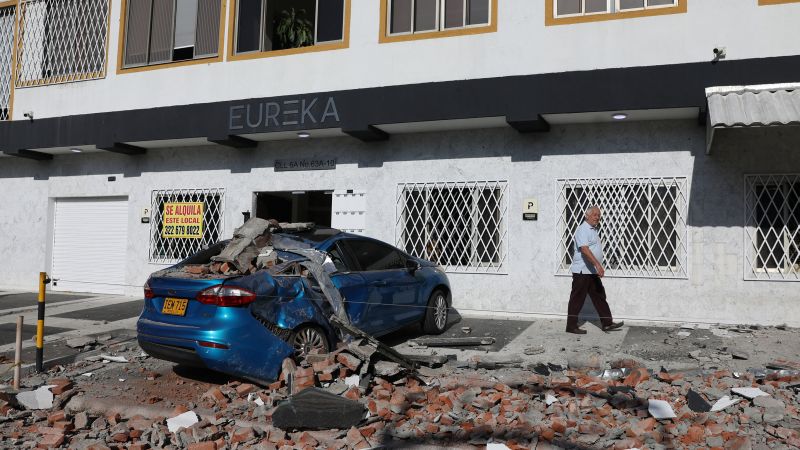
A Northern California man visiting family in Colombia recounted his terror as a 7.4-magnitude earthquake struck western Colombia on Monday.
Andres Martinez, from Roseville, was in Manizales when the powerful quake shook the region on Monday morning.
The quake was felt across the country, with witnesses reporting strong shaking.
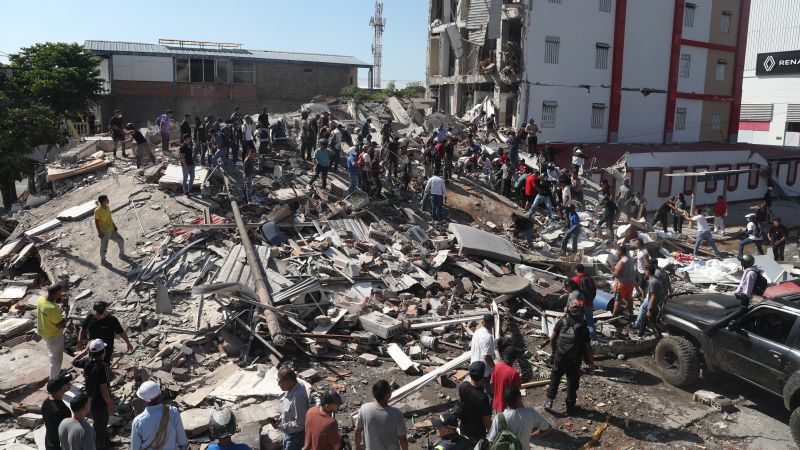
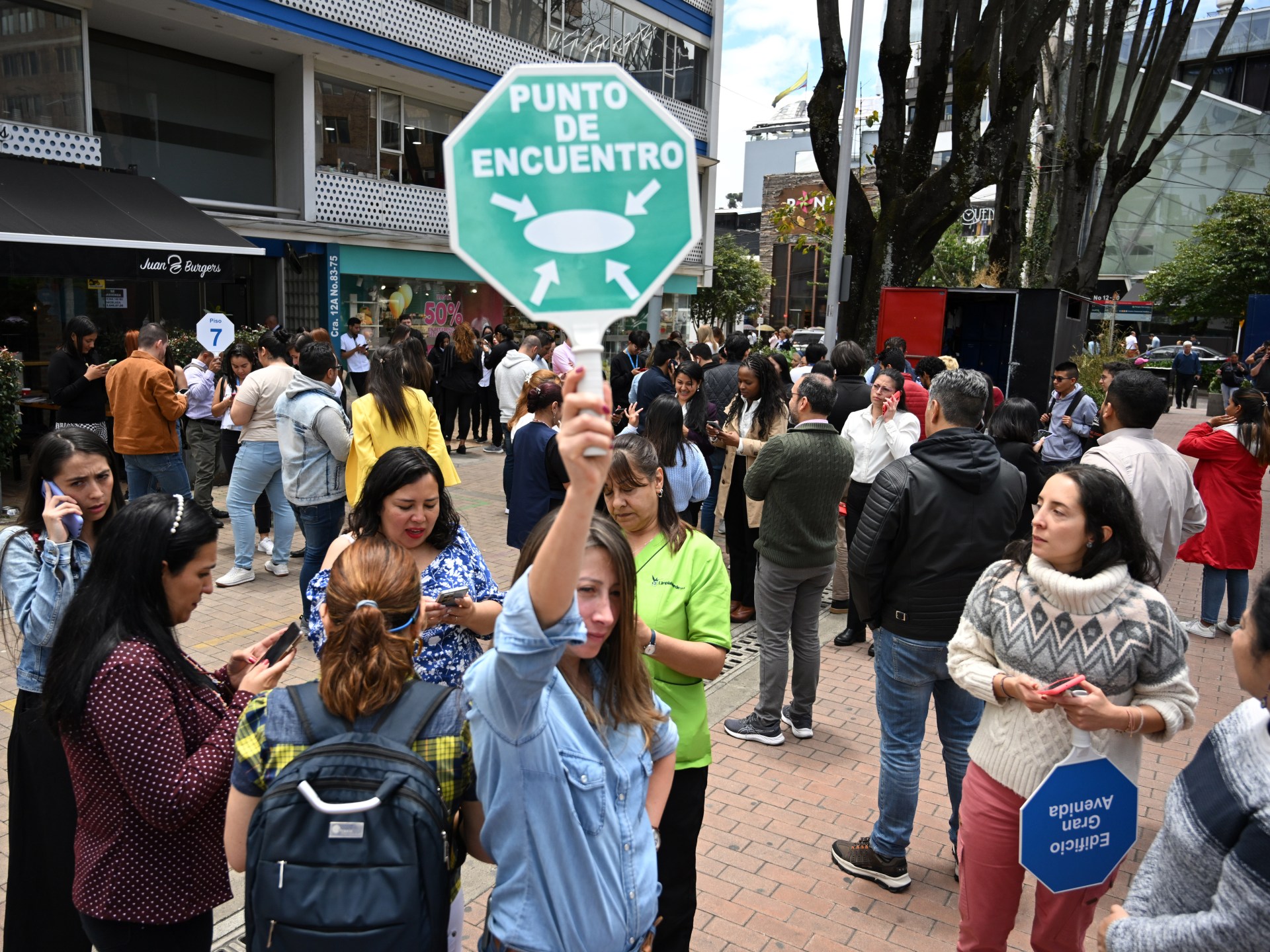
At least 111 people have been killed in the 7.4-magnitude earthquake that shook western Colombia and the region Monday morning, Colombia’s newly inaugurated president Abelardo De La Espriella said.
Roughly 87 people were injured, 37 homes have been completely destroyed, 61 buildings have collapsed, 18 hospitals have been damaged, 52 schools have been damaged, 17 community centers sustained damage, 18 roads have been damaged and six airports have also sustained damage, according to local officials.
Martinez told KCRA that he was enjoying breakfast when the earthquake hit. “We were just sitting down to have breakfast. I was having my coffee and it started shaking. It just kept shaking and shaking and shaking,” he said.
The shaking intensified rather than subsiding, forcing him to act quickly.
“And finally, like 10 seconds, I’m like, ‘I got to get out.’ Everybody got out and it just got stronger and stronger,” Martinez continued to the station.
The quake hit at about 8:34 a.m. ET and was followed by a 5.0 magnitude aftershock less than an hour later.
Martinez, who is partly handicapped, faced an especially harrowing situation as the building threatened to crumble around him.
He explained to KCRA that as the walls groaned, he nearly became trapped inside the collapsing structure until a relative helped him escape.
The experience was particularly jarring for Martinez because he had endured the infamous 1989 Loma Prieta earthquake in the Bay Area, but described this Colombian quake as a different beast altogether.
“This latest jolt was a different beast that just wouldn’t quit,” according to his account to KCRA.
While neighbors huddled in the streets outside, Martinez witnessed terrified schoolchildren in uniform weeping as the earth continued to heave around them.
Most of the deaths were reported in provinces neighboring Chocó, including at least 40 in the Risaralda region, where the hard-hit city of Pereira is located, and 27 in the Valle del Cauca region, where Colombia’s third-biggest city, Cali, is located.
The quake’s epicenter was reported in the municipality of San José del Palmar in the department of Chocó. De La Espriella declared a national disaster to allow for the mobilization and coordination of emergency efforts.
In Manizales, where Martinez was staying, the destruction was severe.
The 7.4 magnitude earthquake caused the collapse of the Manizales Cathedral spire, a historic landmark.
Four deaths were reported in the city of Manizales in the Caldas region.
Colombian President Abelardo De La Espriella, who was sworn into office just days before the disaster struck the nation, said in a post on X on Monday morning that he had “directly assumed leadership of the emergency response.” In another post that morning, he said that he was traveling to the nation’s capital, Bogotá, “to focus on addressing the emergency facing our country.”
The president added in his statement, “We aren’t going to leave people alone. They are in our hearts and we are going to tend to people with our full determination.”
U.S. Secretary of State Marco Rubio said in a social media post on Monday that the Trump administration was closely monitoring the earthquake and “stands ready to support the people of Colombia.”
The Roseville resident had just begun breakfast in Manizales, a mountainous city about 100 miles from the epicenter in San José del Palmar.
The epicenter was located in San José del Palmar, in the department of Chocó, about 240 kilometers west of Bogotá, at a depth of 107 kilometers at 7:34 a.m. (local time, 8:34 a.m. Miami time).
As the violent shaking began, Martinez and those around him quickly evacuated to the streets. The earthquake continued relentlessly, growing stronger with each second. Family members helped Martinez escape what could have been a deadly collapse. Around him, frightened children in school uniforms cried as the ground heaved beneath their feet.
The earthquake was the strongest recorded in Colombia in the last decade, according to the Colombian Geological Service.
It was the largest quake to hit the South American country on record.
The area where the quake struck, Colombia’s coffee region, was devastated by an earthquake in 1999 that killed more than 1,200 people.
De La Espriella’s administration faces significant reconstruction challenges ahead.