

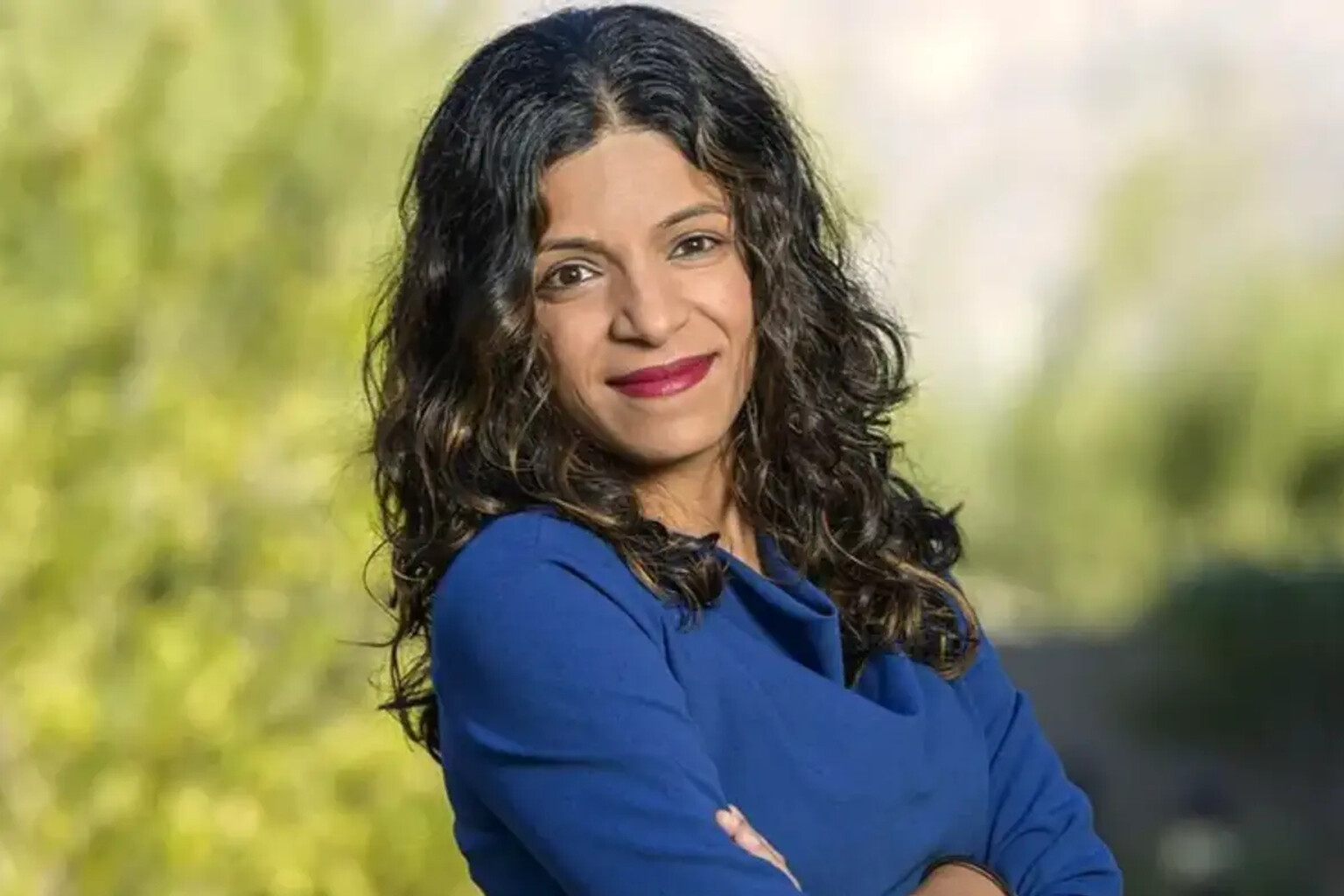
Dr Rachna Shroff, 47, has died from the aggressive cancer she spent her career fighting to cure.
The University of Arizona oncologist passed away this week after being diagnosed with terminal adenocarcinoma earlier this year, the institution announced. Shroff was internationally recognized for her pioneering work in cholangiocarcinoma, a rare and historically difficult-to-treat bile duct cancer that had virtually no FDA-approved therapies when she began her research.
The American Society of Clinical Oncology, where Shroff held fellowship status, described her in a statement as “one of the foremost experts on pancreatic and biliary tract cancers.” ASCO continued: “ASCO joins the oncology community in mourning the death of Rachna T. Shroff, MD, MS, FASCO, a renowned expert specializing in gastrointestinal (GI) cancers and a dedicated ASCO volunteer. Dr. Shroff passed away following a battle with an aggressive cancer.”
Her colleagues at the University of Arizona credited her with transforming the field through landmark clinical trials she led as principal investigator. “Today, the field has changed dramatically, due in part to the landmark clinical trials Dr. Shroff led as a principal investigator,” the university said in its announcement.
Even after receiving her terminal diagnosis, Shroff continued working to advance cancer awareness and fundraising for future research. She is survived by her husband, Dr Puneet Shroff, and their children, Simran and Sachin.
The Cholangiocarcinoma Foundation, where Shroff served on the Science and Medical Advisory Board, remembered her for bringing energy and humor to the most difficult circumstances. “Whether she was quoting Beyoncé in a talk about clinical trials or getting us to throw our hands during her amazing Bollywood lesson, Rachna made us live in the moment and laugh, even in the hardest of times,” the foundation wrote in its tribute. “Our hearts are with her family and friends in the days ahead and beyond.”
Before joining the University of Arizona, Shroff helped build one of the nation’s largest clinical and research programs in biliary tract cancer as a faculty member at MD Anderson Cancer Center. The foundation noted that “she has made tangible differences for patients and their families throughout her career” across every facet of her work, from research to direct patient care.

In a 2024 interview with GIOncology Now, Shroff emphasized the obligation researchers have to patients seeking treatment options. “It is our role and responsibility to have clinical trials available to the patients that come to see us and to ideally have a trial available to every single patient that walks through the door to be able to offer them something cutting-edge, different and innovative,” she said at the time.
Shroff’s final months included a push to establish an endowment fund for cancer research. In a statement quoted by The Cancer Letter, she expressed urgency about seeing the project through: “Because of my health, I have a profound desire to see this endowment come to fruition now.”