

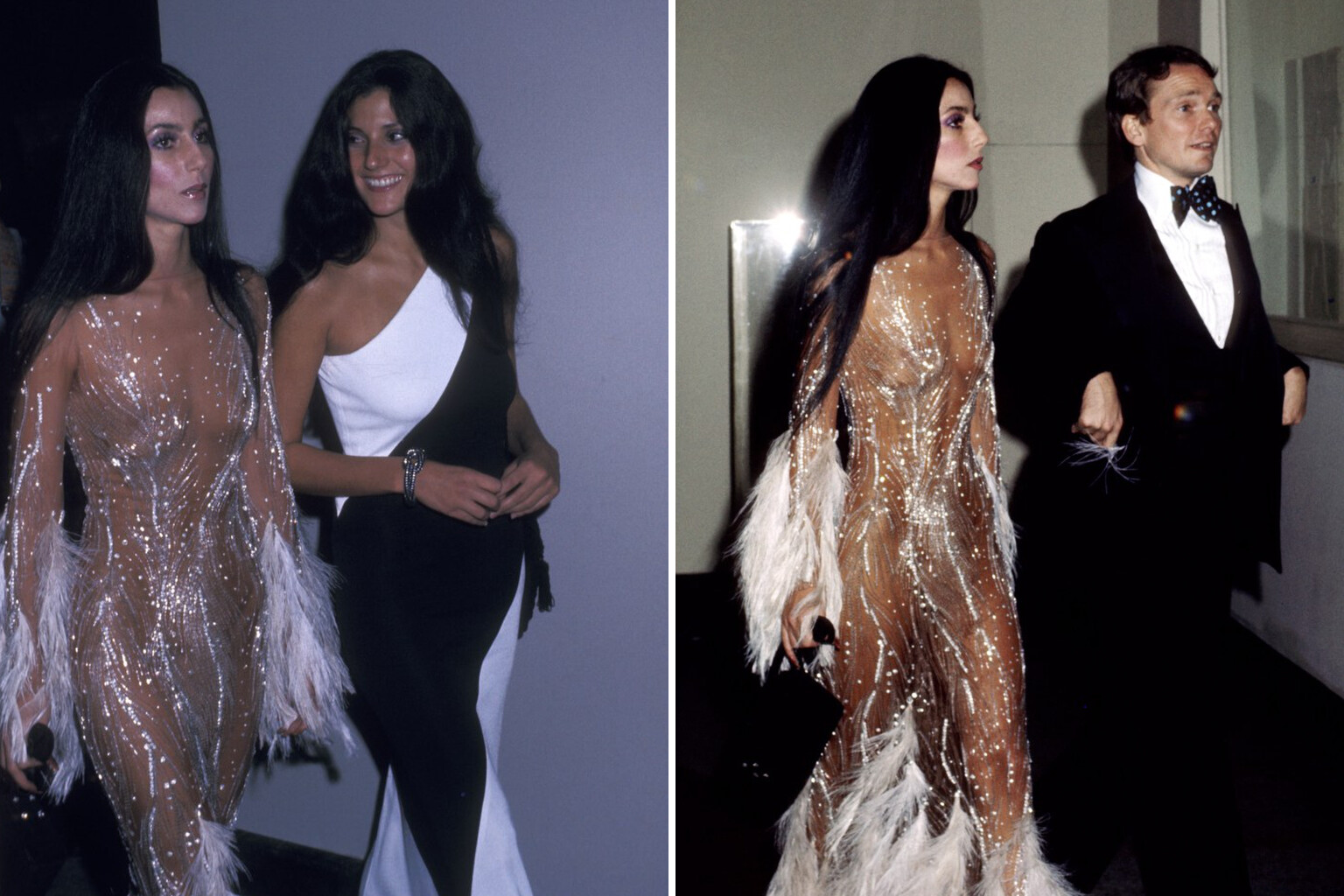
Cher has opened up about the illicit fabric behind her legendary 1974 Met Gala gown and the Hollywood icon who smuggled it into the country.
The “Believe” singer, 79, spoke with Vogue about her decades-long partnership with Bob Mackie, the designer who died in September at 87. She credited him with forging the daring image that made her a fashion legend.
“Without Bob, I would certainly not be a fashion icon, because Bob really was so important in making me have my own look. I did other things on my own, but Bob was really the person that pushed me into those real glamour moments,” Cher told the magazine.
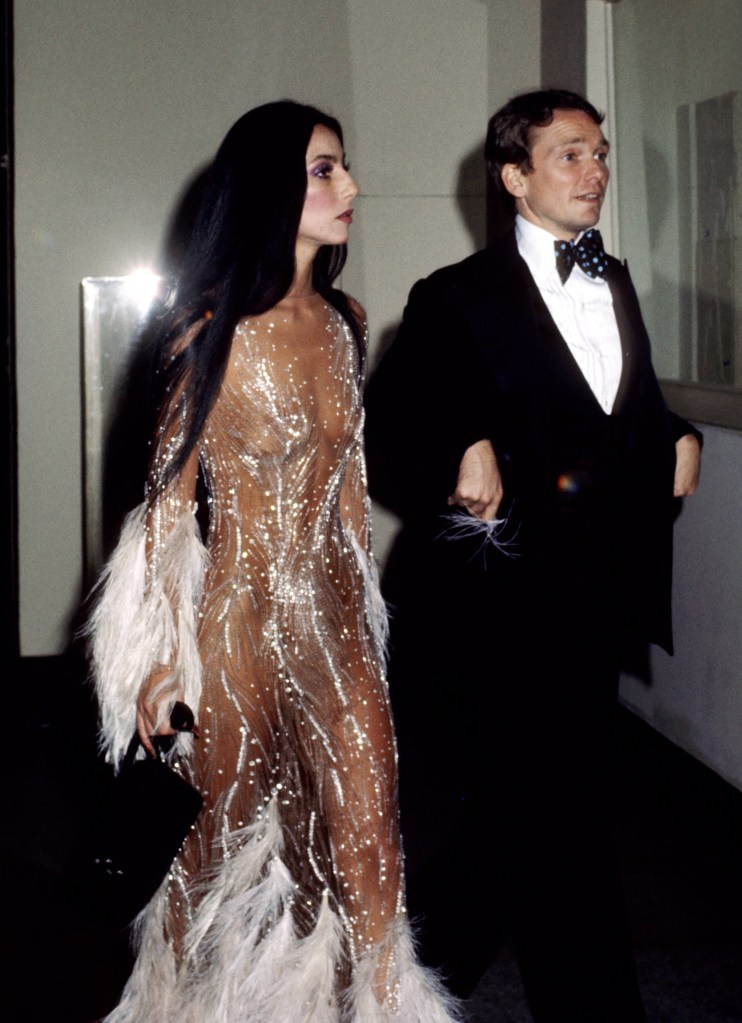
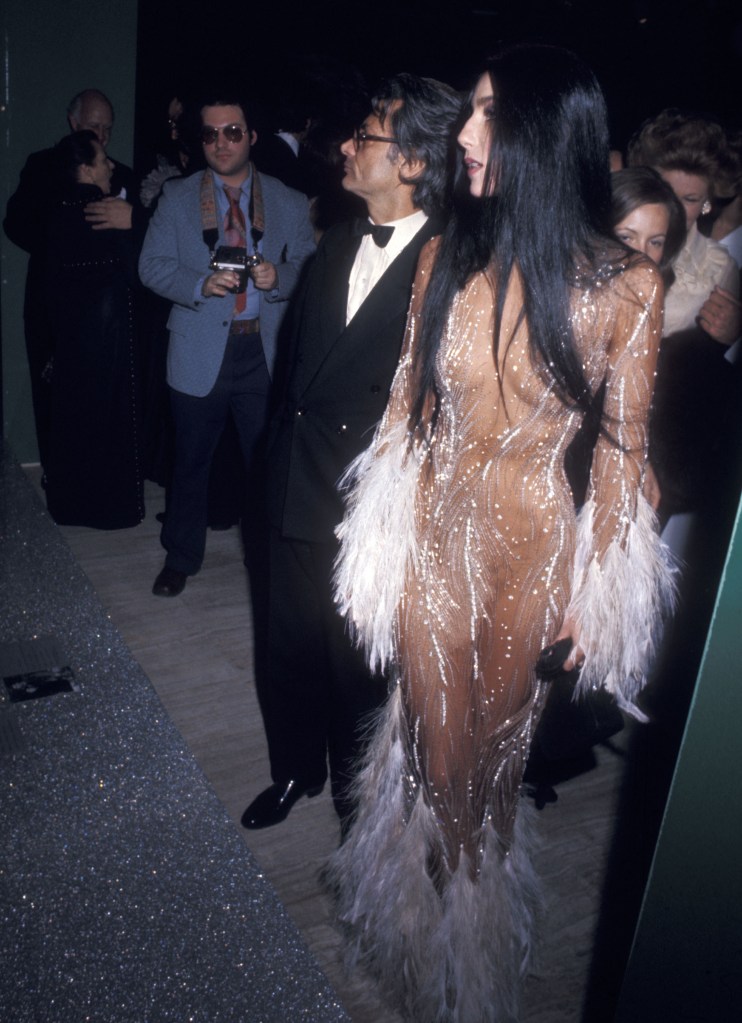
The conversation turned to what she called her personal favorite Mackie creation: the sheer, feather-trimmed dress she wore to her first Met Gala appearance. The gown, constructed entirely of see-through mesh with all-over embroidery, caused a sensation when she arrived on Mackie’s arm.
Cher revealed that the material, a fabric called soufflé, was actually banned in the United States at the time.
“I remember coming in for a fitting, and I could see this little kitchen. This woman was taking things out of the refrigerator and putting them into the trash can. I had no idea what she was doing,” she recalled to Vogue.
“So I was like, ‘Bob, who is that?’ And he was like, ‘That’s Marlene Dietrich!’ She brought the material that we were making the dress out of.”
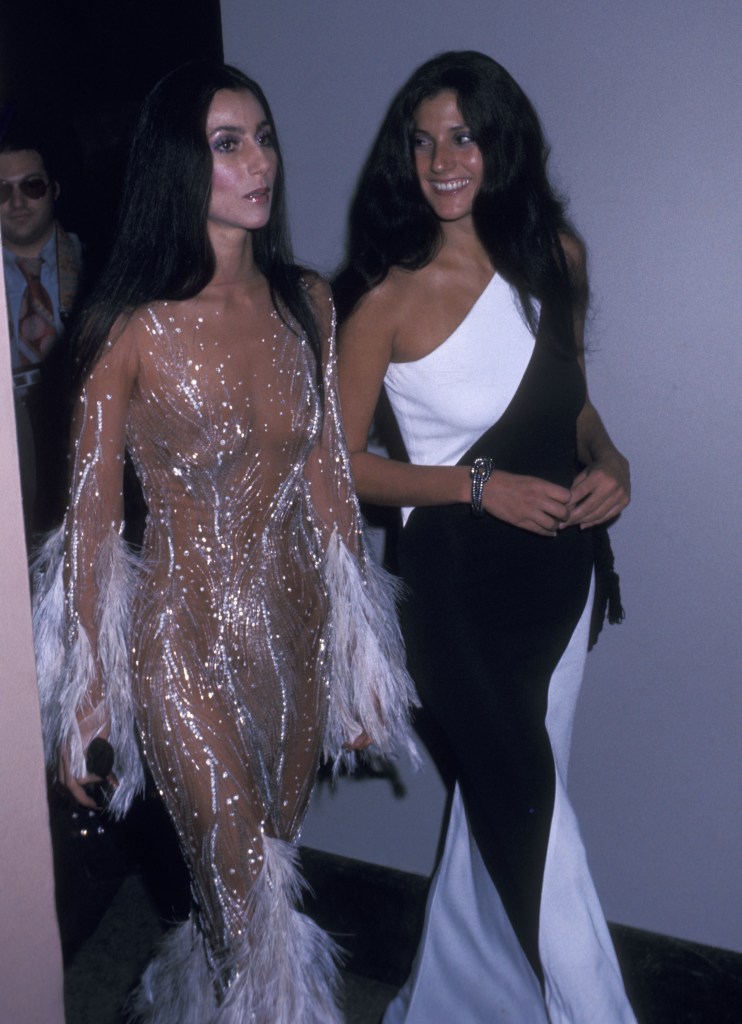
The German-born film star had transported the contraband textile on Mackie’s behalf, enabling the creation of what would become one of the most referenced naked dresses in red-carpet history.
The gown itself emerged from a Vogue photo shoot that had the pair recreating dresses from the 1920s through the 1970s. When the Met Gala approached, Cher had nothing planned.
“Bob, Vogue, and I were doing a decades [photo shoot] of dresses from the 1920s to 1970s,” she explained. “When we were going to the Met, I had no idea what to wear, and we were like, ‘Bob, what about this dress [from the shoot]?'”
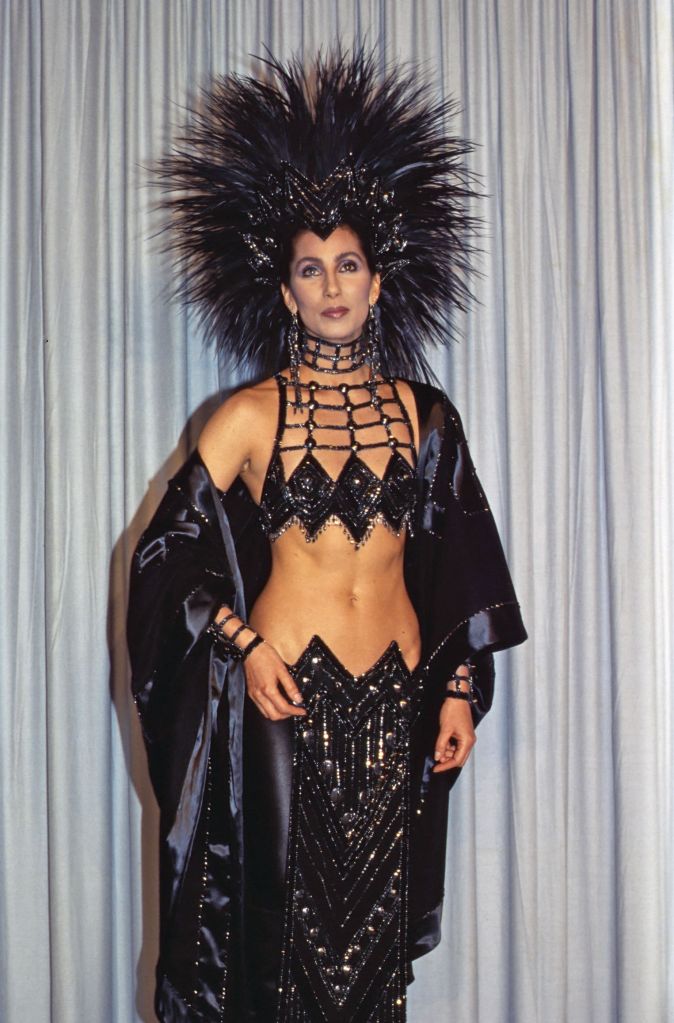
Cher’s admiration for Mackie’s craftsmanship ran deep beyond any single garment. She emphasized that his work stood apart from imitators who tried to replicate his bold aesthetic.
“With Bob’s clothes, you could wear them inside out: They were so beautifully made. Other people might have copied his dresses, but they didn’t create them as he did,” she said.
The singer also reflected on the breadth of their creative history together. “I remember every moment,” she told Vogue.
Mackie’s death in September closed a chapter that had defined Cher’s visual identity since the early years of her solo career. The pair first connected in the late 1960s when Mackie designed costumes for “The Carol Burnett Show,” and their collaboration soon expanded to Cher’s own television programs and concert tours.
The 1974 Met Gala marked a pivotal public moment for their partnership, establishing a template for the provocative, body-baring glamour that would become Cher’s signature. The feathered soufflé gown, dubbed “The Dress” by observers, moved with the wind as she walked, its embroidered mesh leaving little to the imagination.
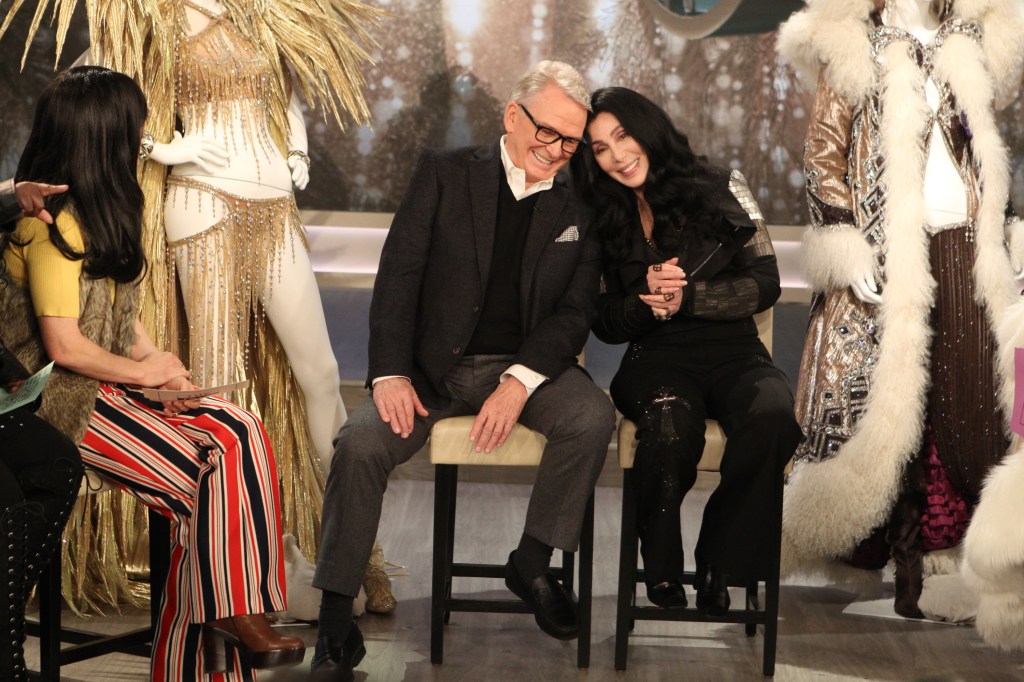
Cher continues to honor Mackie’s legacy in her public appearances, including her return to the Met Gala red carpet this year.