

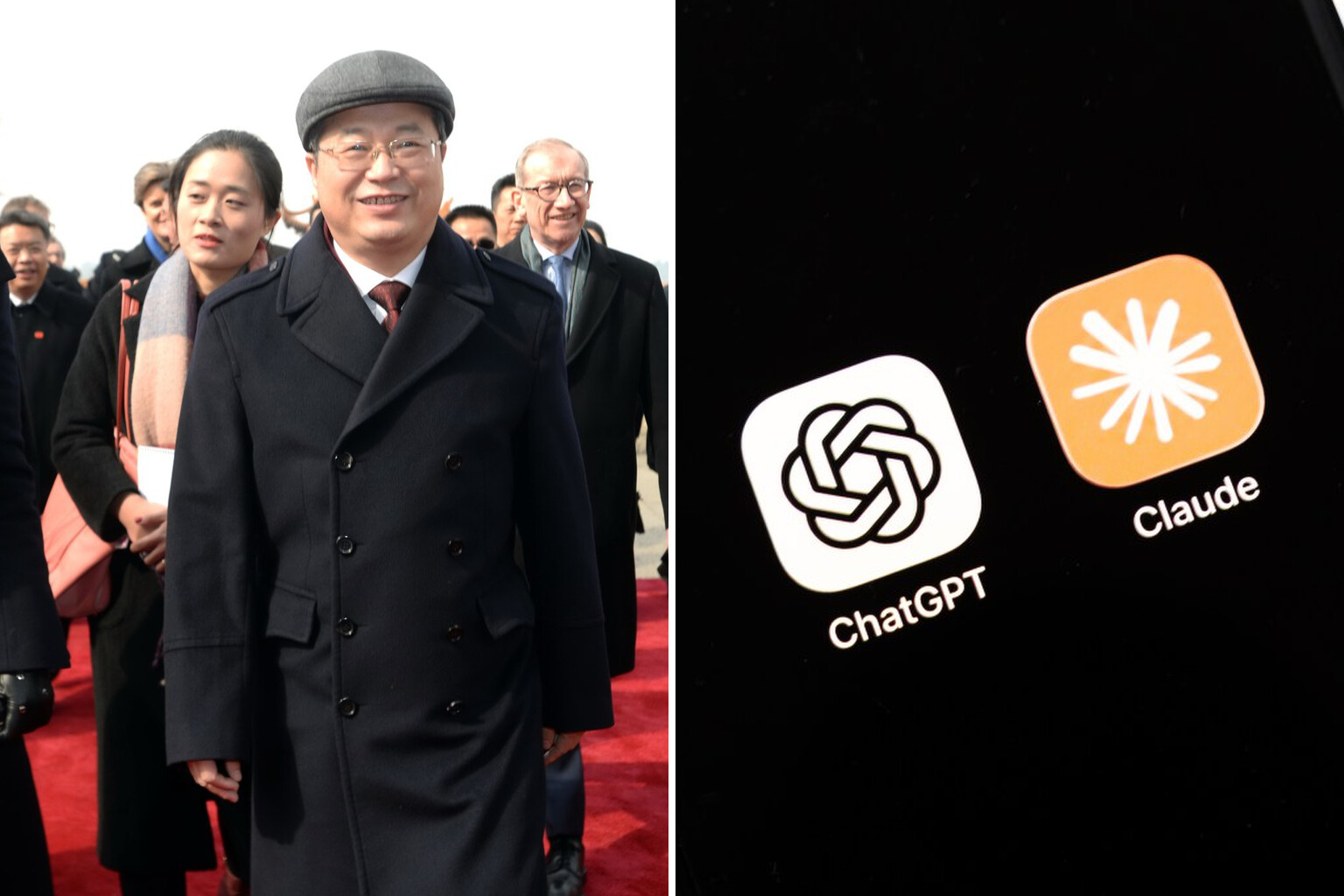
China’s top intelligence chief has publicly warned that artificial intelligence could destabilize Communist Party rule and demanded tighter state control over the technology’s development.
Chen Yixin, who leads the Ministry of State Security, issued the stark assessment in an essay published last week in China Cyberspace Magazine, a state-run journal. The 62-year-old spymaster framed AI as a double-edged sword that Beijing must master before foreign adversaries exploit it against the regime.
“Artificial intelligence is penetrating all aspects of human society at an unprecedented speed, breadth, and depth, profoundly reshaping the global economic structure, power dynamics, innovation paradigms, and social governance logic,” Chen wrote in the magazine.
Chen’s warning lands as global powers race to dominate AI while grappling with its risks. His concerns diverged sharply from Western debates about existential threats or machine consciousness. Instead, the security chief zeroed in on practical dangers to one-party control: foreign espionage, deepfake propaganda, and crippling cyberattacks on critical infrastructure.
The minister specifically named US tech companies and their AI models as threats to national security and the CCP’s standing. He cautioned that artificial intelligence could generate convincing fake videos and audio to spread anti-regime messaging, a tool he suggested would be turned against Beijing by hostile forces.
“Some countries and organizations possess the capability to rapidly and in large quantities discover vulnerabilities, automatically connect attack paths, and complete complex hacking tasks, drastically lowering the technical barriers and costs of launching cyberattacks and posing serious risks to China’s critical information infrastructure,” Chen wrote.
The spymaster also flagged how AI could democratize cyber warfare, enabling less sophisticated actors to breach China’s defenses. Where hacking once required elite skills, automated tools now open the door to broader threats against power grids, financial systems, and government networks.
Despite the alarm, Chen insisted China must accelerate its own AI programs rather than retreat. Losing the technology race to Washington, he argued, would carry graver consequences than the risks of development itself.

“Whoever can achieve more refined perception, more accurate judgment, and more precise strikes through algorithms will gain the initiative on the battlefield,” he added in the essay.
“We must recognize the opportunities and seize the initiative, while also understanding the risks and adhering to the bottom line,” Chen continued, threading a needle between urging caution and demanding speed.
President Trump, 78, fired back on Truth Social after Anthropic CEO Dario Amodei urged AI firms to slow their development pace. The former president slammed such restraint as a “conspiracy” that would benefit Beijing.
“There is a SICK conspiracy going on against AI and Data Centers, and the only one that is happy about it is China. WHOEVER WINS AI, WINS!” Trump wrote.
Chen’s essay reflects mounting anxiety within Chinese leadership about technologies that could outpace the state’s ability to monitor and control information flows. The Ministry of State Security, historically secretive, has grown more vocal under his tenure about digital threats to regime stability.
The article also arrives amid intensifying US-China competition over semiconductor exports, cloud infrastructure, and AI model development. Washington has restricted advanced chip sales to Chinese firms, while Beijing has pushed for technological self-sufficiency.
Chen’s call for “greater government oversight” aligns with Beijing’s broader pattern of tightening regulation over tech sectors that might challenge party authority. Previous crackdowns have targeted social media, ride-hailing apps, and online education platforms.