

A powerful new artificial intelligence model from China took the U.S. Tech industry by surprise on Friday, the latest sign that Chinese startups releasing open-source AI technology are challenging Silicon Valley’s dominance. The newest Kimi K3 model from Beijing-based startup Moonshot appears to be catching up to the leading versions of Anthropic’s Claude and OpenAI’s ChatGPT in key performance areas.
Kimi K3 scored 1,679 points to rank first on Arena’s frontend code leaderboard, a benchmark that uses real-world coding tasks where developers vote on which model produces better outputs. The model surpassed Anthropic’s Claude Fable 5, which scored 1,631 points, and OpenAI’s GPT-5.6 Sol, which scored 1,618 points. This represents a dramatic jump for Moonshot—its previous model, Kimi K2.6, had placed 18th on the same leaderboard. Kimi K3 dominated six of seven categories in the frontend code evaluation, including Brand & Marketing, Data & Analytics, and Consumer Product.
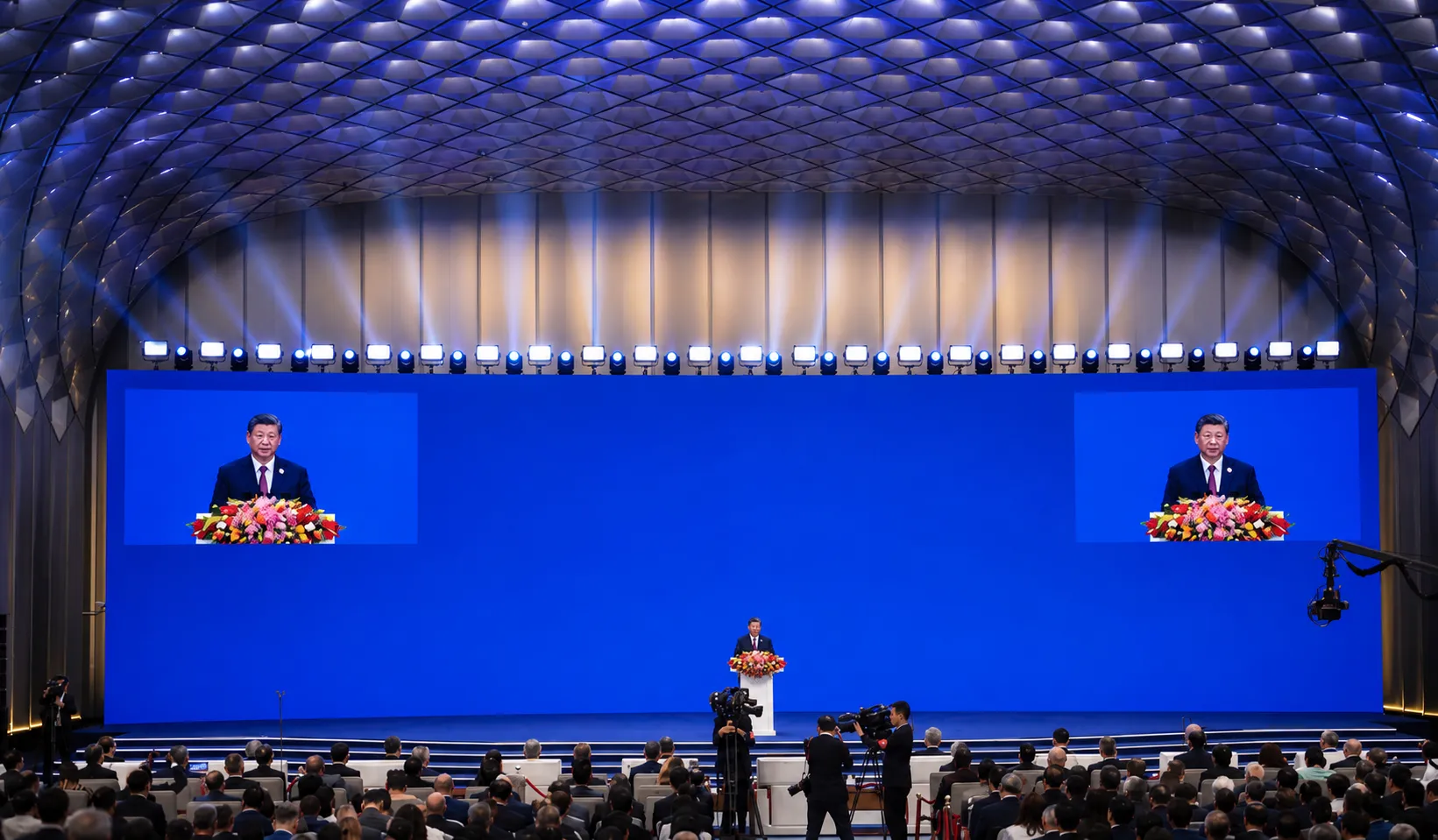
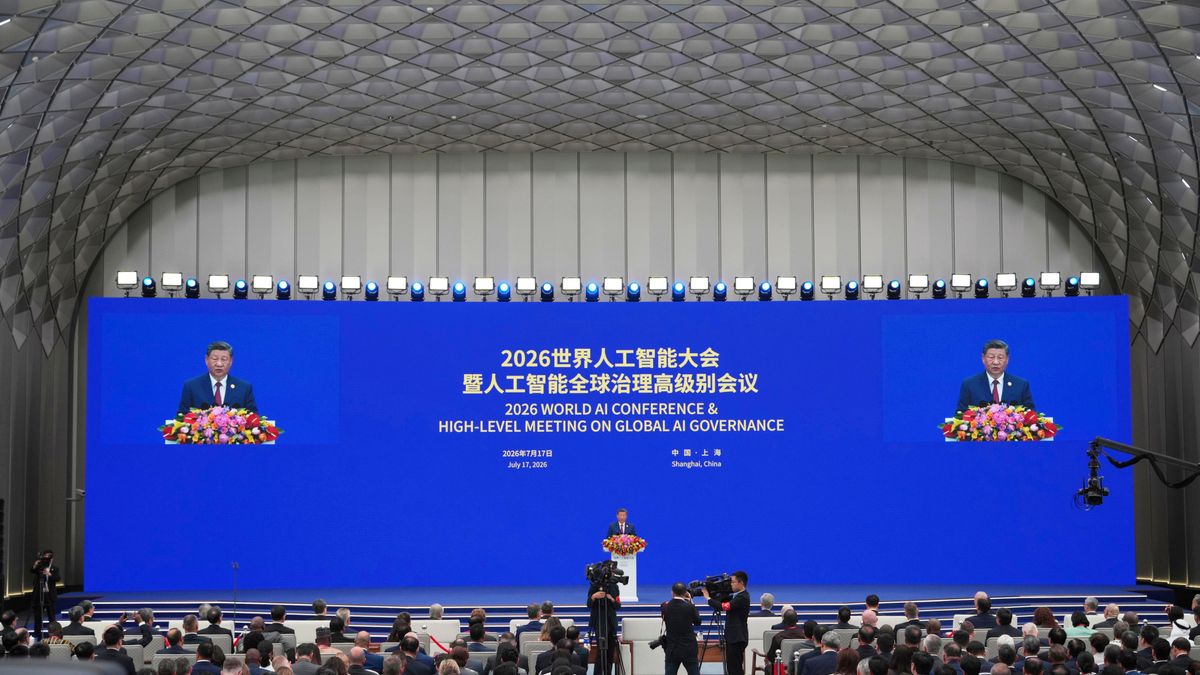
The timing of the release was notable. K3’s unveiling came shortly before Chinese President Xi Jinping’s opening address Friday at Shanghai’s annual World Artificial Intelligence Conference. The rollout underscores Beijing’s determination to build independent technological capabilities despite American-led export restrictions on advanced semiconductors and other key technologies.
“This may be the single biggest release of the year,” said Anastasios Angelopoulos, co-founder and CEO of Arena, a platform for evaluating AI systems. Angelopoulos described the release as marking a moment when open-source Chinese models are surpassing closed U.S. Models.
Moonshot described Kimi K3 as the largest open-weight AI model ever released, containing 2.8 trillion parameters. The model operates with a context window of one million tokens, allowing it to process roughly 750,000 words of code or documentation in a single request. The company designed the model with architectural innovations called Kimi Delta Attention and Attention Residuals specifically for handling long-horizon coding tasks. Moonshot plans to release the full model weights by July 27, making it freely available for anyone to run, modify, or build upon.
The pricing strategy represents another significant challenge to U.S. Companies. Kimi K3’s API costs $3 per million input tokens and $15 per million output tokens—less than half the price of Anthropic’s Claude Fable 5 and significantly cheaper than OpenAI’s comparable models. Bank of America research analysts noted that K3 represents the highest price point yet for any Chinese AI model, but it still undercuts OpenAI’s high-performing GPT-5.6 Sol.
The release follows another significant model announcement last month from Chinese startup Zhipu, or Z.ai. Its GLM-5.2 model has already gained adoption among software developers worldwide, with users reporting it can perform work nearly as well as top U.S. Models at lower cost.
The emergence of competitive Chinese AI models continues a pattern that caught many Western observers off guard. Earlier this year, Chinese startup DeepSeek released models that rivaled top U.S. Offerings and sparked what some described as market panic similar to what K3 has now triggered. The reaction underscores concerns among U.S. Tech leaders about the speed of Chinese AI advancement.
U.S. Politicians and major AI companies including Anthropic and OpenAI have accused Chinese AI models of illicit “distillation”—extracting capabilities from proprietary models to improve their own systems. Anthropic accused DeepSeek, Moonshot, and MiniMax of engaging in campaigns to illicitly extract Claude’s capabilities using distillation techniques that involve training less capable models on the outputs of stronger ones. Beijing has dismissed these accusations as “groundless.”
The concern about distillation cuts both ways. San Francisco-based startup Anysphere, maker of the popular coding tool Cursor, has acknowledged that one of its top products was based on Moonshot’s K2.5 model. Elon Musk’s SpaceX is planning to close a deal to buy Cursor for $60 billion later this year.
Yang Zhilin, Moonshot’s co-founder and CEO, earned his doctorate in 2019 at Carnegie Mellon University, where colleagues noted his fundamental contributions to machine learning and his passion for rock bands including Pink Floyd. His former adviser Russ Salakhutdinov, now a former director of AI research at Apple, expressed pride in the achievement: “What a huge win for the open-source community! It feels like just yesterday Zhilin was graduating from my lab at CMU.”
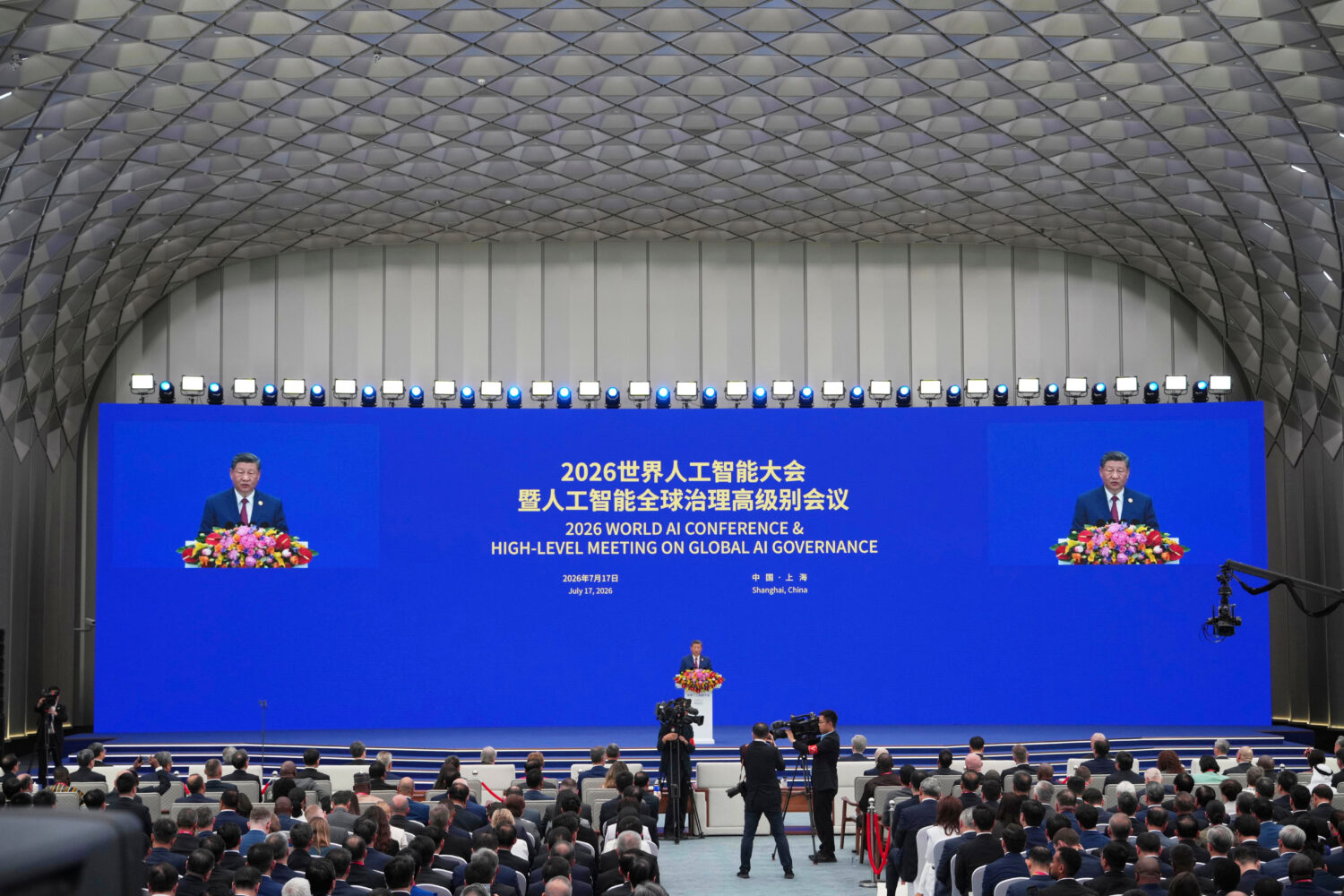
The technical achievement is notable given restrictions on China’s access to advanced semiconductors. Moonshot has not disclosed which hardware was used to build K3, though the company is a partner with Huawei. During the Shanghai conference, Huawei showcased a new AI computing system called the Atlas 950 SuperPoD, signaling that China is increasingly developing domestic hardware capabilities despite U.S. Restrictions on imports from chipmakers like Nvidia.
K3’s performance underscores broader shifts in the global AI landscape. Industry expectations about the timeline for Chinese models to match U.S. Offerings have been repeatedly confounded. Anthropic CEO Dario Amodei had not expected a Chinese lab to release a competitive model for another six months, while some observers predicted it would happen by early next year.
Moonshot AI was founded in Beijing and backed by major Chinese tech companies including Alibaba, Tencent, and Meituan. The startup raised $2 billion at a $20 billion valuation in May. Its Kimi chatbot has become one of China’s most popular consumer AI products, with annualized recurring revenue exceeding $200 million in April, driven by paid subscriptions and API usage.
Chinese President Xi Jinping used his opening remarks at the Shanghai conference to reaffirm China’s commitment to releasing AI models on an open-source basis. He emphasized the importance of encouraging open source, openness, cooperation, and sharing to promote AI innovation and development. He also criticized what he characterized as Washington’s overreach on export controls, saying countries should “oppose the practice of overstretching the concept of national security” in AI or placing one country’s security above others.