

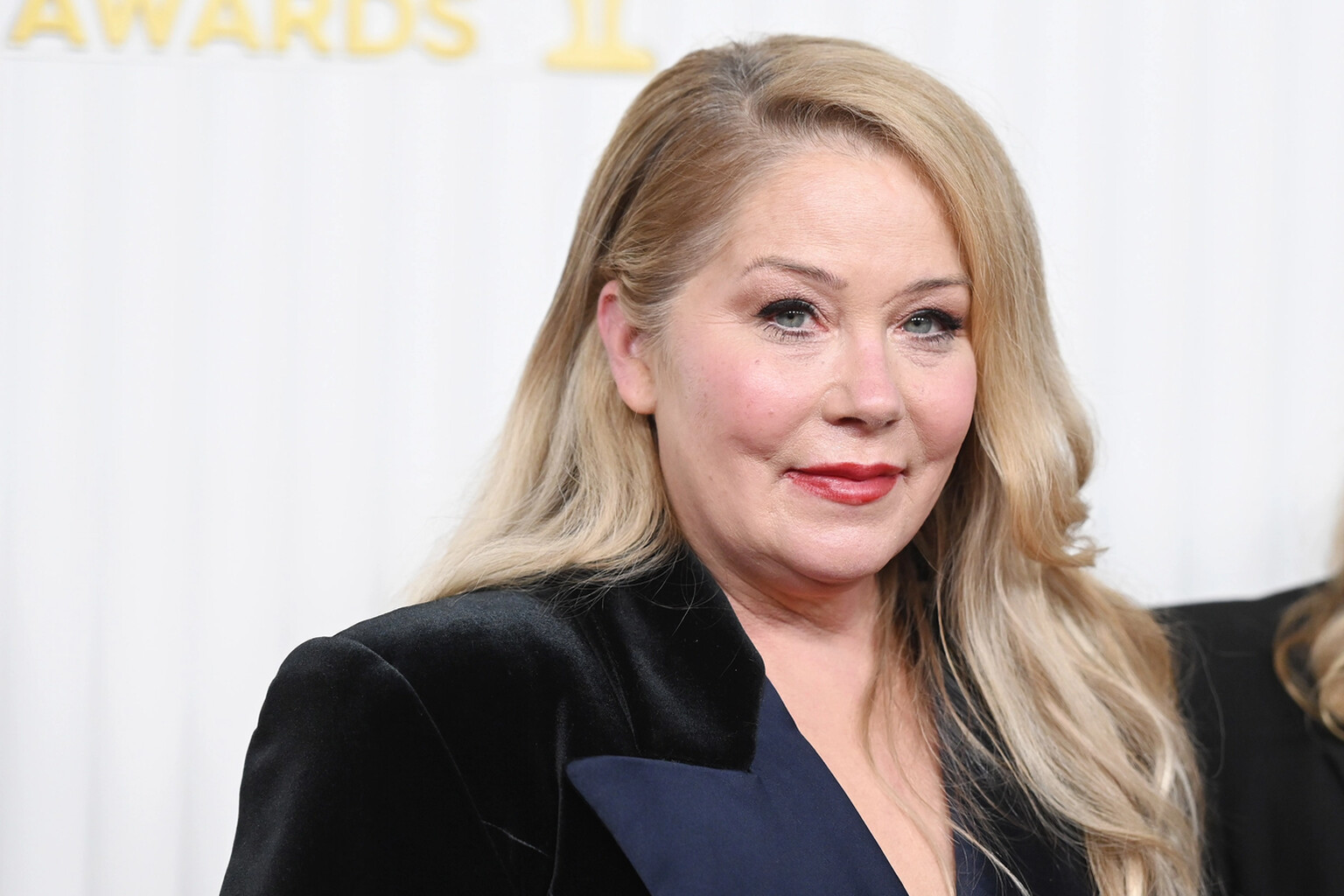
Christina Applegate has fired back at critics who questioned why she was upset about being told she does not have multiple sclerosis after five years.
Applegate, 53, revealed on her MeSsy podcast that doctors recently overturned her MS diagnosis, a reversal that left her devastated rather than relieved. The actress had spent half a decade believing she had the chronic neurological condition, building her identity around it and forging bonds with others in the MS community.
“She came into my room and said, ‘Congratulations, you don’t have MS,'” Applegate recalled on the podcast, which she co-hosts with Jamie-Lynn Sigler. “I was, like, not happy at all. Everybody else was so happy.”
The “Married… With Children” alum explained that the misdiagnosis means her very real symptoms remain unexplained and untreated. “You don’t get misdiagnosed and then all of the sudden I’m better,” she said. “If anything, I’ve gotten worse.”

Applegate described the emotional toll of losing a diagnosis that had become central to her sense of self. “It’s about an identity thing,” she said. She had developed deep connections with people living with MS, believing she shared their experience. Now those relationships feel complicated, and her medical future uncertain.
“I’m back at square one where I don’t know what’s going on with me,” she continued. “It can be incredibly stressful.”
The reversal came after Applegate’s doctor suggested she stop MS treatment a few years ago. Her body responded in ways that indicated she did not have the condition after all, prompting the re-evaluation.
Dr. Marwa Kaisey, a guest on the MeSsy podcast, noted that MS remains notoriously difficult to diagnose definitively. “It’s not like we have something like a pregnancy test that says ‘yes, you have it. No, you don’t’,” she explained. “It’s a list of criteria.” Physicians must perform what is called a “diagnosis of exclusion,” systematically ruling out other potential causes of symptoms.
Dr. Michael Kornberg, associate professor of neurology at Johns Hopkins University School of Medicine, said that such misdiagnoses can be psychologically destabilizing. “It becomes part of your identity,” he said. “To live with that for five years and then to be given a different diagnosis is really unsettling.”
Applegate’s candid reaction drew some social media criticism, with commenters questioning why she would not celebrate the news. She addressed those trolls directly on her podcast, making clear that the celebration belonged to people whose health actually improved. Her situation, she emphasized, offered no such relief—only the loss of a framework for understanding her declining condition.
The actress first publicly discussed her MS diagnosis in 2021, revealing she had experienced symptoms for years before confirmation. She continued working during treatment, completing the final season of “Dead to Me” while managing the disease she believed would be lifelong.