

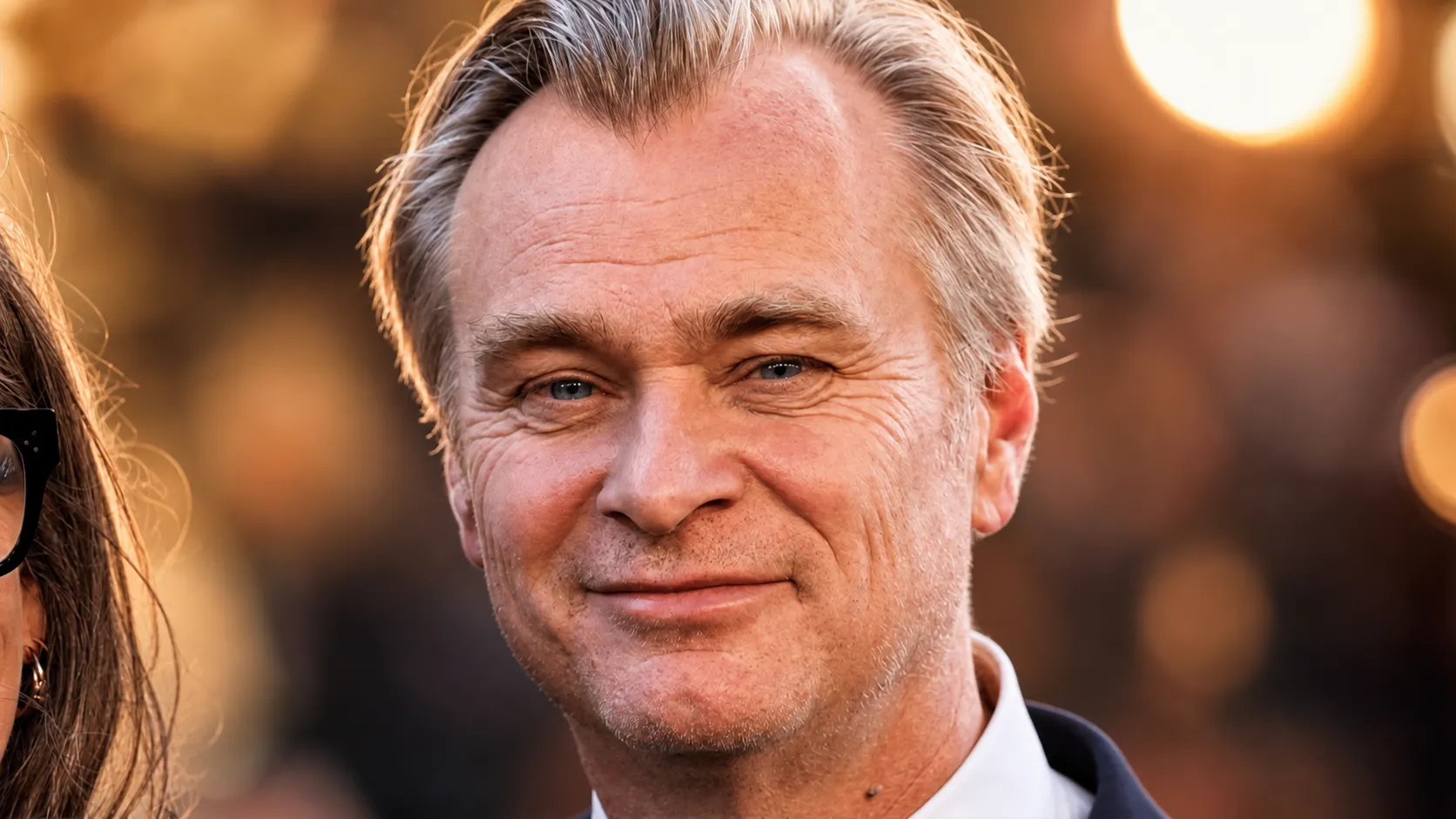
The Odyssey filmmaker Christopher Nolan has shared the straightforward reason he still refuses to own a phone, while also admitting one modern change has made that choice much harder.
Nolan is known for directing enormous, technically ambitious films such as Interstellar, Dunkirk, Oppenheimer and now The Odyssey. Given the scale of those productions, it might seem natural to assume he embraces every available piece of modern tech.
In reality, he takes a far more skeptical approach and has even chosen not to have a smartphone. Over the years, he has also said he does not use email and has been comfortable relying on assistants and printed materials to stay connected to work.
He confirmed that he does not own one, jokingly referring to other people as “pod people”.
Still, Nolan has acknowledged that avoiding phones is not always easy, especially in a world that increasingly expects everyone to be digitally connected. He said one development since the pandemic has been especially inconvenient.
“The return of the QR code since Covid has been particularly tricky for me.”
He also explained that his resistance to smartphones is partly about self-preservation, because he believes owning one would quickly become a distraction.
“Partly because I know I’d become horribly addicted to them if I had one. I’d spend all my time looking things up,” he explained. “And I find I’m only able to advance my thinking on projects in those pockets of time where everybody usually jumps on their phone – waiting for a train, or in an airport, or sitting in a restaurant waiting for somebody to turn up for dinner. Those are the moments I work out whatever it is I need to do next.”
That preference for staying offline fits with the way Nolan has made The Odyssey, which opens in cinemas on July 17, 2026. The film has been described as his first feature shot entirely on IMAX, and production leaned heavily on practical filmmaking rather than relying on digital effects to do the heavy lifting.
Nolan’s hesitation around modern tech does not stop with phones. He has also spoken critically about artificial intelligence and the way it is being received.
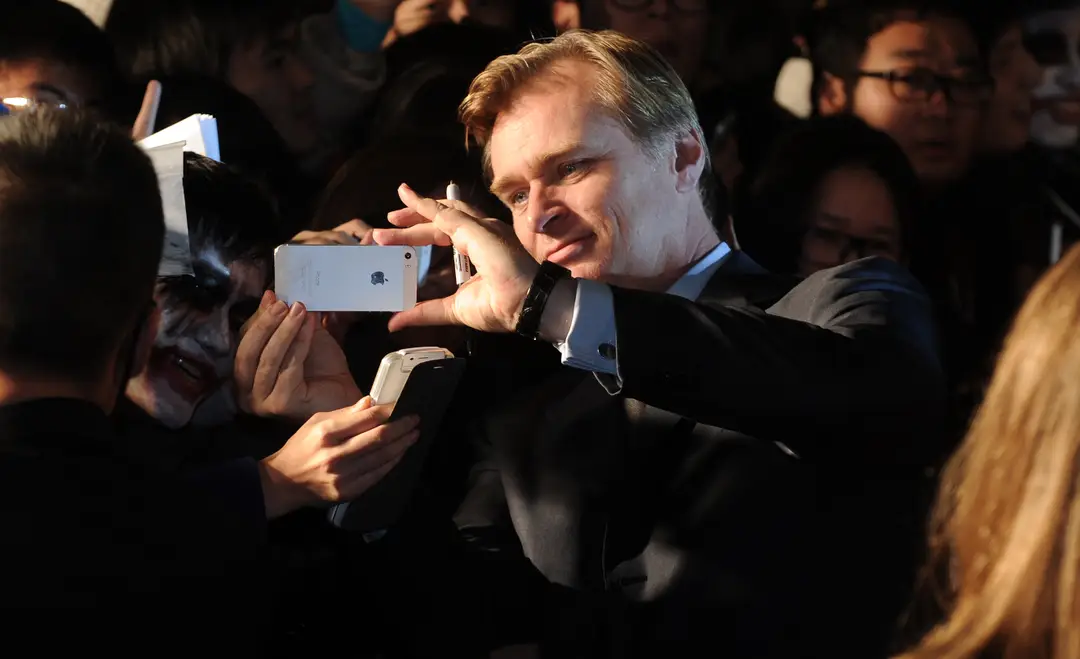
He reflected he’s ‘never seen a more rapid wholesale dismissal of a supposedly foundation jump in technology’ in his ‘lifetime’.
Pointing to the reaction from his four children’s generation, Nolan praised their quick and unforgiving rejection of AI-generated “slop”. At the same time, he made clear he does not see every use of the technology as pointless, though he thinks its arrival in filmmaking has come at an awkward moment.
“After years of driving towards heavily virtual environments, we’re seeing a renewed interest in more tactile, more real forms of storytelling,” he added.
That philosophy is evident in The Odyssey, his latest film.
Although the movie adapts Homer’s ancient Greek epic and deals in mythic spectacle, Nolan reportedly tried to rely on CGI as little as possible. Instead, the production leaned into practical craftsmanship, from a constructed Trojan horse to a 60-foot Cyclops puppet, with scenes shot on real water and inside actual caves.
Recent reporting on the film has also highlighted the scale of the shoot, with Nolan and his crew filming in multiple countries and using authentic locations to give the story a more immediate, documentary-like feel.
In The Odyssey, Samantha Morton portrays the goddess Circe, and Nolan said he instructed the effects teams to build their work around the actors’ performances.
“I can’t tell her to act to a piece of electrical tape’. So they came up with mechanisms that allowed her to find things through performance, and really just play with the scene.”
The Odyssey is out in movie theaters today (July 17)