

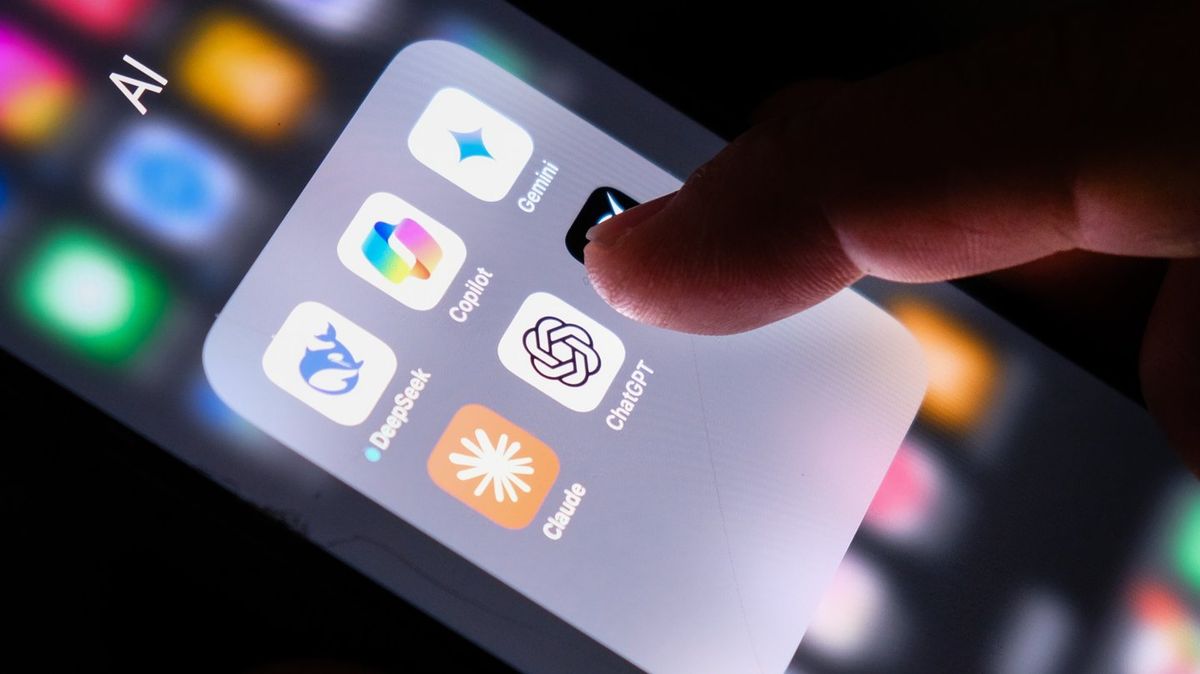
A commencement address at the University of Central Florida drew loud boos after the speaker launched into comments about artificial intelligence.
Gloria Caulfield, a real estate development executive, took the stage for UCF’s Friday evening ceremony (May 8) and spoke about major figures she considers global innovators, referencing names such as Jeff Bezos and several former US presidents.
During her remarks, Caulfield pointed to Bezos’ long-standing ambition to travel to space and noted that he went on to found Blue Origin in 2000.
“The second that I observed is embracing innovation without fear of being disruptive. Great leaders know that breakthrough innovation happens at the intersection of different disciplines, cultures and fields,” she said.
“We are living in a time of profound change. That’s an understatement, right? Change is exciting. And let’s face it: change can be daunting. The rise of artificial intelligence is the next Industrial Revolution.”

As she mentioned AI’s rapid rise, the reaction from the crowd appeared to sour, prompting Caulfield to pause and address the noise directly: “Okay. I struck a chord. May I finish.”
She continued by arguing that the technology’s influence has accelerated quickly in a short span of time.
“Only a few years ago, AI was not a factor in our lives,” she added.
“And now AI capabilities are in the palm of our hands.”
Caulfield then compared current anxieties to earlier technological shifts, citing the rollout of the internet and mobile phones. She said similar fears surfaced then too, but those developments ultimately fueled economic growth and helped create major companies “like Apple, Google and Meta and so many others.”
“So being an optimist here. AI alongside human intelligence has the potential to help us solve some of humanity’s greatest problems. Many of you in this graduating class will play a role in making this happen.”
AI’s continued expansion has also sparked debate about its impact on the workforce. One high-profile voice weighing in is Bill Gates, who has offered predictions about roles he believes are more likely to endure the technology’s advance in the near term.
Gates has suggested that jobs such as coders, energy specialists, and biologists may be among those that remain comparatively resilient for now.
On the other hand, he has indicated that positions in data and administrative work, customer service, and assembly line roles could be among the first to feel the effects of widespread automation.
Last year, Microsoft published a report ranking 40 roles described as being “most at risk” based on varying levels of overlap with AI capabilities, listed from highest to lowest.