


Diego Sarabia is pushing to be cut loose from a gang-rape lawsuit by framing his alleged role as nothing more than an unwanted kiss.
His attorneys filed a dismissal motion Friday in New York state court, seizing on the fact that Jane Doe never accused him of intercourse in her sprawling complaint against seven Cornell fraternity brothers. Sarabia, a former Chi Phi member, admits to nothing but argues that even if every allegation were true, the claims against him fail legally or arrived too late.
James C. Knox, Sarabia’s attorney, leaned hard on that distinction in his filing. “As far as defendant goes, this is essentially a lawsuit about an allegedly forced kiss,” he claimed in the motion.
Doe’s lawsuit, filed last month, describes a drug-fueled Chi Phi party in 2024 where she alleges she was gang-raped. She placed Sarabia at the scene, accusing him of grabbing her face, kissing her without consent, and snorting ketamine off her body alongside other fraternity members. She did not, however, name him as one of the men who sexually assaulted her or provided the drugs.
Knox wielded that gap aggressively. “Throughout a sprawling complaint approaching 600 paragraphs, plaintiff repeatedly, collectively and without differentiation accuses seven student defendants of ‘sexual assault and rape,'” he wrote in the filing. “Those legally conclusory statements do not substitute for pleaded facts.”
The attorney pressed multiple technical arguments for dismissal. He contended that assault, battery and intentional infliction of emotional distress claims face a one-year statute of limitations, and that Doe’s cited extensions do not apply. He also challenged whether a forced kiss legally qualifies as any of the claimed offenses at all.
“An unconsented-to kiss does not constitute any of the listed offenses, and plaintiff cannot simply circumvent the statute of limitations by relying on generalized, collective accusations of ‘rape and sexual assault’ that are otherwise unsupported by, and inconsistent with, her own factual allegations,” Knox said.
He closed with a blunt summary of his position. “In short,” Knox continued, “plaintiff has filed a sensational complaint that repeatedly concludes defendant is a rapist, but her alleged facts, even if accepted as true, describe something entirely different. Because plaintiff’s actual claims against defendant are time-barred, inadequately pleaded, or both, the complaint must be dismissed in its entirety.”

The case has already cost Sarabia professionally. He reportedly lost his position at the Charlotte, North Carolina branch of Wells Fargo, where he had worked since 2022, after state Attorney General Letitia James announced a new criminal investigation into the alleged assault.
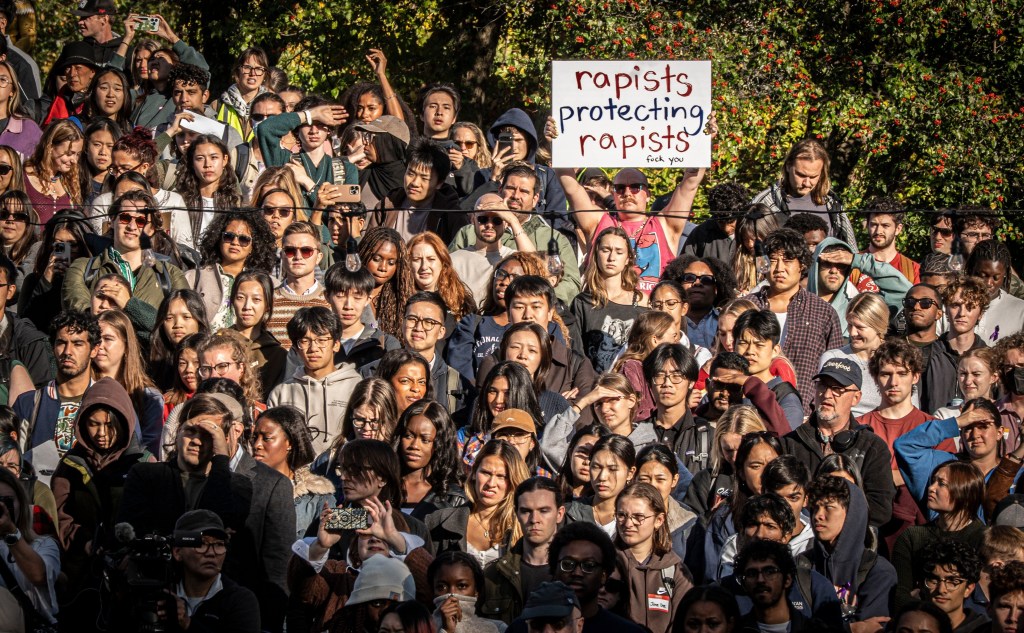
The lawsuit landed last month and named seven Cornell fraternity brothers as defendants, drawing national attention to the Ivy League school’s Greek life culture and its handling of sexual misconduct allegations. Doe’s complaint spans nearly 600 paragraphs and alleges a coordinated attack at the Chi Phi house during the 2024 party.
The other six defendants face more severe direct accusations of sexual assault and rape. Knox’s strategy for Sarabia hinges on separating his client from that group through precise parsing of Doe’s own allegations, turning her lack of specific accusation against him into a shield.

Legal observers note that such surgical motions are common in multi-defendant litigation, where each accused party maneuvers to limit exposure. Whether the court accepts Knox’s narrow framing of the facts, or views Sarabia’s alleged conduct as part of an indivisible criminal episode, will determine if the dismissal bid succeeds.
The criminal investigation James launched runs parallel to Doe’s civil action, meaning Sarabia and the other defendants face potential prosecution regardless of the lawsuit’s outcome. No criminal charges have been announced publicly.
Knox did not immediately respond to requests for comment on whether Sarabia would cooperate with the state investigation.