

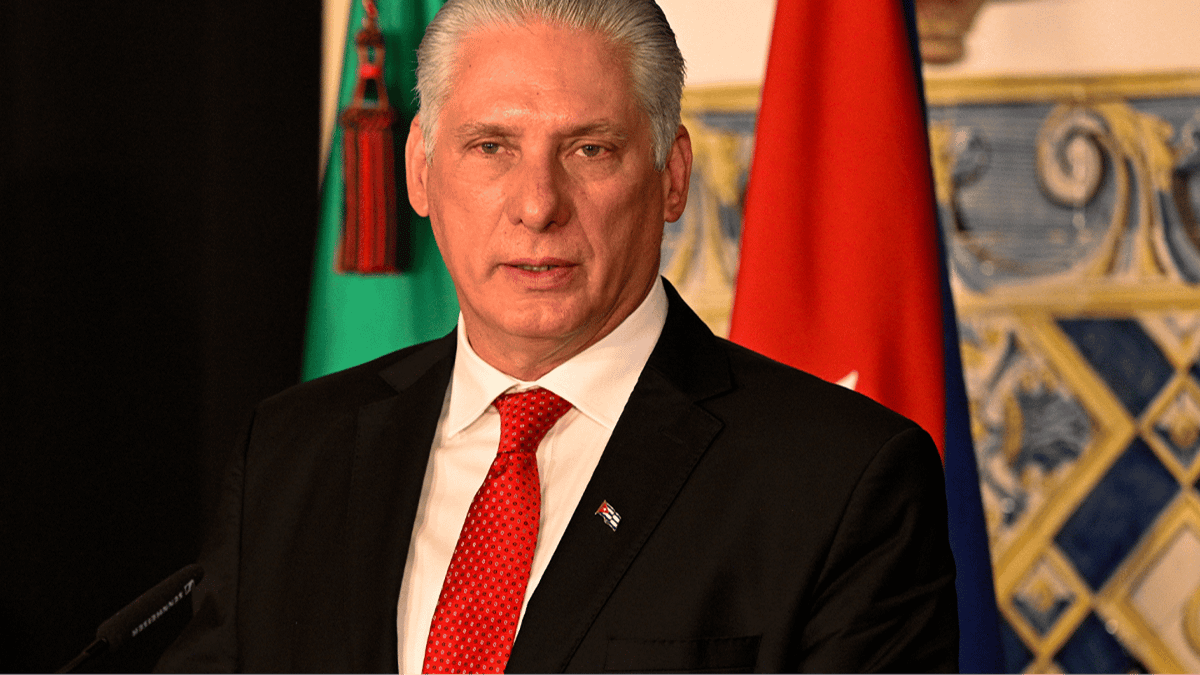
Cuba’s president has issued a defiant message to Donald Trump after US threats against the nation.
Miguel Díaz-Canel said that if the US were to attempt an invasion, Cuba would respond with what he described as “impregnable resistance.”
In a post shared on social media, he wrote: “Only in this way can the fierce economic war be explained, which is applied as collective punishment against the entire people.
“In the face of the worst scenario, Cuba is accompanied by a certainty: any external aggressor will clash with an impregnable resistance.”
Trump has again hinted at the prospect of action against Cuba, telling reporters on Tuesday: “We’ll be doing something with Cuba very soon.”
US Secretary of State Marco Rubio also weighed in, arguing that the country needs a change in leadership and saying Cuba needs ‘new people in charge’.
He said: “Their economy doesn’t work…They’re in a lot of trouble, and the people in charge, they don’t know how to fix it, so they have to get new people in charge.”
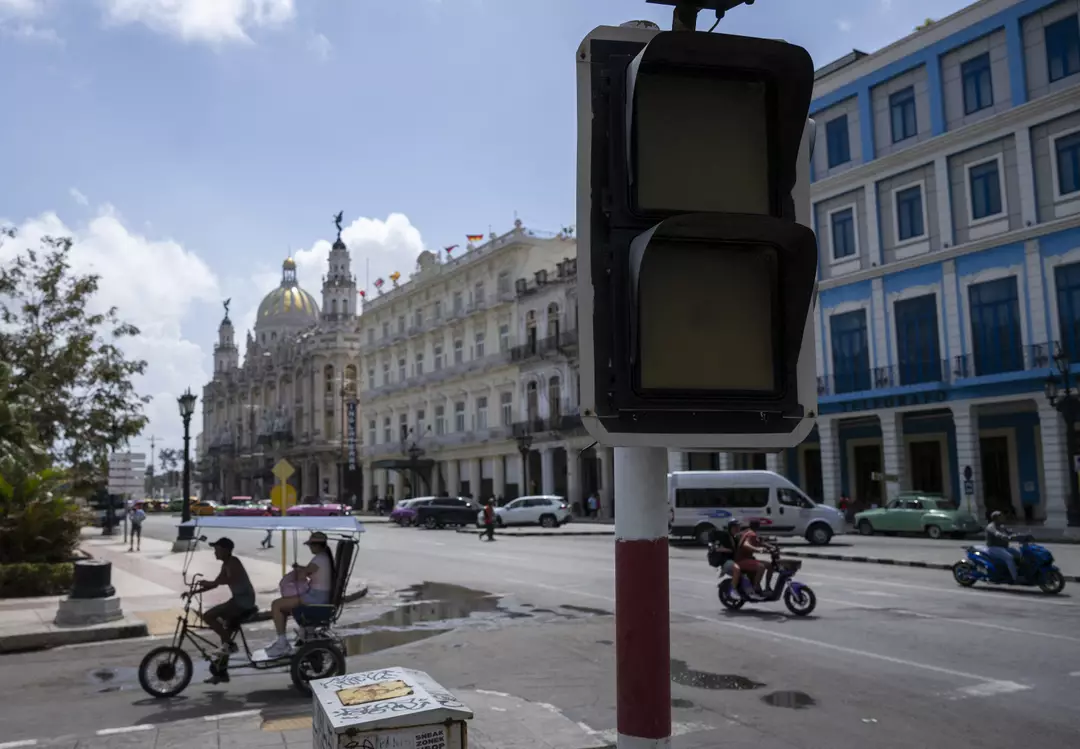
Cuba’s economy has faced steep pressure in recent years, particularly after the US cut off oil supplies that had largely been sourced via Venezuela.
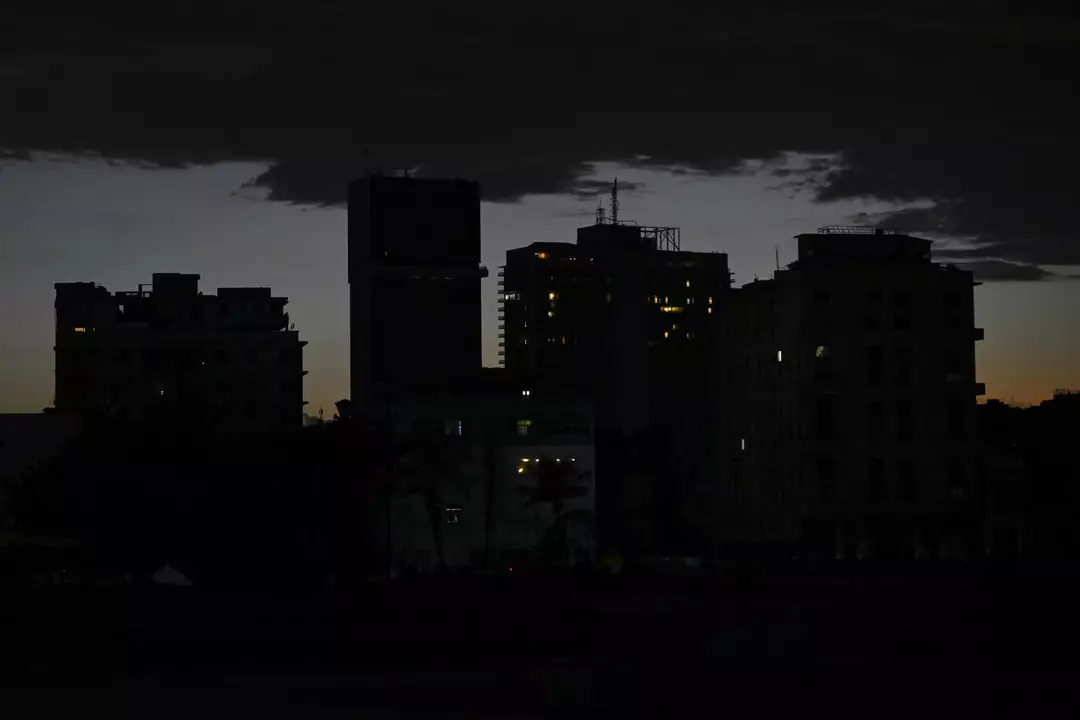
The disruption has contributed to widespread blackouts, with the island’s power network struggling to produce enough electricity. CNN reported that on Monday, most of the roughly 10 million residents were affected by an outage.
In his second term, Trump has already signalled a readiness to take direct action abroad.
Venezuela has been one of the earliest flashpoints, with Venezuelan president Nicolás Maduro detained by US forces and strikes reported in the capital, Caracas.
Following that, the US also moved to impose an embargo targeting Venezuelan oil exports.
Trump has also taken military action in Iran, launching strikes over a three-week period alongside.
With US operations in both Venezuela and Iran, Trump’s latest comments about Cuba have been viewed by some as more than rhetorical—particularly given Havana’s proximity to Florida and Trump’s Mar-a-Lago residence.
Cuba has remained a sensitive issue in US foreign policy ever since Fidel Castro’s 1959 revolution and his government’s anti-imperialist stance.
As Castro aligned more closely with the USSR, the US backed the failed Bay of Pigs Invasion in an effort to remove him, while also tightening economic pressure through sanctions and isolation.
Decades later, a shift seemed to be underway during Barack Obama’s presidency. In 2015, relations appeared to soften, with some visa rules eased so US-Cuban citizens could more easily visit family.
Trade restrictions were also loosened in certain areas, and there was a sense before 2016 that Cuba might gradually evolve away from its long-standing model.
That progress was later reversed after Trump won the presidency, when a tougher approach returned and a stringent embargo was reimposed.