


—
A dangerous heat wave is gripping millions of Americans across the Midwest this week before expanding eastward, with forecasters warning of potentially record-breaking temperatures that could pose serious health risks as people prepare to celebrate Independence Day. The intense heat is being driven by a heat dome, a meteorological phenomenon in which a large area of high pressure traps hot air like a lid, preventing it from escaping and blocking cloud formation.
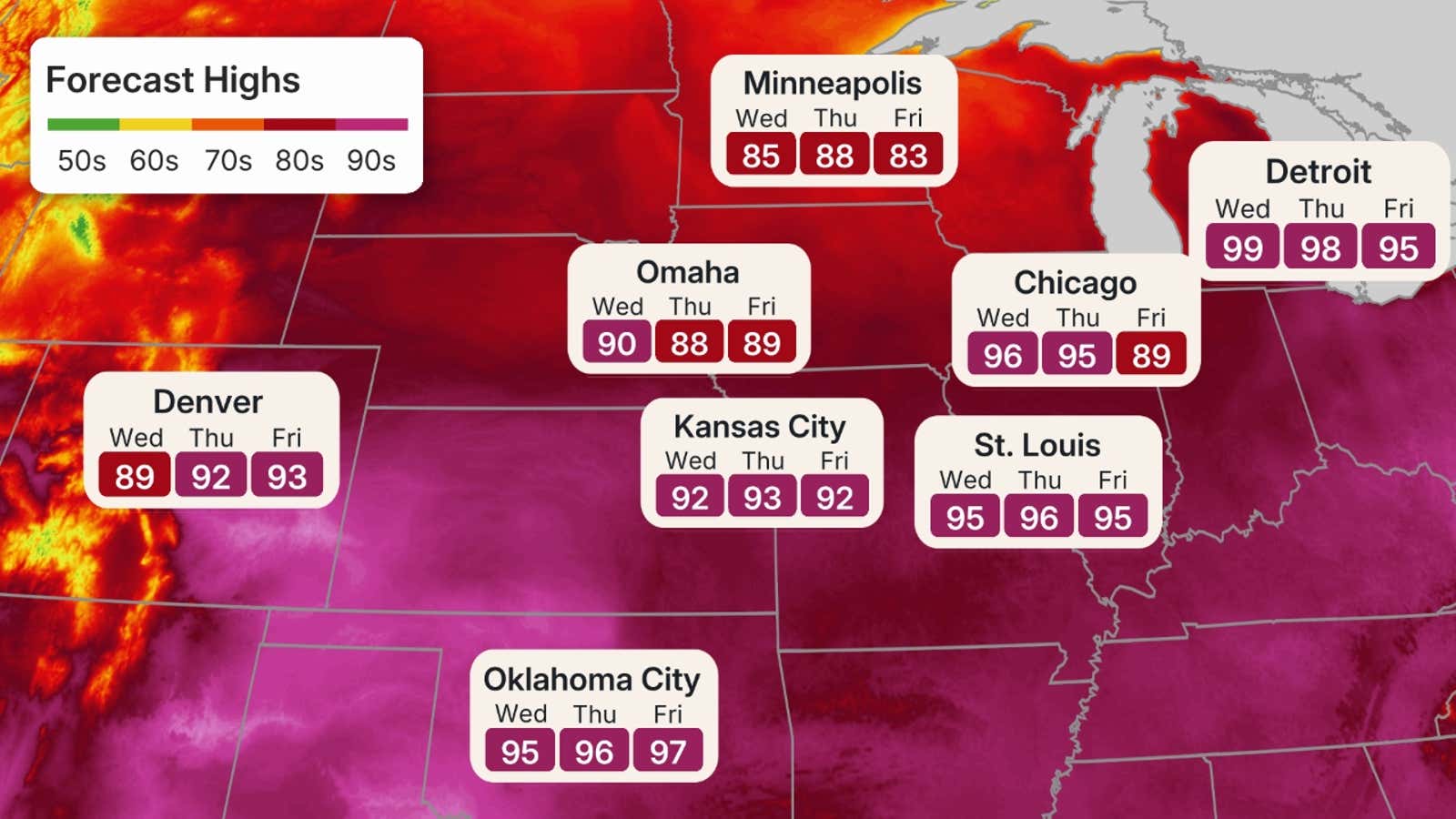
The extreme heat already intensified across the Midwest and Plains over the weekend and is now locking into place across the Great Lakes and Ohio Valley. By Tuesday, highs in the 90s are stretching as far north as Upper Michigan, with heat index values—what the temperature feels like when humidity is factored in—reaching into the triple digits across major cities. Chicago is seeing heat index values near 105 degrees, while Detroit is forecast to hit 111. The National Weather Service has described conditions as “dangerous,” with warnings that the heat index exceeds 100 degrees Fahrenheit in some areas.
The oppressive heat and humidity are already forcing communities to take action. Chicago has activated cooling centers throughout the city at community service centers, senior centers, libraries, city colleges and police districts. Flint, Michigan opened four cooling centers through Wednesday. Summer camps and outdoor activities have been canceled across the Midwest, and roads in parts of Illinois have buckled under the extreme heat. More than 100 firefighters in Milwaukee spent hours controlling a fire at a school in the dangerous conditions.
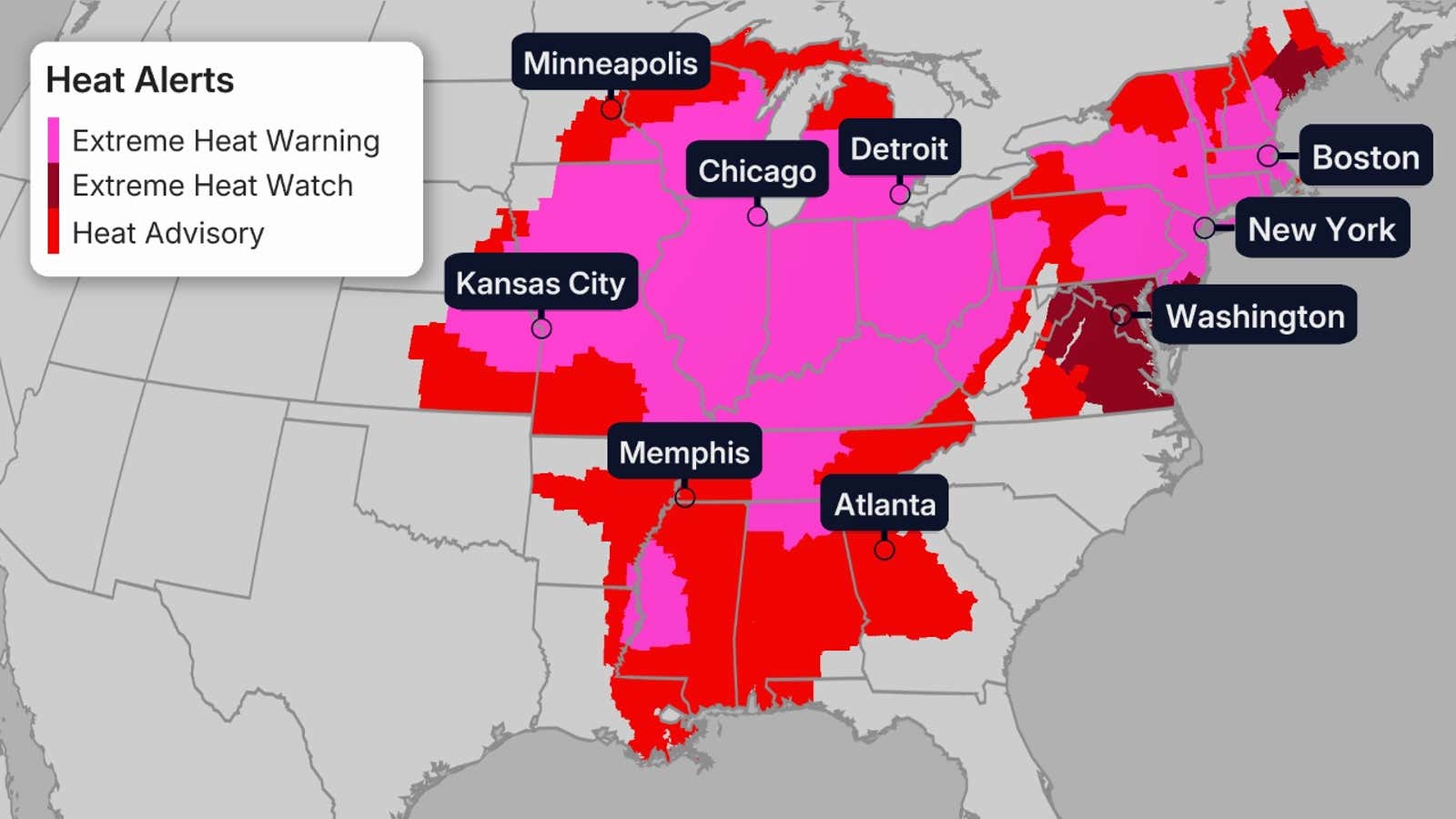
As the week progresses, the heat will continue spreading eastward. By Wednesday, the worst conditions are expected to stretch from the Great Lakes to the South and central Gulf Coast, with the heat expanding into the Northeast. The forecast calls for heat index values of 108 degrees in Detroit, 105 in Houston, 102 in New York City, and 104 in Philadelphia and Washington, D.C. By Thursday, the Northeast will experience even higher heat indices, potentially reaching 107 in New York City and 111 in Philadelphia and 110 in Washington, D.C.
The scope of this heat event is massive. As of Tuesday morning, the National Weather Service estimated that extreme heat warnings affect more than 102 million people nationwide, with another 43 million under extreme heat watches. By late this week, over 175 million Americans in the Midwest and East will be at risk of either “major” or “extreme” heat-related health issues, according to the National Weather Service’s experimental HeatRisk product. The National Weather Service has issued numerous extreme heat watches, warnings and advisories stretching from the Central Plains through the Midwest, South and Northeast.
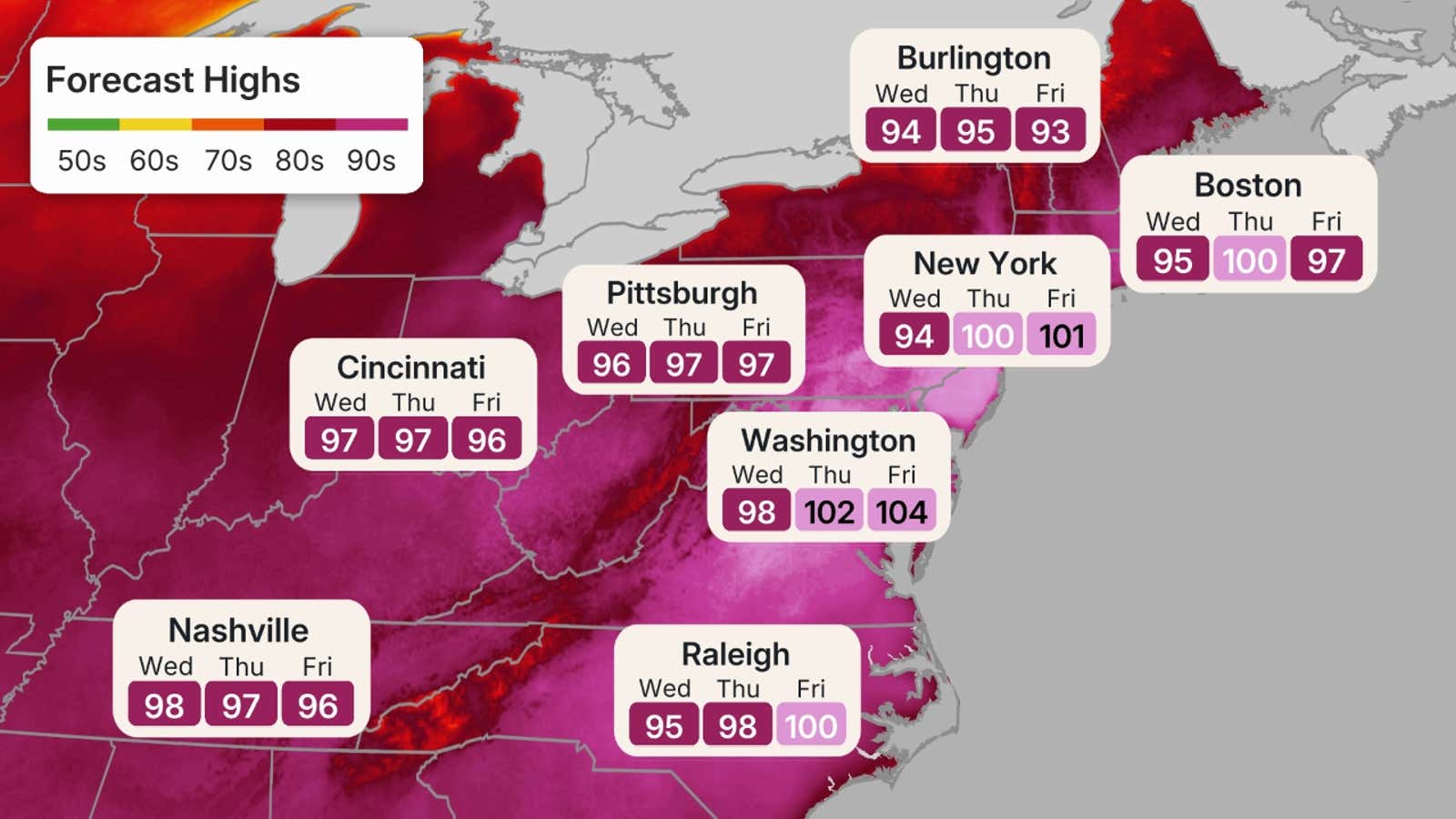
The timing of this heat wave is particularly concerning because it coincides with the Independence Day holiday weekend, one of the busiest travel and outdoor celebration periods of the year. Millions of Americans attending parades, cookouts, sporting events and Fourth of July fireworks should prepare for dangerous heat, particularly during afternoon and early evening hours. In some spots in the eastern United States, like New York City and Washington, D.C., temperatures could be the hottest in over a decade, and numerous daily temperature records are likely to fall.
One of the most dangerous aspects of this heat wave is the lack of overnight relief. Overnight temperatures will remain dangerously warm, with lows only falling into the 70s across much of the region and hovering near 80 degrees in urban areas where concrete and asphalt absorb and slowly release heat. Over 300 record warm overnight lows could be challenged through the weekend. This limited nighttime cooling makes the heat even more dangerous, as people without proper air conditioning have little opportunity to escape the heat.
The regions being most significantly impacted include a broad swath of states: Illinois, Indiana, Ohio, Missouri, Iowa, Wisconsin, Michigan, Kentucky, parts of Minnesota, Kansas, Tennessee and Pennsylvania. In eastern Virginia, meteorologists are saying this could be the region’s most significant heat wave since July 2012, which resulted in a dozen deaths in that state among more than 30 heat-related fatalities across four states. Richmond, Virginia, is forecast to top 100 degrees for three consecutive days, and in North Carolina, Raleigh could get within a few degrees of its all-time high temperature record of 106 degrees on Saturday.
Health officials are warning that the dangerously hot conditions pose serious risks to vulnerable populations, particularly older people, young children, those with respiratory problems and people working outside. However, the National Weather Service and health experts emphasize that “it’s the kind of heat that affects everyone of all ages and health conditions.” Heat is considered the deadliest type of weather in the United States, with a higher annual average death toll than tornadoes, hurricanes and lightning combined.
The high humidity compounds the danger because it prevents sweat from evaporating efficiently, making it harder for the body to cool itself. Multiple cities are preparing response efforts to protect residents. New York City has updated its more than 2,000 LinkNYC kiosks to provide directions to cooling centers within a 10-minute walk. Philadelphia declared a heat health emergency and activated more than 50 cooling centers. Washington, D.C. Is adding first aid tents, response teams and extra ambulances in service during July 4 events. Nashville crews will conduct “Heat Patrols” to check on vulnerable people, including the unhoused, and offer cold water and resources.
The heat is expected to ease somewhat over most of the Midwest by this weekend, where highs in the 90s may be limited to near the Ohio Valley. Parts of New England and the interior Northeast should see some relief by Sunday. However, the mid-Atlantic states will experience continued dangerous heat through the holiday weekend, with the peak intensity expected from Wednesday through Friday. Some relief may arrive for the mid-Atlantic by next Monday or Tuesday as the heat dome responsible for this extreme event shifts westward.
Human-caused climate change is contributing to these extreme heat events. Scientists note that heat waves worldwide are becoming more harsh and frequent because of warming from fossil fuel pollution. The average number of heat waves in the United States has doubled since the 1980s. Climate change is making the conditions for heat domes happen more often, and when they do form, they are becoming more intense and lasting longer than in the past.