

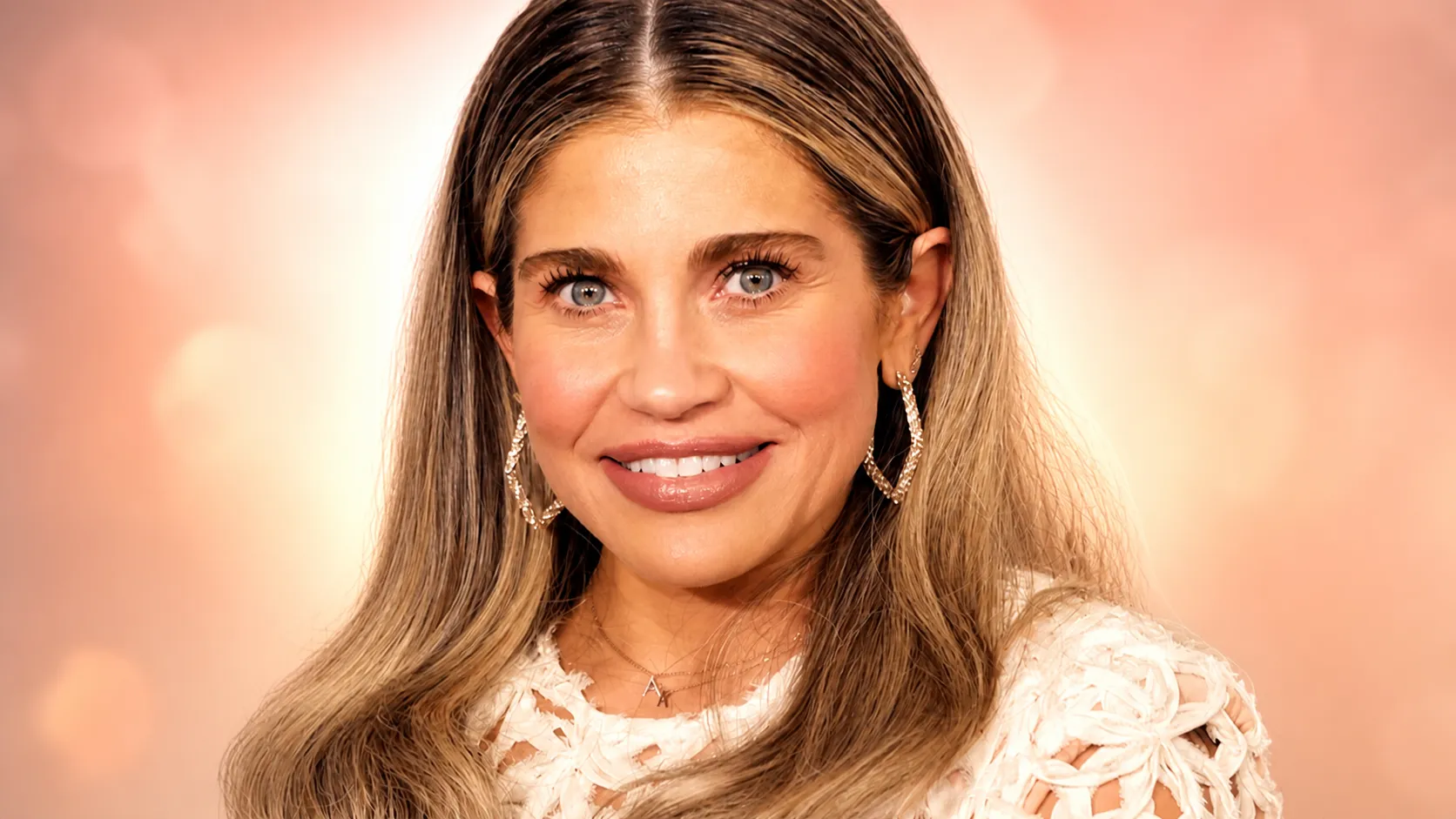
Danielle Fishel has reflected on how differently she was treated in Hollywood once she was no longer a child actor, after spending much of the 1990s working in television.
Fishel was still very young when she landed the role of Topanga Lawrence on Boy Meets World, joining the series at about 12 years old during its original run from 1993 to 2000.
Since then, she has built a career that stretches beyond acting. In recent years, Fishel has spent much of her time behind the camera as a TV director, has co-hosted the Pod Meets World rewatch podcast with former co-stars Will Friedle and Rider Strong, and in 2026 began hosting the official American Idol companion podcast.
Years later, when she returned to the franchise as part of Girl Meets World in 2015, she said the shift in how she was viewed and handled on set was impossible to miss.
Speaking on Tuesday’s (July 28) episode of the I Choose Me with Jennie Garth podcast, the 45-year-old opened up about the contrast between her younger self and the adult she had become by the time she stepped back into that world.
“I had been a real go-with-the-flow, not ruffle any feathers, be so easy to work with, a consummate professional,”
Fishel said.
She said that attitude, while meant to make her seem dependable and professional, also created an environment where others assumed she would accept whatever was asked of her without objection.
“And essentially what that meant is the producers felt like they could tell me to do whatever they wanted me to do, and I would never push back.”
According to Fishel, that dynamic changed by the time she returned for the reboot. In her personal life, she had already moved away from staying silent just to keep the peace, and that carried over into her work.
“And when we got to Girl Meets World, I think I had been so used to, in my personal life, going away from that, that when we went to the set, and I was now a new person, an adult, a grownup, who had thoughts and opinions of her own, and wasn’t incredibly shy about sharing them.”
She made clear that this did not mean calling people out publicly or confronting others in front of a crowd. Instead, she said she tried to address issues directly and in private when something made her uncomfortable.
“It was more like, when something happened I felt uncomfortable with, I would then make time to go in and talk to the people I felt uncomfortable with and say, ‘Can I talk to you about something? This makes me feel uncomfortable,’”
Fishel said, adding that the reaction to those conversations was not what she had hoped for.
She claimed: “And the response was, ‘Well, she’s gone crazy! Have you seen what’s going on with her? She’s gone crazy. She’s got rules and boundaries about the way we’re allowed to talk to her and to touch her and to interact with her. It’s shocking!’”
Hearing that, she said, led her to question herself and whether simply setting boundaries was enough for people to label her as difficult.
“There was a part of me that was like, ‘Am I? Am I difficult?’ And having to then decide, ‘Okay, well, I guess, if this is difficult,’” Fishel said. “The alternative doesn’t make me feel like I can live with myself, so I guess I just have to be difficult. And that has to be okay with me. I guess I am a difficult person, even though I didn’t think any of the things I was asking for or requesting was difficult.”
She also admitted there were moments when she wondered whether she should stay out of matters that did not directly involve her, unless a child’s wellbeing was at stake.
“Unless it’s protecting a kid from something, maybe I need to mind my own business if it doesn’t actually pertain to me,” she said she began to think. “There were times when I thought, maybe I overstepped a little there, but … I had a producer credit on the show.”