

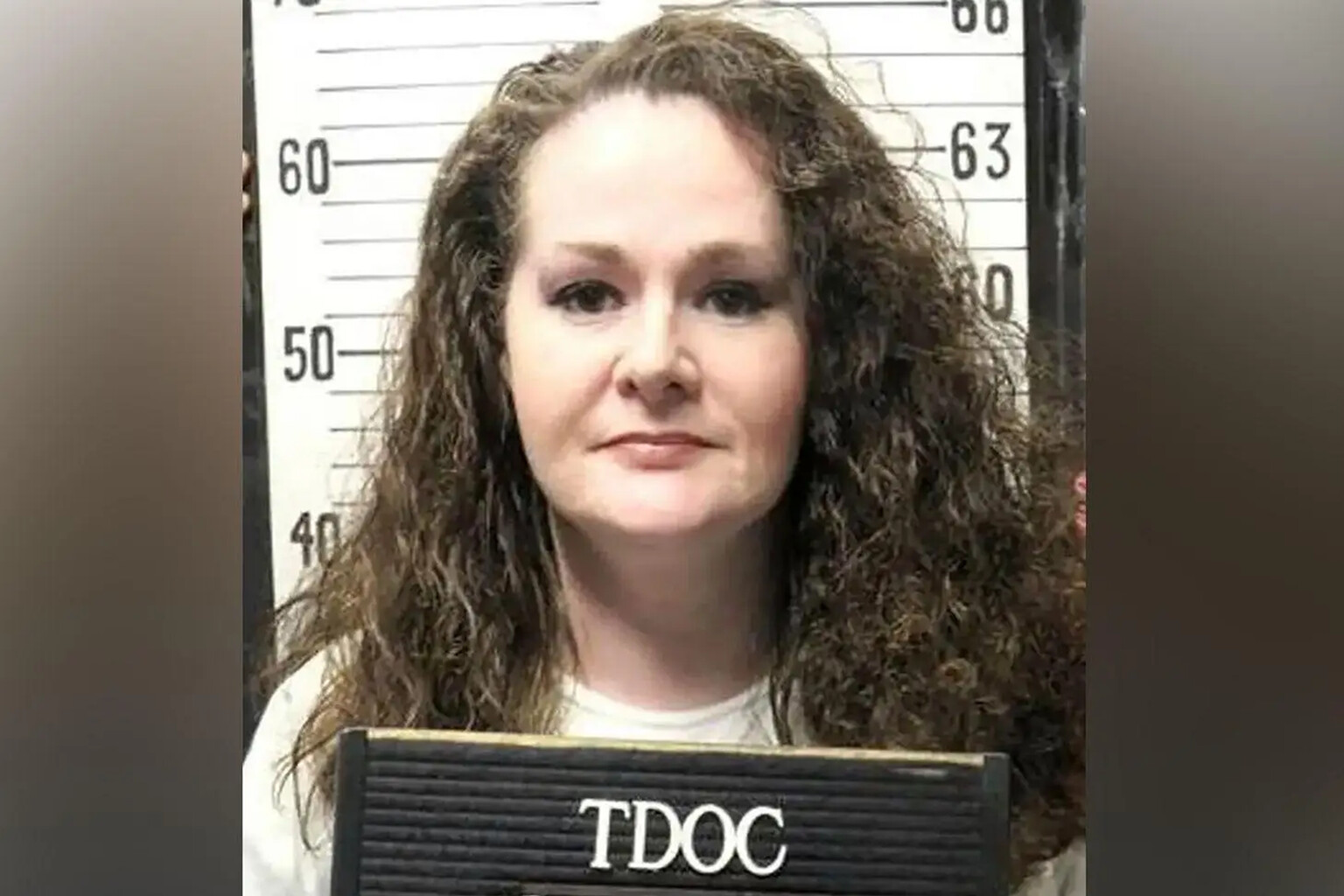
Christa Pike is conscious and speaking after Tennessee’s botched execution attempt, her lawyers said in a statement.
Randy Spivey and Kelly Gleason, Pike’s attorneys, revealed the update in an emailed statement shared with The Tennessean. The condemned woman had been unconscious and in critical condition since September 30, when the state failed to kill her with two doses of lethal poison.
“Against all odds, Christa Pike is conscious, speaking, and continues to receive critical medical care,” the lawyers wrote.
The attorneys also described conditions that have drawn fresh condemnation from her legal team. Despite severe damage to her arms from the failed procedure, Pike remains restrained.
“Despite the severe damage she endured to her arms, she is still handcuffed and shackled to the bed,” Spivey and Gleason continued. “Her recovery is medically unprecedented. Her prognosis remains unclear but, at a minimum, we expect a long recovery.”
The Tennessee Department of Correction administered two doses of pentobarbital to Pike on September 30, but the drugs failed to achieve their intended effect. Witnesses to the execution attempt were left stunned by what unfolded.
Before losing consciousness, Pike had shown signs of distress during the procedure. Her lawyers reported she was crying, whispering, and complaining of pain in her arm. She then fell unconscious in front of the witnesses present.
Medical personnel rushed her from the prison to a hospital by ambulance. She remained unconscious and in critical condition from that point until her lawyers’ latest update.
The case has drawn national attention both for its rarity and the circumstances surrounding it. Botched executions are uncommon, and a condemned person surviving lethal injection is virtually unheard of in modern American capital punishment.
Pike, now 49, has been on death row for more than three decades. She received her sentence for the 1995 murder of Colleen Slemmer, a fellow Job Corps student in Knoxville. Pike, then 18, and an accomplice lured the 19-year-old victim to a secluded spot, where Pike beat her with a chunk of asphalt and carved a pentagram into her chest.
The crime made Pike the youngest woman sentenced to death in the United States in the modern era. She has exhausted multiple appeals over the years, with courts repeatedly upholding her conviction and sentence.
Tennessee had not executed a woman since 1820 before scheduling Pike’s date. The state’s decision to proceed with her execution came after years of legal maneuvering and amid ongoing debates about its lethal injection protocols.
Defense attorney Matthew T. Mangino called the botched execution “unprecedented” in comments to media outlets. The description matches the extraordinary nature of a condemned person not only surviving but regaining consciousness after state-administered lethal drugs.
The restraints on Pike during her recovery have become a particular point of contention. Her lawyers emphasized that she remains handcuffed and shackled to her hospital bed despite the documented damage to her arms from the failed execution attempt.
Medical experts have not publicly weighed in on her specific case, but the attorneys’ statement that her recovery is “medically unprecedented” suggests the situation falls outside standard clinical experience with pentobarbital overdose or failed execution procedures.
Legal observers note that the United States has almost no precedent for what happens when an execution fails and the condemned person survives. Courts have occasionally addressed botched executions in the context of Eighth Amendment challenges to methods, but a survivor’s subsequent status remains largely uncharted territory.
Pike’s case now joins a tiny handful of known failed executions in American history, though most previous examples involved mechanical failures with electric chairs or gas chambers rather than a lethal injection protocol failing to kill after two full doses.