

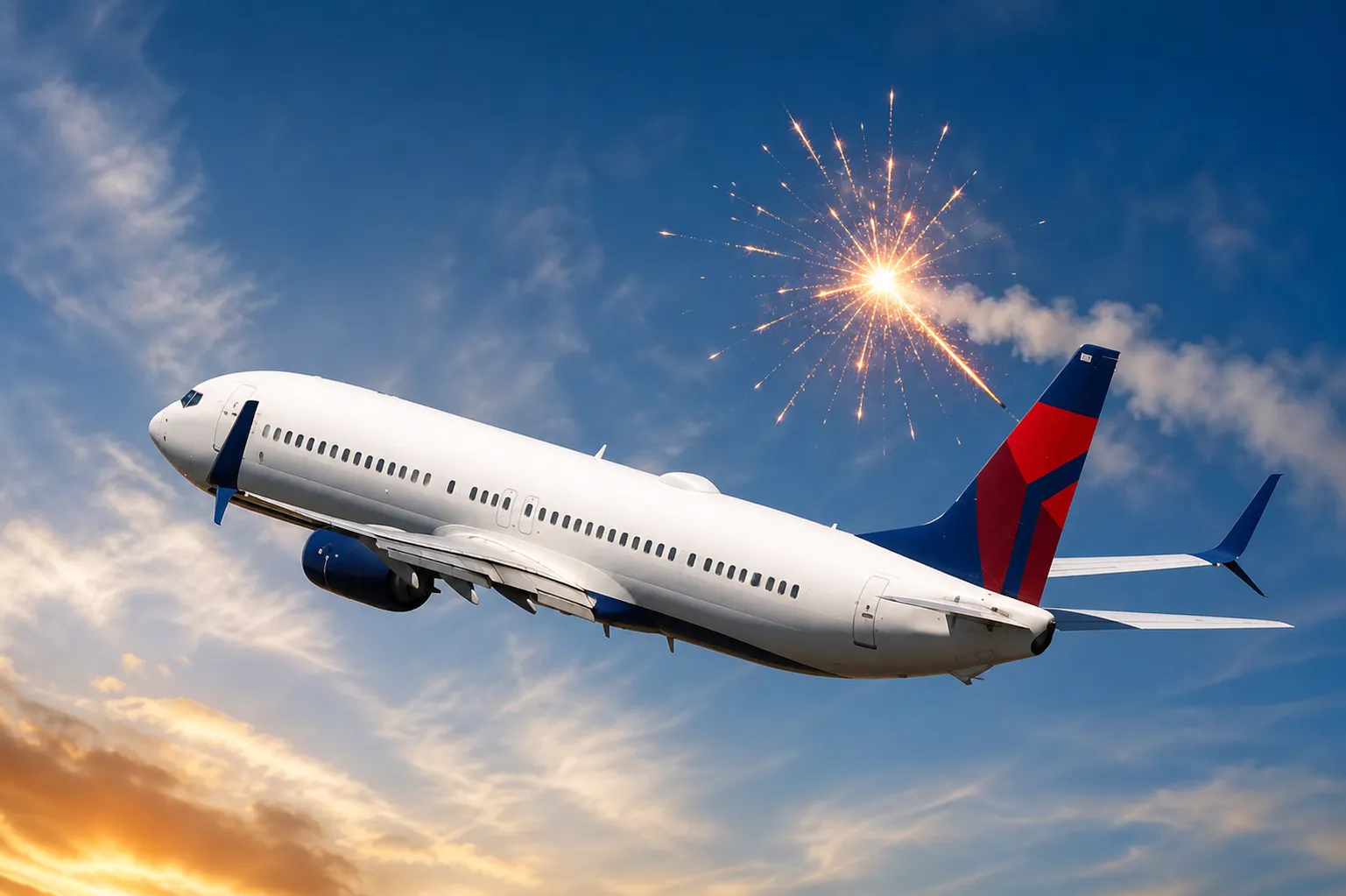
A Delta Air Lines flight made an unexpected encounter with July Fourth fireworks as it descended toward Chicago Midway International Airport on Saturday evening, jolting the crew with what they described as a sudden “big bang” just moments before touchdown.
Delta Flight 1076, an Airbus A319 carrying 52 passengers and six crew members, was arriving from Atlanta when the pilot radioed air traffic controllers around 8:30 p.m. Local time to report that a firework had struck the aircraft during its final descent. At the time, the plane was flying at an altitude of approximately 200 to 250 feet above ground level, placing it in one of the most critical phases of flight.
Air traffic control audio captured the tense moments following the impact. “We just had a firework hit our plane,” the pilot told controllers. “We’re just hoping it was just a mortar that went off underneath, but definitely felt a big bang.”
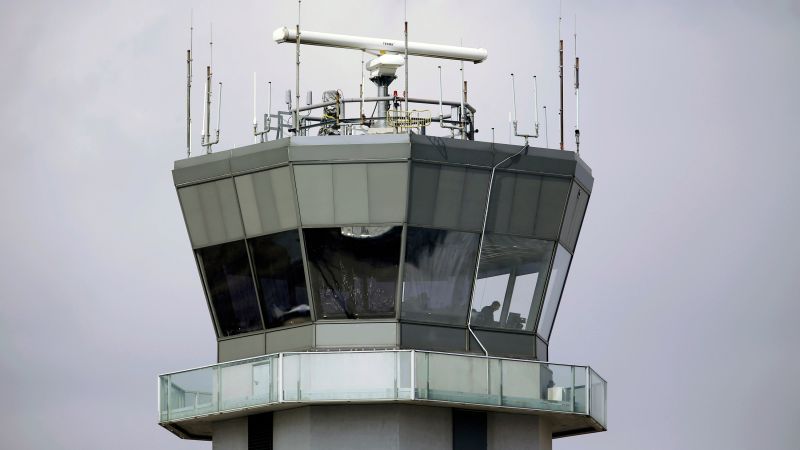
The incident did not derail the landing. The crew continued their approach, and the aircraft touched down safely at Midway without declaring an emergency. The plane taxied normally to the gate, where it was immediately taken out of service for inspection.
The controller responded to the report by informing the Delta crew that there had been “multiple reports” of similar incidents that evening. The controller added that city officials were aware of the danger posed by fireworks being launched from nearby residential neighborhoods in close proximity to the airport’s approach corridor. Air traffic control audio indicated that officials said they would notify Chicago police, though the controller expressed uncertainty about what enforcement action would be possible.
This was not an isolated incident during Saturday evening’s holiday celebrations. When a Southwest Airlines flight subsequently descended toward Midway, the controller warned the incoming crew: “Welcome to the war zone.” The Southwest pilots responded with an ironic “That’s reassuring.”
The hazard created by residential fireworks is particularly acute at Chicago Midway, which sits in an urban environment surrounded by densely populated neighborhoods. Unlike many major airports with extended buffer zones, Midway’s approach corridors pass directly over residential areas. During Fourth of July celebrations, when fireworks are launched from homes below the flight path, mortar-style fireworks can reach altitudes that overlap with aircraft descent paths.
Smaller consumer fireworks typically burst between 50 and 200 feet in the air, with some professional displays reaching as high as 1,200 feet. This altitude range places them squarely in the zone where aircraft are approaching for landing.
Before the incident, air traffic controllers had already warned Flight 1076’s crew about the fireworks hazard. “Delta 1076, use caution, there are multiple homes near the approach end shooting off fireworks,” a controller said shortly before the impact.
In the aftermath, reports emerged about the extent of any damage. Chicago police told media outlets that the firework caused minor paint damage to the aircraft’s exterior. However, Delta’s own post-flight inspection by mechanics found no damage requiring further action. The discrepancy between visual observation of minor cosmetic damage and mechanical inspection findings is not unusual, as surface damage from fireworks does not necessarily indicate structural or system compromise.
The aircraft remained in service pending completion of all required inspections. No injuries were reported among passengers or crew members, and cabin conditions remained stable throughout the landing sequence.

The Federal Aviation Administration opened an investigation into the incident. Investigators are expected to analyze flight data recordings, cockpit communications, and airport surveillance footage to determine the origin, altitude, and trajectory of the fireworks involved, as well as assess whether established safety zones around the airport were breached.
The incident highlights ongoing challenges for commercial aviation at urban airports during major holidays. The event occurred on what was already a record-breaking travel day for American aviation, with the Transportation Security Administration screening nearly 18.7 million passengers at airports nationwide between June 30 and July 6. Chicago’s two airports were projected to handle nearly 1.95 million passengers during this holiday travel rush.
The pilot’s calm professionalism and the aircraft’s structural integrity allowed the situation to resolve without escalation. Modern commercial aircraft are engineered to withstand impacts from birds, hail, and other debris, though fireworks present unique risks due to their explosive and incendiary properties. These hazards are considered most dangerous during takeoff and landing, when aircraft are at lower altitudes and pilots are executing critical maneuvers.
The incident serves as a reminder of the delicate balance required to maintain aviation safety in densely populated urban centers during major public celebrations.