

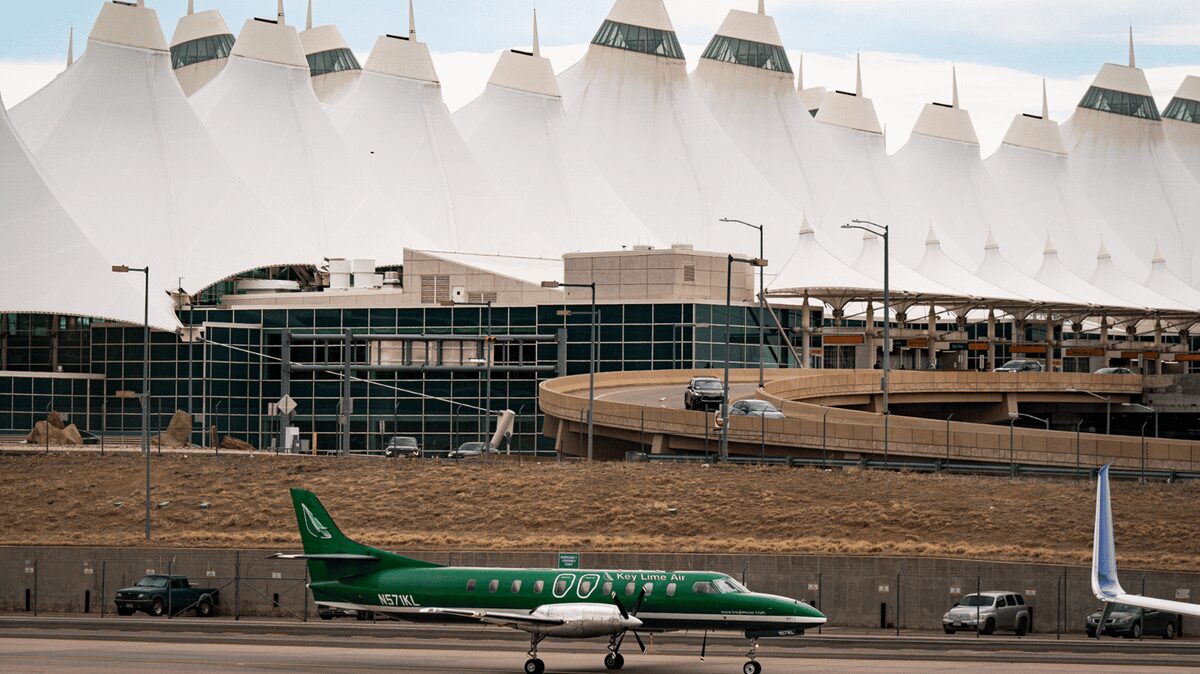
A deadly event at Denver International Airport has raised fresh questions about how perimeter security is managed at one of the country’s largest aviation hubs.
On Friday (May 8), a person was killed after being hit by a Frontier Airlines plane on a runway shortly before takeoff. More than 200 passengers onboard were instructed to evacuate immediately.
Reports indicate the individual gained access by jumping the airport’s perimeter fence and making their way onto the runway.
After the incident, Denver airport said in a statement: “[The airport] will perform an incident analysis and after action in the coming days which will include reviewing the ongoing investigation, including our perimeter security program.”
The airport added that it was ‘gathering more information in coordination with the airport and other safety facilities’.
The situation has also spotlighted the difficulty of protecting an airfield that spans an enormous footprint—an area described as twice the size of Manhattan and larger than the city limits of Boston.
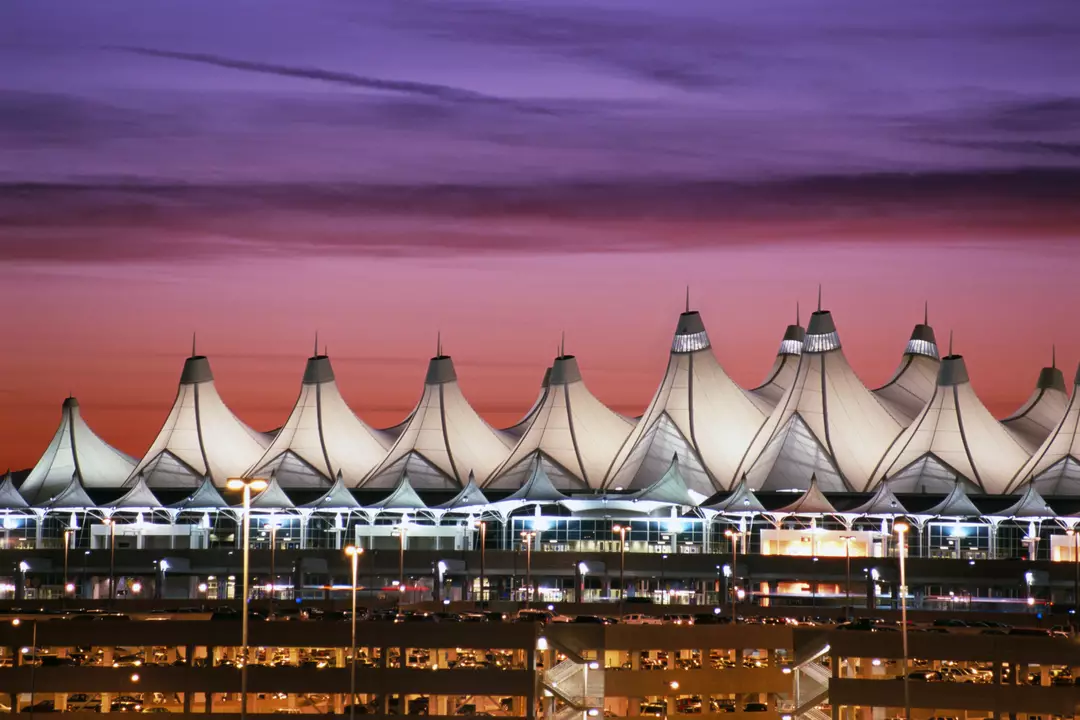
Denver International Airport has roughly 36 miles of perimeter fencing, with personnel carrying out regular checks along the boundary.
According to the airport’s website, the property covers 53 square miles, making it about twice the size of Manhattan, which totals about 22.8 square miles.
The airport has also been described as being ‘larger than the city boundaries of Boston, Miami or San Francisco.’
DEN ranks as the third busiest airport in the US by passenger numbers, and its land area is so vast that airports such as ‘Hartsfield-Jackson Atlanta, Chicago O’Hare, Los Angeles International and Dallas Fort Worth’ could fit inside its footprint.
One aviation expert said that scale can create real vulnerabilities.
“The more expansive the land area of an airport, the more perimeter to defend, the more remote areas, and the more complex terrain, all of which provide more opportunities for unauthorized entry,” William Rankin, an adjunct professor at Florida Institute of Technology specialising in researching airport management and safety said.

Even so, Rankin emphasized that incidents involving people on foot entering restricted airfield areas—like what happened Friday—are ‘extremely rare’.
He also said the incident ‘shouldn’t make citizens lose confidence in the security of major US airports.’
This was not the first reported perimeter breach at the airport. The outlet investigation found that between 2004 and 2015, there were eight such incidents.
A spokeswoman for the airport at the time said: “We believe many folks do not realize they are even on airport property — it looks like farmland and a breach may be miles and miles away from a runway or the terminal.”