

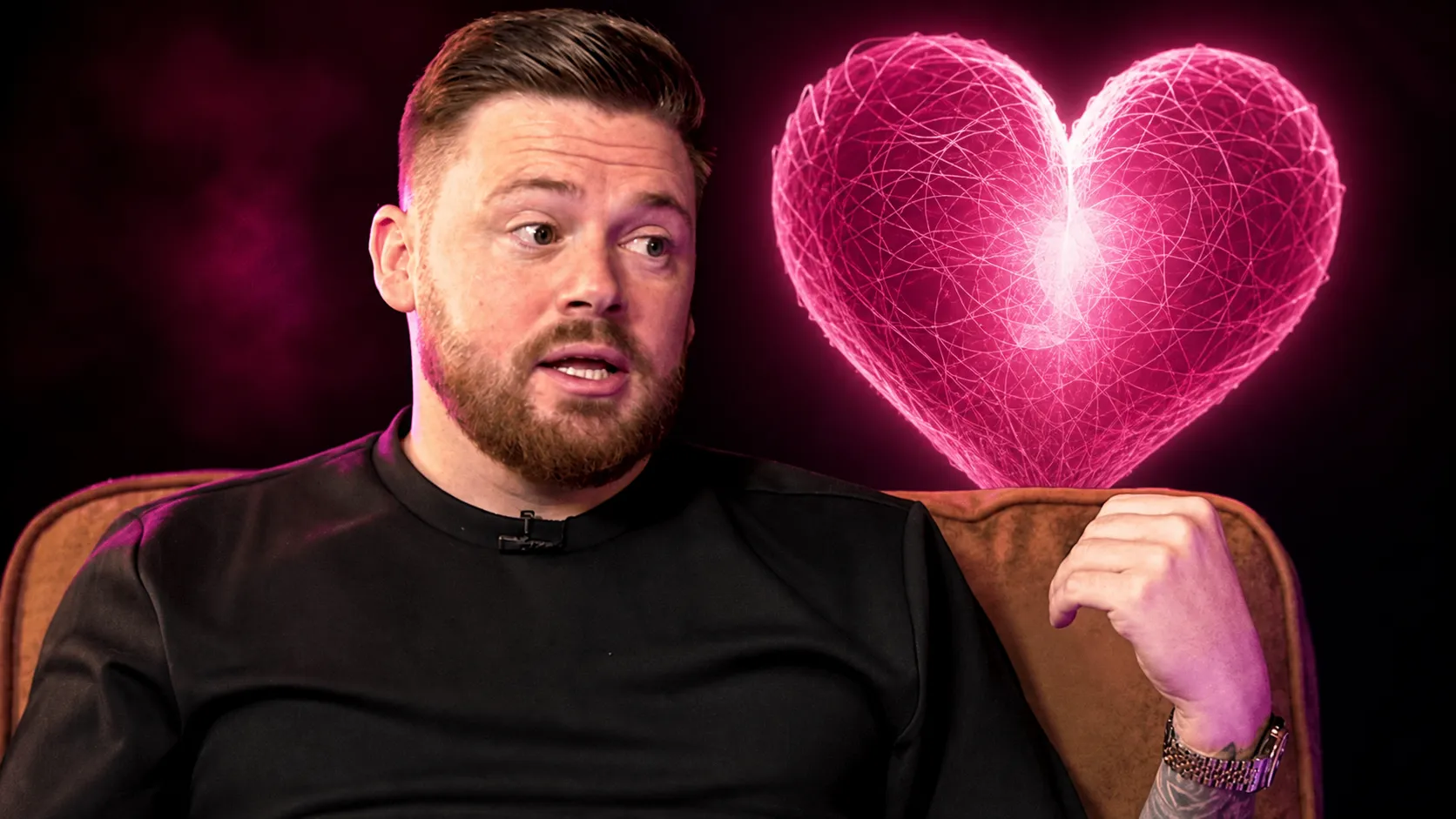
What does love feel like to someone with psychopathy-related traits? One man who has been diagnosed with several mental health conditions has shared how relationships work from his perspective.
Lewis Raymond Taylor says he has been diagnosed with antisocial personality disorder, emotionally unstable personality disorder, and bipolar II, diagnoses he says ‘officially make him a psychopath’.
Healthline notes that psychopathy is not considered a formal clinical diagnosis in the US, but that the label can be used to describe traits linked to antisocial personality disorder, such as reduced empathy. The same is true of the term ‘sociopath’, which is also not an official diagnosis, even though both labels are still widely used in everyday conversation.
Taylor, who was featured in the 2023 Netflix documentary The Psychopath Life Coach, spoke about romance and attachment during an appearance on Lisa Bilyeu’s Women of Impact podcast. The film follows his rise from a criminal past to running a coaching business, and sparked strong reactions from viewers when it was released.
During the conversation, Lisa raised a question many people may wonder about but hesitate to ask, pressing Lewis on what the phrase ‘I love you’ actually means to him.
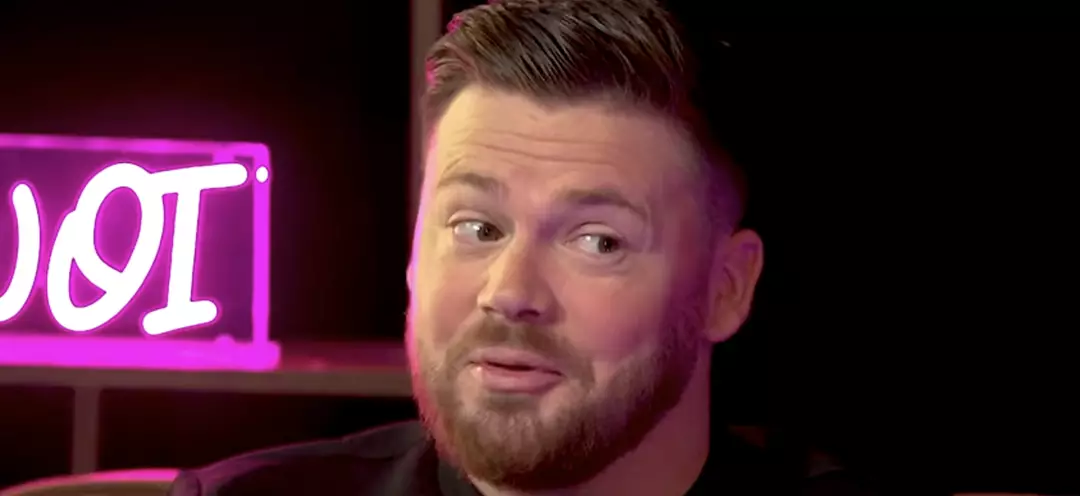
“So, I’ve never experienced, as far as I can remember, any warm, fuzzy, sensation of connection,” he told the host.
“I can get infatuated with somebody, and there’s that early kind of excitement almost. But for me, I have to know that they love me, and they have to show me that.”
Lewis, who has previously been married, said his former partner was highly supportive and ‘understood him very well’, though he added on the podcast that ‘they didn’t quite match’.
He also said acts of service matter most to him, explaining that he needs visible proof of affection in order to accept that it is real.
“I can see it. I can visually understand it and say, ‘OK, that person really loves me,’” he said.
He explained that unless love is demonstrated clearly, he does not feel it ‘at all’.

He went on to say that after the birth of their son, Ocean, his child naturally became the priority for his partner, and that shift left him feeling uncared for.
According to Lewis, when he does not feel loved, his reaction is to pull away and stop wanting to return affection.
He also acknowledged engaging in ‘love bombing’, though he said he tells the people he dates when he is doing it.
Lewis said it is not something he deliberately wants to do, but rather a behavior he feels driven toward.
“I just have this desire to be admired, and be loved and I want to give my all to it, so I get extreme,” he said.
WebMD describes love bombing as ‘an emotional manipulation technique that involves giving someone excessive compliments, attention, or affection to eventually control them,’ adding that it often appears at the start of a ‘toxic or unhealthy relationship’.
Mental health experts generally describe love bombing as a red flag rather than a romantic communication style, because the intense attention can be followed by withdrawal, criticism, or attempts to create dependency. That does not mean every intense early relationship is abusive, but it is one reason professionals urge people to pay attention to patterns, boundaries, and whether affection is being used to gain control.
Reflecting on his own pattern, Lewis said that after intense early affection, he would often ‘switch off’. Before becoming ‘consciously aware’ of it, he explained that once he received the love and validation he wanted, he would internally treat it as ‘mission complete’ to make himself feel better.
Later in the interview, Lewis connected some of these feelings to his upbringing, saying he grew up believing he was ‘unlovable’ and claiming his father ‘put him down a lot’.
His comments also underline an important distinction: having traits associated with antisocial personality disorder does not automatically mean every person will describe relationships in the same way. Clinicians generally treat psychopathy as a cluster of traits rather than a standalone diagnosis, and experiences with attachment, remorse, empathy, and intimacy can vary from person to person.
That is part of why conversations like this tend to draw attention. For some listeners, Taylor’s account offers a rare first-person description of how affection and validation can be processed differently; for others, it raises broader questions about manipulation, accountability, and how much a diagnosis should explain behavior inside relationships.