

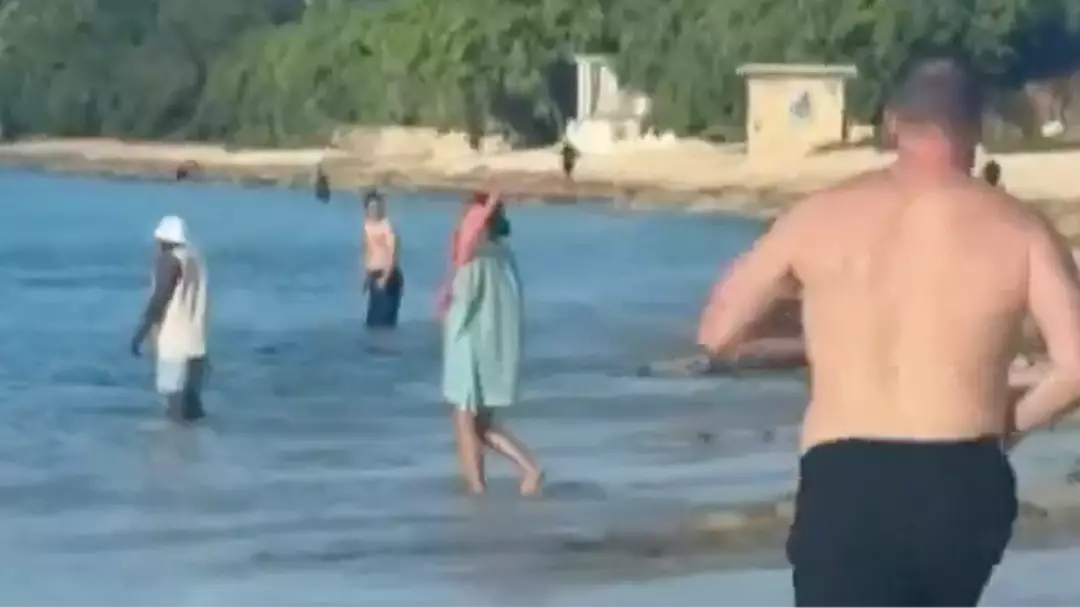
A hero recounted his brave attempt to save a woman from a shark attack.
Arlene Lillis, hailing from Minnesota, was swimming near St. Croix in the Virgin Islands when she was attacked by a shark.
Registered nurse Christopher Carroll, from Spanish Fork, Utah, did not hear the beachgoers’ cries of alarm and rushed into the water to try and rescue her.
Upon reaching Arlene, Christopher made the shocking discovery that she had fallen victim to a shark attack.
He managed to safely bring the conscious Arlene back to shore, comforting her by assuring she wasn’t alone and would receive medical attention.
Sadly, despite his valiant efforts, Arlene succumbed to her injuries later at the hospital.

Christopher recounted the moment he realized the severity of the situation as he approached the injured Arlene in the blood-filled water.
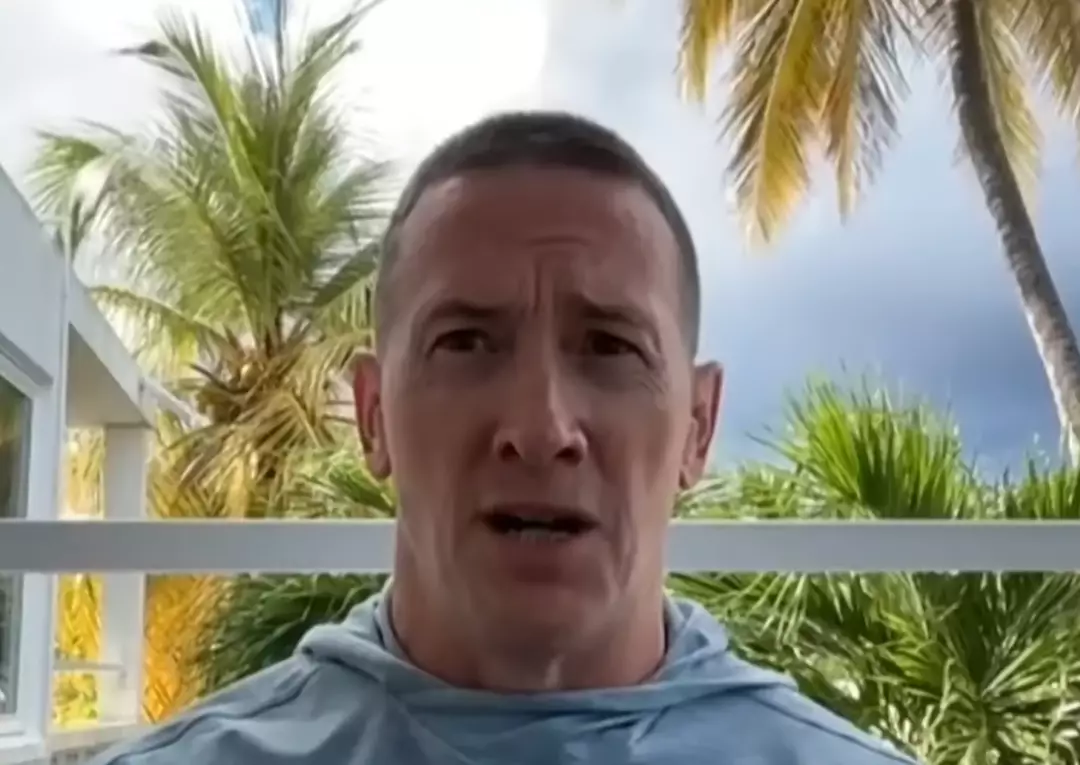
During an interview with TODAY, he recalled, “There were people shouting, ‘Don’t go, there’s a shark’, but I didn’t hear any of it. I didn’t hear it at all.”
He added, “My second clue should have been that nobody was in the water.”
Upon reaching her, Christopher saw the devastating extent of her injuries.
“Her arm had been amputated below the elbow,” he explained. “At that point I knew it was a big, big shark.”
While bringing her back to shore, he tried to offer reassurance, saying, “She said she didn’t think she was going to make it, and I told her she was going to be okay, and I just kept trying to reassure her that she wasn’t alone, we’re gonna get her help and get her to the hospital.”
Family friend Andrew Gamble paid homage to Arlene, stating, “She loved the water, she loved people. She was a wonderful human being.”
Fortunately, shark attacks are not a common occurrence.
Many attacks happen when a shark mistakenly identifies a human as food and retreats upon realizing the error.
However, even a test bite can exert enough pressure to cause serious and sometimes fatal injuries.
Although there are numerous shark species, only a few are known to be dangerous to humans.
The species most frequently responsible for attacks include Great Whites, Tiger Sharks, and Bull Sharks, which are often found in shallower coastal waters.
This proximity to shorelines brings them into more contact with humans compared to oceanic species like Oceanic White Tips and Blue Sharks, which have also been known to cause fatal attacks.