

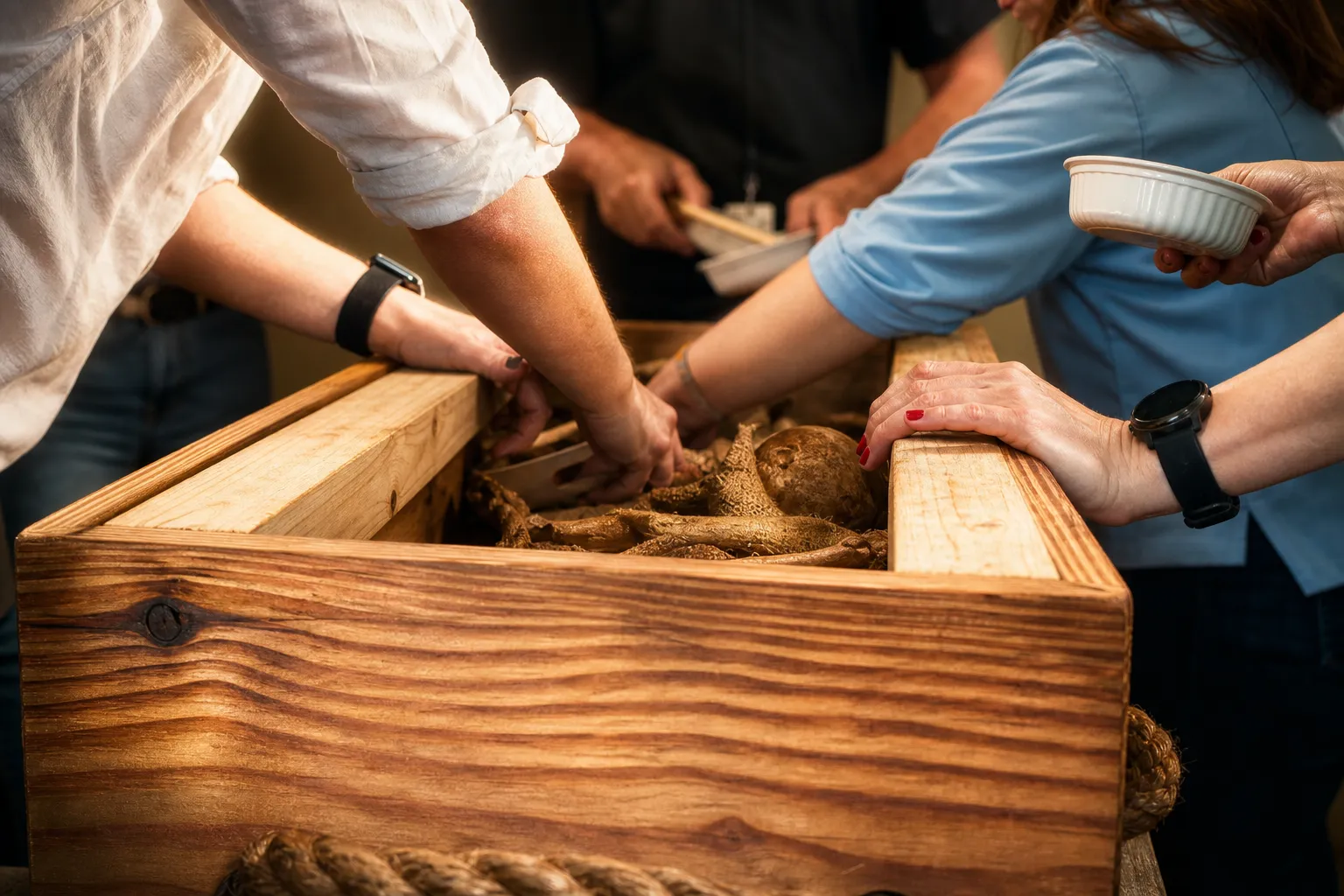
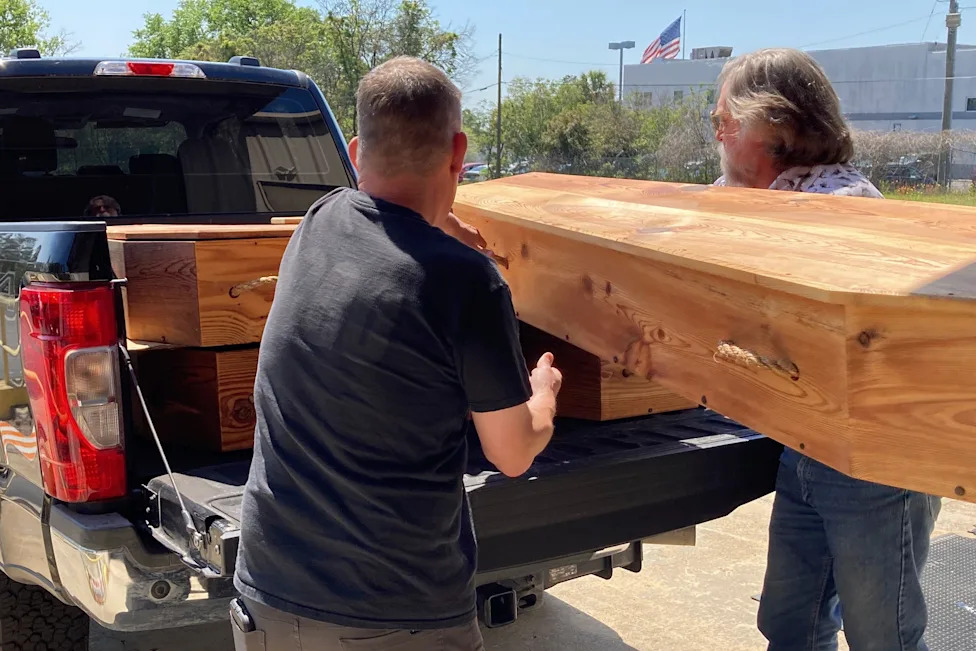
After 246 years, Private John Pumphrey of Anne Arundel County, Maryland, is finally known by name. Through a combination of cutting-edge DNA testing and meticulous genealogical research, a team of forensic scientists and archaeologists has solved one of America’s oldest unidentified remains cases, giving a young Revolutionary War soldier the recognition long denied to him.
Pumphrey died on August 16, 1780, at the Battle of Camden in South Carolina, one of the Continental Army’s most devastating defeats. His body was among approximately 900 killed in the battle, many of whom were left where they fell, abandoned to the elements and wildlife in the South Carolina heat. Like countless others, his body was hastily buried in a shallow grave and forgotten for nearly two and a half centuries.
The breakthrough began in 2020 when archaeologists surveying the Camden Battlefield discovered human bones protruding from the eroded ground. Excavations in 2022 uncovered 14 sets of remains, 12 of them Continental soldiers. One of these, designated simply as “Camden 9B,” became the focus of an extraordinary effort to identify long-lost fallen soldiers using modern forensic technology.
The remains of Camden 9B presented challenges for traditional analysis. Working with Astrea Forensics, a California laboratory specializing in ancient DNA, researchers extracted genetic material from the petrous portion of the temporal bone, a delicate structure behind the ear at the base of the skull. This proved crucial, as the teeth, typically reliable sources of DNA, yielded nothing. From this tiny sample, scientists extracted three types of DNA—autosomal, X chromosome, and Y chromosome—marking some of the oldest genetic profiles ever successfully created for genealogical analysis.
When Allison Peacock, founder of FHD Forensics, the Texas-based company conducting the investigation, uploaded the DNA profiles to genealogy databases FamilyTreeDNA and GEDmatch, the results exceeded expectations. The team discovered approximately 20,000 DNA matches linking the remains to living relatives, despite the centuries-long genetic distance. Yet the task remained daunting: sifting through thousands of potential connections to build family trees spanning seven, eight, or nine generations to pinpoint a common ancestor.
A critical breakthrough came through maternal DNA, leading investigators to Russ Hudson, a retired federal agent in Gettysburg, Pennsylvania, who possessed matching genetic markers. Hudson volunteered to conduct archival research, helping construct a profile of an orphaned teenager from Maryland’s Anne Arundel County who had enlisted in the militia at approximately 13 years old. Combined with evidence from other researchers, a narrative emerged of a young, dispossessed boy seeking opportunity through military service.
Historical records confirmed the connection. Pumphrey’s family descended from Walter Pumphrey, a Quaker who immigrated from England in 1678 and settled in Burlington, New Jersey, before relocating to the Baltimore area in 1713 to provide carpentry services. By Pumphrey’s time, the family was well-established in Anne Arundel County as prominent Quakers. Yet this young member of the pacifist community had felt compelled to enlist, losing both parents as a child, he had joined the 7th Maryland Regiment in January 1777.
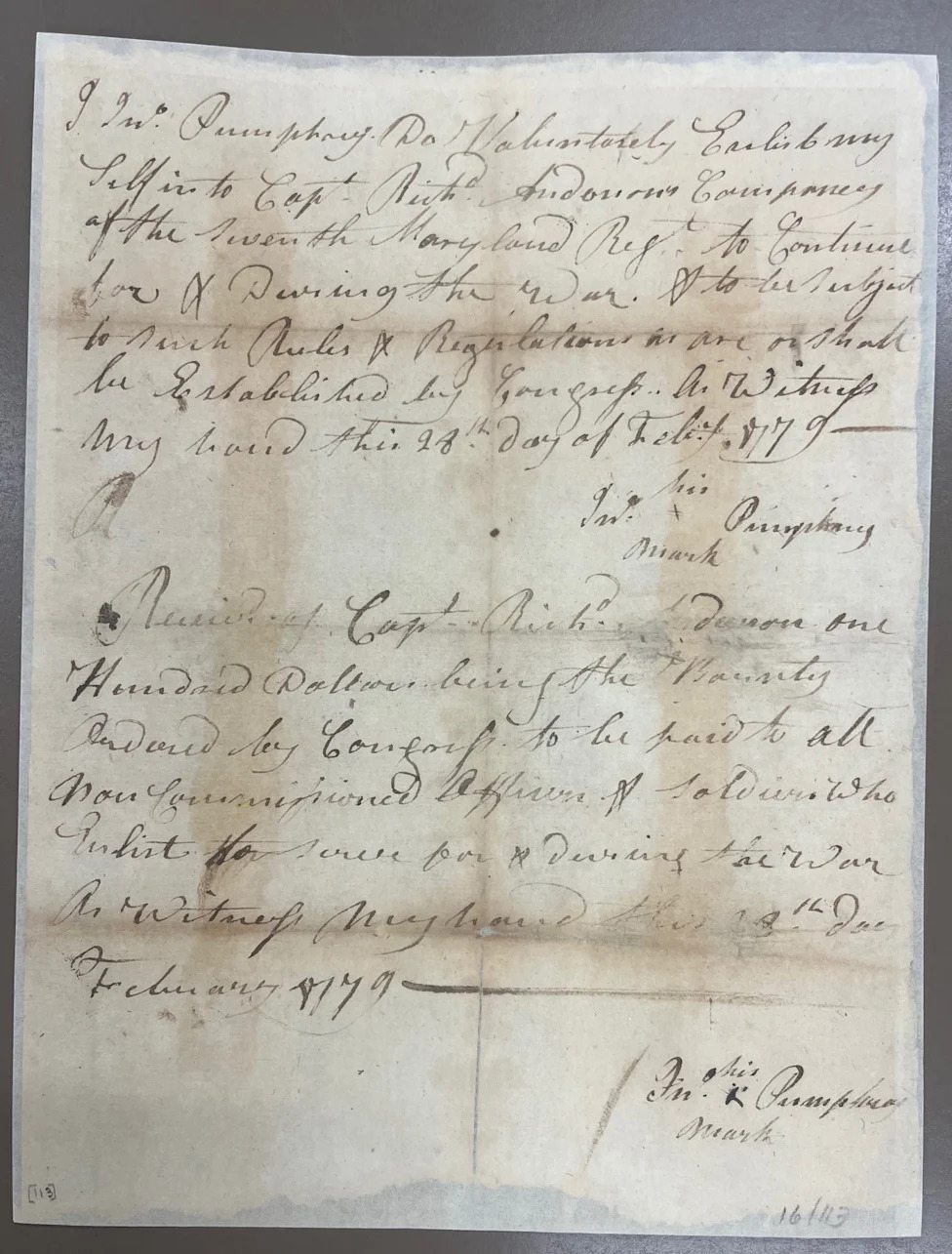
Based on the growth plates in his skeleton, biological anthropologists estimate Pumphrey was between 13 and 15 years old when he enlisted. A historical re-enlistment contract dated February 28, 1779, bears his mark—an “X”—suggesting he never learned to write his name. Over his three and a half years of service, he marched approximately 1,000 miles, participating in some of the Continental Army’s most significant battles. He was at Valley Forge during the brutal winter encampment and fought at Brandywine, Germantown, and Monmouth before heading south to South Carolina, where the Battle of Camden would be his final battle.
The identification process revealed connections that stunned living relatives. Nancy White, a 71-year-old from the Eastern Shore of Maryland, learned that the Revolutionary War soldier was her fourth great uncle. She and her sisters, whose DNA samples proved crucial to the identification, had been researching their family genealogy for years but had dismissed any connection to a Pumphrey who fought in the war, given their family’s Quaker heritage and the sect’s historical pacifism. Pumphrey’s circumstances, losing both parents as a child, apparently led him away from the pacifist traditions of his relatives.
On June 18, 2026, some 54 people identified as Pumphrey’s last remaining next of kin gathered in his home county of Anne Arundel at the 19th-century Benson-Hammond House to celebrate the revelation of his identity. The announcement coincided with the nation’s 250th anniversary, and relatives wept during the emotional ceremony as his name was said aloud for the first time in centuries.
The significance of this identification extends far beyond Pumphrey himself. Researchers involved in the project believe it represents the oldest John Doe case ever solved using genetic genealogy. With 13 other unidentified soldiers from the Camden Battlefield remaining to be identified, the success suggests that modern forensic DNA technology may eventually unlock the identities of countless unnamed military casualties from the Revolutionary War, the Civil War, and other conflicts where records were lost to history’s fog.
Pumphrey’s remains rest in Camden’s historic Quaker Cemetery, near the battlefield where he fell. His gravestone, which once read simply “UNKNOWN. REV WAR,” will now carry his name. For a young man who left his home more than 245 years ago seeking a better life and found only an unmarked grave, recognition at last has come.