

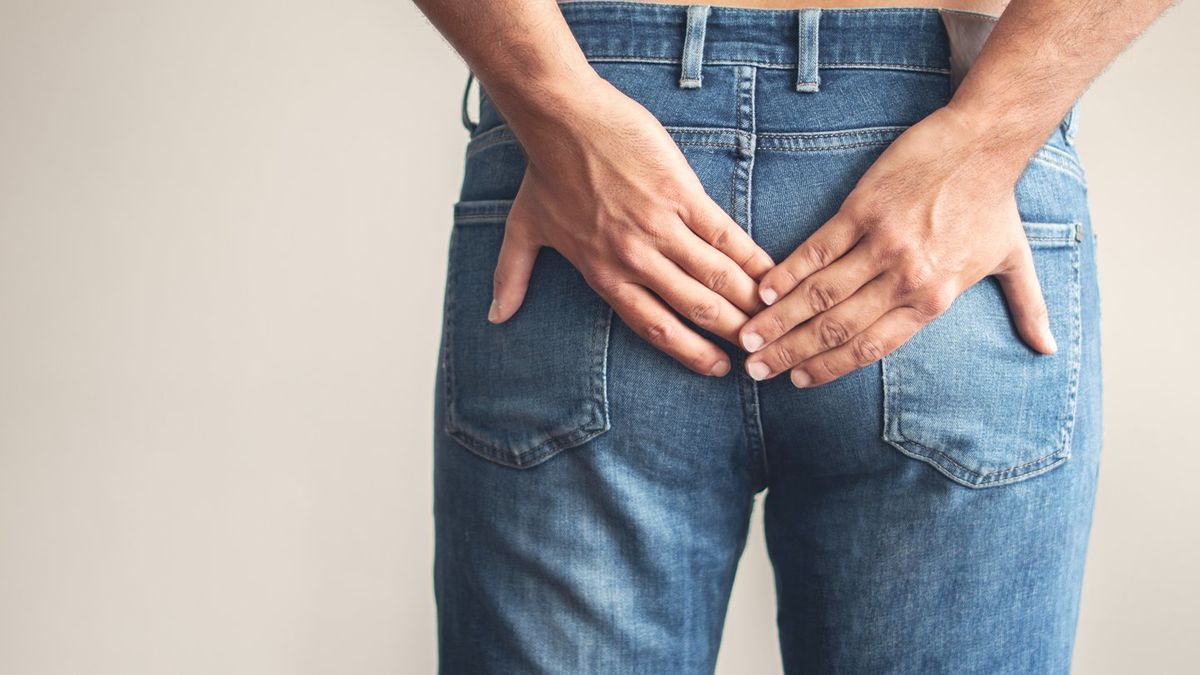
There’s a clinical label for almost every bodily process or symptom people experience — including an unpleasant feeling in a very private area.
One example is ‘pruritus ani’, which at least 61 percent of men reportedly deal with at some stage. It’s not something you’d want to handle in public, but it’s far from rare, particularly in certain age groups.
For anyone unfamiliar with medical Latin, colorectal surgeon Shahab Siddiqi, MD, explains that the term comes from ‘pruritus, meaning “itch” and ani, meaning “of the anus”’.
For many, the sensation is short-lived, though still uncomfortable. In other cases, ‘pruritus ani’ can be intense and persistent enough to disrupt everyday life.
Defined as ongoing itching or a burning feeling around the anus, pruritus ani can lead to soreness, redness, and irritation of the surrounding skin, which may also cause broader discomfort.
Dr Siddiqi said the condition shows up most often in men aged 40 to 60 and is seen more frequently in men than women — by as much as four times. “There is no obvious reason why this should be the case, and more research is needed to look into this,” he added.
Pruritus ani may appear as either a primary problem or one linked to another health condition. There are more than 100 medical issues associated with it, though some people develop long-lasting itching without a clear underlying cause.
The colorectal surgeon explained: “If a condition is found in the lower bowel, anus, or on the skin surrounding the anus that is suspected to lead to anal itching, pruritus ani is classified as secondary to that condition.
“If no abnormality can be found in these areas, then the pruritus ani is considered to be primary (or idiopathic, meaning ‘no known cause’).”
It might seem logical that extra washing would solve the problem — or that not cleaning well enough is the main trigger — but Dr Siddiqi said it’s usually more complicated than that.
He added: “In a small minority of people, bad hygiene can undoubtedly lead to pruritus ani. However, as a general rule, people with pruritus ani are rigorous with their personal hygiene, which can actually make their anal itching worse.”
According to Dr Siddiqi, many people can improve symptoms with a few straightforward adjustments. He also stressed that people shouldn’t let embarrassment stop them from speaking to a doctor, since discomfort in this area can sometimes point to another issue.
As with many skin-related problems, removing potential irritants can be an effective first move. The doctor explained: “The first step is to stop using any chemicals, including creams, soaps, bubble baths, and toilet paper, around the anal area and only use water for cleansing.
“Hypoallergenic laundry products are also recommended.”
Food and drink can also play a role, with some people noticing symptoms after consuming certain items. Commonly reported triggers include: coffee, tea, cola, energy drinks, chocolate, citrus fruit, tomatoes, spicy foods, beer, dairy products and nuts.
Beyond that, using only water for cleaning, avoiding harsh scrubbing (including in a squat position), and gently patting the area dry with a flannel may help. If symptoms persist or worsen, the next step is to discuss it with a physician.