

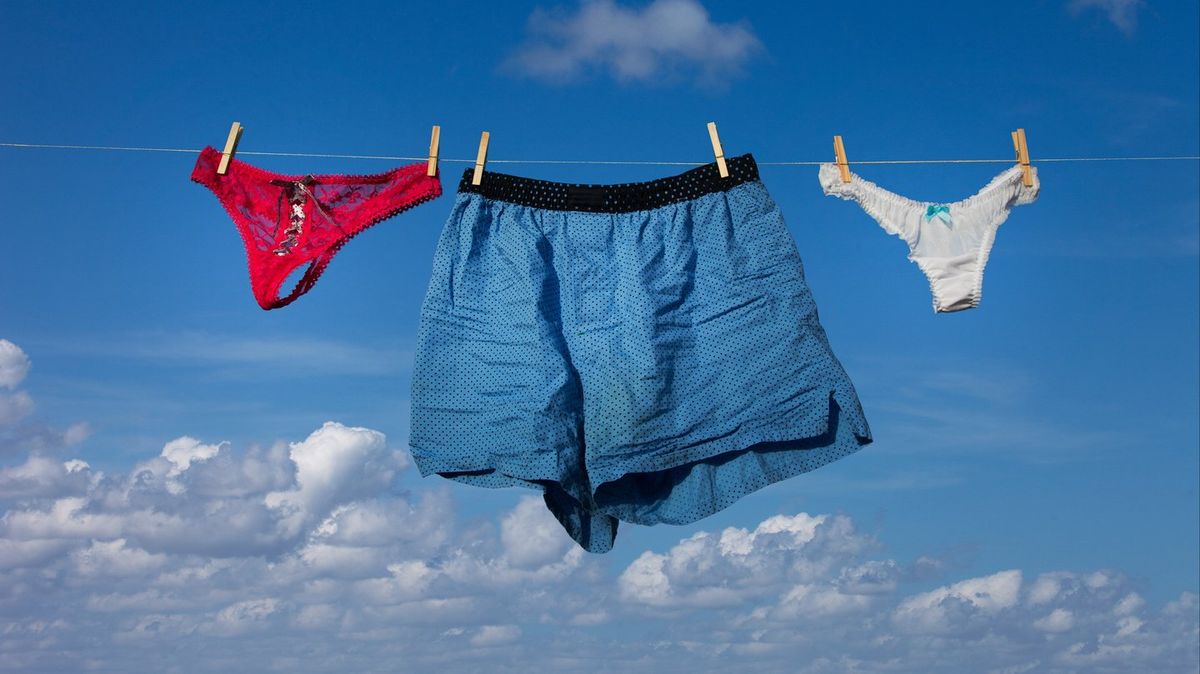
A doctor has shared a health warning after discovering how frequently people typically change their underwear — and it turns out many aren’t doing it as often as they should.
There’s long been a running joke that some men will flip their boxers inside out to squeeze out another day of wear. As it happens, the reality may not be far off for a lot of people.
For many, the thought of wearing the same underwear for multiple days is pretty unpleasant — but recent findings suggest it’s more common than you might expect.
Figures compiled by British retailer Jacamo indicate that, on average, both men and women wear their underwear for three days before washing it. That’s around two days longer than what’s generally recommended for hygiene.

The survey, which questioned 1,006 UK adults, also suggested socks are being re-worn too — with both men and women reportedly wearing the same pair as many as three times before washing.
And it doesn’t stop there. The same research points to infrequent washing of workout gear as well. According to the figures, men change their gym clothes after about five wears on average, while women may keep the same set in rotation for up to 11 days before washing.
With those habits in mind, Dr Deborah Lee from Dr Fox Online Pharmacy explained that leaving underwear unchanged after each wear can increase the likelihood of certain health problems.
“It stands to reason that the less often you change your underwear the greater the risk of a UTI,” she said. “This is because most UTIs are caused by coliform bacteria that originate in the bowel.”

She added that wearing underwear for longer periods can give bacteria more time to grow, which may raise infection risks — though the risks aren’t identical for everyone.
Dr Lee continued: “Not changing your underwear frequently allows these bacteria to multiply and increases the risk of many infections – including UTIs. However, the risk differs in men and women.
“In women, studies have shown E.coli is present in up to 14.5 percent of high vaginal swabs. This demonstrates that faecal bacteria can migrate from the rectal/anal area into the female genital tract. E.coli is the causative organism of a UTI in around 80 percent of cases.”
She noted that UTIs occur less often in men, and that many younger men who experience urinary symptoms are more likely to be dealing with an STI than a UTI.
Even so, she stressed that that’s not a reason to be relaxed about changing underwear, and that daily changes are still advisable.

“[Men] are still at risk of anaerobic infections such as balanoposthitis – an unpleasant, inflammatory condition typically occurring in uncircumcised men, which causes a foul-smelling penile discharge,” she warned.
“Bacteria can contaminate semen. High levels of E.coli in semen reduce sperm quality and motility and impair fertility. In addition, as men age, they are more at risk of E.coli prostatitis.”
Her overall advice was straightforward: change underwear daily, and consider choosing breathable, natural materials such as cotton rather than synthetic fabrics like nylon or polyester.