

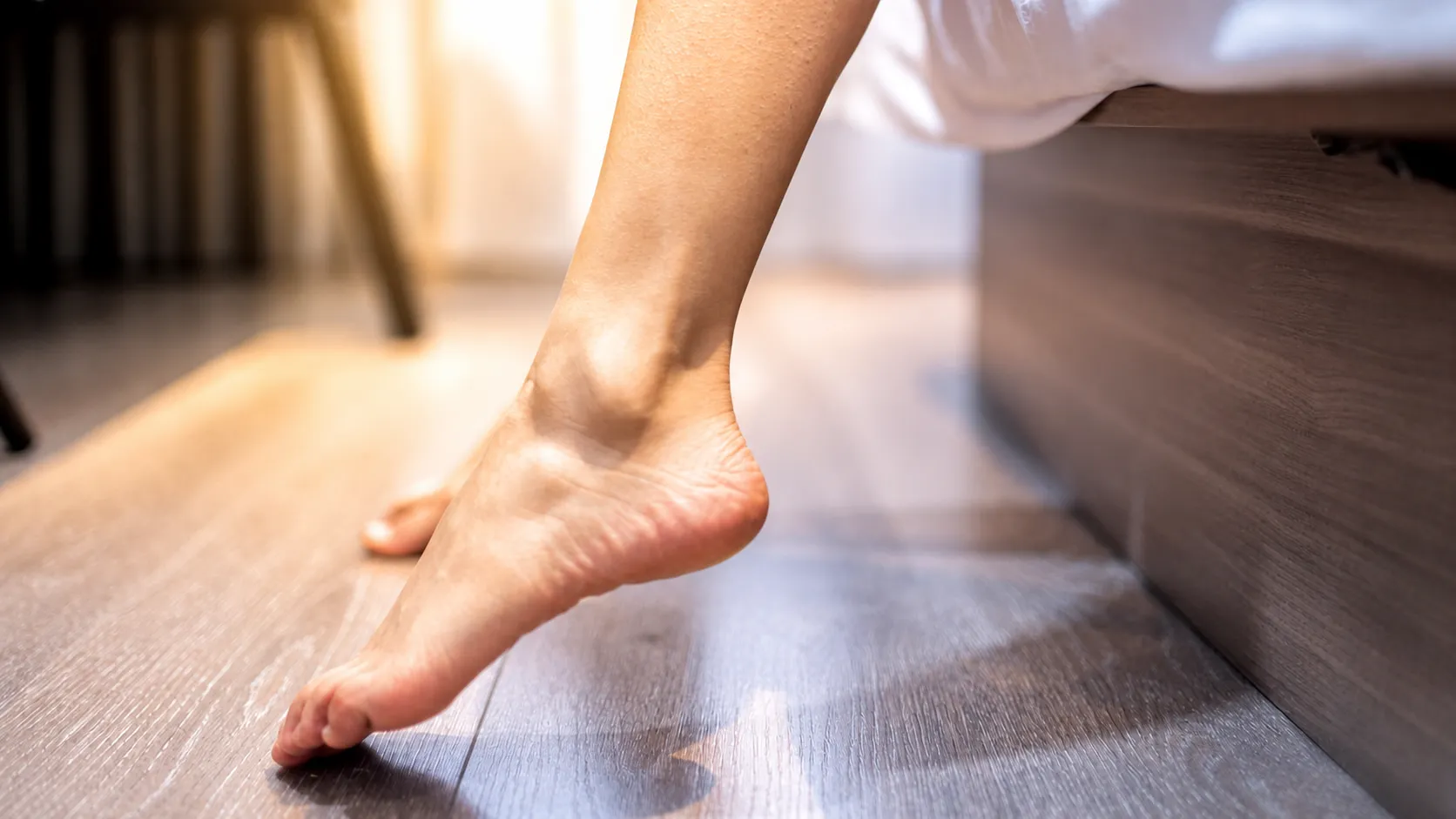
A podiatrist has explained a widespread condition that can make those first steps out of bed especially painful.
For plenty of people, mornings are hard enough without anything else getting in the way. But for some, the start of the day comes with a sharp pain in their feet the moment they stand up.
Even people who usually wake up feeling alert can find their routine disrupted if they deal with foot pain as soon as they get out of bed.
The issue often affects people who notice soreness or stabbing pain in the heel or arch of the foot, especially during the first few steps after sleeping or after sitting for a long time.
Marion Yau, a podiatrist, said she regularly sees patients who report foot pain first thing in the morning.
For some, it may be a brief discomfort, but for others it can seriously affect their mobility.

Feet may seem straightforward, but they are actually one of the body’s more complex structures. They contain more than 100 muscles, ligaments and tendons, along with 26 bones and 33 joints.
Speaking about why pain can strike in the morning, Yau pointed to one frequent cause: plantar fasciopathy, also commonly called plantar fasciitis.
This condition affects the plantar fascia, the thick band of tissue that runs along the bottom of the foot and supports the arch.
Although it may sound strange that pain appears after hours of resting, she said there is a clear reason why this happens.
“When you sleep, your foot naturally points downward, which keeps the plantar fascia in a shortened, contracted position for hours,” she said.
“By the time your alarm goes off, that tissue has tightened considerably.
“The moment you put your foot to the floor, the fascia is suddenly pulled from its shortened state into a full weight-bearing stretch and that’s what causes that sharp, ‘stepping on glass’ pain with your very first steps.”

Yau added that plantar fasciopathy is not the only possible factor behind early-morning foot pain. Another common issue is over-pronation, where the foot rolls inward excessively and can place extra strain on the arch and heel.
“Over-pronation, where the foot rolls inward excessively, is another common culprit, as it flattens the arch and stretches the fascia beyond its comfortable range,” she explained.
She also noted that other underlying causes may be involved, including relatively simple issues such as tight calf muscles.
When ankle flexibility is reduced, it can place extra strain on the fascia every time a person walks.
Other common risk factors include spending long periods on your feet, increasing activity too quickly, wearing unsupportive shoes, having flat feet or very high arches, and carrying extra body weight.
Although plantar fasciopathy is a common cause of heel pain, doctors may look at other possibilities if the pain is severe, unusual, or does not improve with basic treatment. These can include stress fractures, nerve irritation, arthritis, or problems in the Achilles tendon.
To ease the problem, Yau suggested basic steps such as giving the feet time to rest and wearing supportive shoes.
Medical guidance commonly recommends stretching the calves and plantar fascia, using ice, avoiding walking barefoot on hard surfaces, and considering arch supports or night splints in some cases.
People are often advised to do gentle stretches before taking the first steps in the morning, because loosening the fascia and calf muscles first can reduce that sudden sharp pain.
Most cases improve with conservative treatment, but it can take weeks or even months to settle. If pain is persistent, worsening, or accompanied by swelling, redness, numbness, or an inability to bear weight, it is important to seek medical advice.
In many cases, a podiatrist or physiotherapist can help identify whether the problem is plantar fasciopathy, over-pronation, tight calf muscles or something else entirely, and recommend the right treatment plan.