


As an intense “heat dome” pushes dangerous temperatures across large parts of the United States and record-breaking June heat has swept the United Kingdom, dermatologists are warning about a serious long-term consequence that often goes overlooked: a higher risk of skin cancer, including melanoma.
These unusual weather conditions are arriving at an especially concerning moment for public health, with officials on both sides of the Atlantic urging people to take heat precautions as well as sun precautions.
Across the US, a vast ridge of high pressure has locked in a sweltering air mass over central and eastern regions, placing millions of people under heat alerts heading into the Fourth of July period.
In the UK, the Met Office has provisionally confirmed a new June maximum temperature record, with 37.7°C (99.9°F) reported at Lingwood in England, while other parts of the country also saw exceptional heat.
With crowds heading outside to beaches, parks, festivals and sports events in search of sunshine or relief, doctors say many are unknowingly adding to the kind of UV exposure that can raise their melanoma risk years down the line.
That risk is not limited to older age. Medical groups say the likelihood of developing skin cancer rises with UV exposure over time, and especially with repeated sunburns during intense sun and heat events.

Specialists say sunburn is often dismissed as a short-lived irritation that fades after a few painful days. But the biological impact can be far more lasting.
Health experts point to a clear relationship between ultraviolet exposure and the DNA damage that can eventually lead to cancer.
The Skin Cancer Foundation says that a history of five or more sunburns can double melanoma risk, and that blistering sunburns in childhood are especially concerning.
“Your skin behaves like a ledger; it remembers every single ultraviolet insult,” safety experts warned in the wake of the latest global heatwaves.
When bare skin is exposed to ultraviolet radiation, the damage occurs at a microscopic level, disrupting the DNA inside skin cells.
Some of that early injury can be repaired by the body, and the process may show up as redness, inflammation, or peeling. But repeated or particularly severe exposure can overwhelm those natural repair systems.
Once that happens, damaged cells may continue reproducing unnoticed for years, or even decades, before eventually developing into malignant tumors.
“Every intense sunburn adds to your skin’s lifetime DNA damage,” Dr. Michelle Henry of New York City’s Skin & Aesthetic Surgery recently told the outlet.
“We don’t have one exact threshold where researchers can say, ‘This one burn changed everything,’ but we do know the risk increases with both the severity and number of burns.”
Doctors are also concerned that misleading online tanning advice is making the problem worse.
As interest in the term “base tan” rises ahead of summer getaways, dermatologists are pushing back against the widely shared myth that tanning beforehand can meaningfully protect skin from burning during extreme heat.
A tan is not evidence of healthy skin, and it is not a reliable barrier against UV damage. In reality, it is a visible sign that the skin is already responding to injury.
When cells detect UV-related DNA damage, they produce more melanin and move that pigment upward in an effort to shield the nucleus from additional harm.
A “base tan” offers only minimal protection and is nowhere near enough to prevent burning during strong summer UV conditions.
In practical terms, that means skin can still be damaged even before it turns pink or painful, leaving people vulnerable to deeper structural harm associated with premature aging and melanoma.
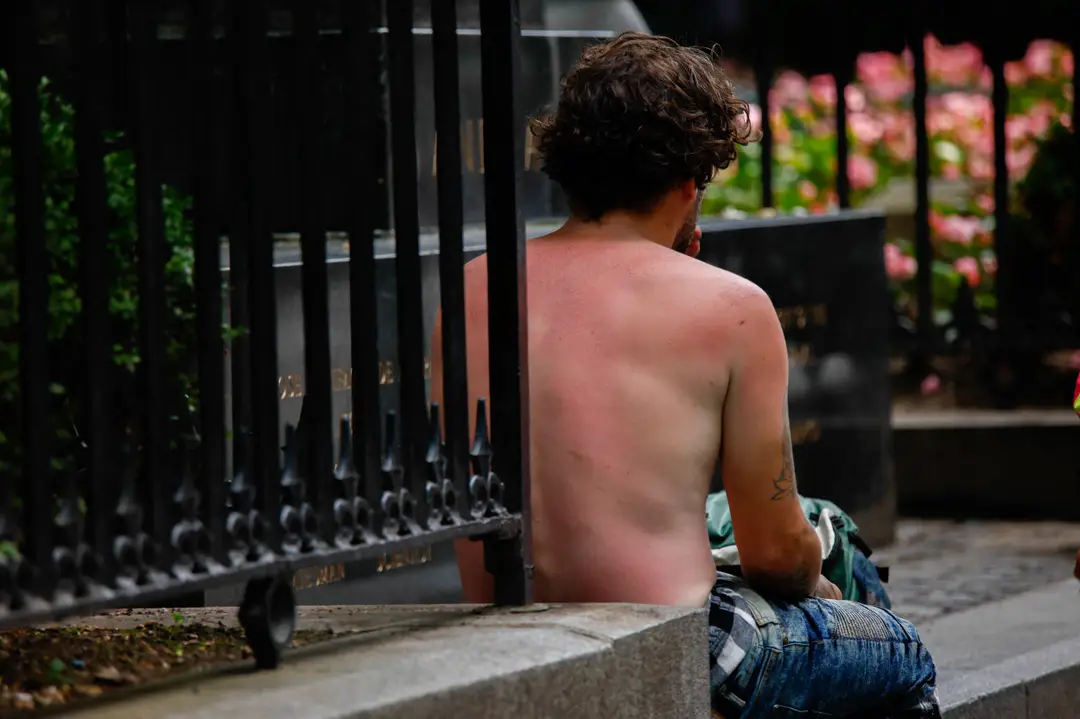
Doctors also say people should not assume that cooler or cloudier weather is automatically safe. UV rays can still be strong on overcast days, and they are often strongest in the middle of the day.
With climate change expected to make prolonged heat events and stagnant heat domes more common, public health groups say people may need to rethink how they approach summer sun exposure altogether.
For anyone spending time outside during the current holiday heat, experts are urging a much stricter approach to sun safety: seek shade where possible, wear protective clothing, use broad-spectrum sunscreen, reapply it regularly, and avoid trying to “pre-tan” before going out.
They also advise checking the UV index as well as the temperature before heading outdoors, since dangerous UV exposure can occur even when the air itself does not feel scorching.