

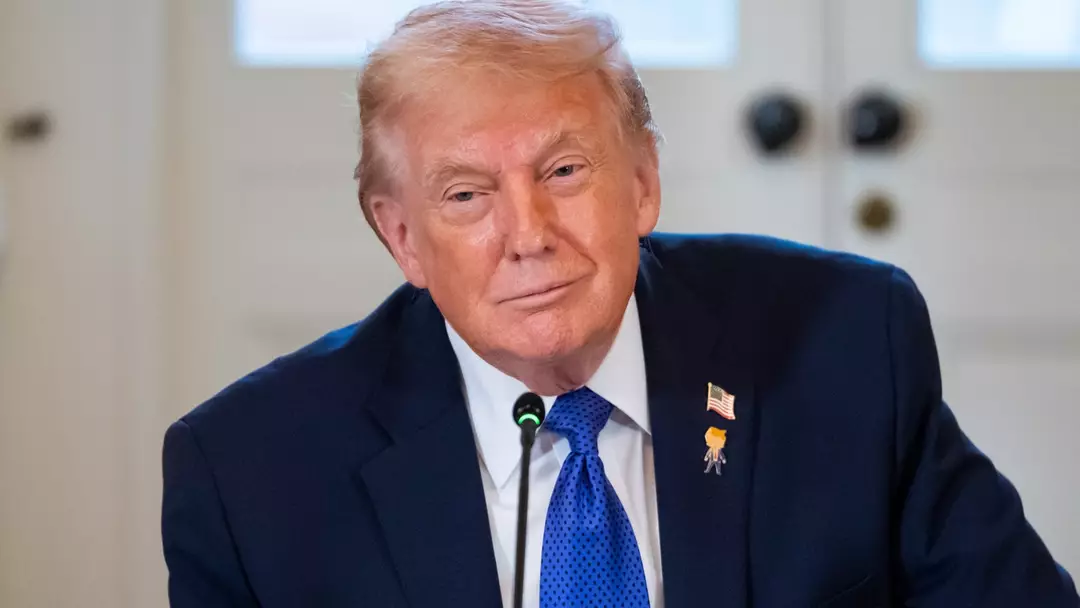
Donald Trump left many puzzled when he attended a significant meeting with oil executives, wearing a pin featuring a cartoon-like image of himself.
The peculiar pin, depicting a caricature of Trump, was seen on the president’s lapel beneath his American flag pin during his meeting with oil executives to discuss Venezuela’s future.
While some critics on social media speculated that the pin was a display of Trump’s ego, the true reason for the unusual accessory was explained during a media address.
“Somebody gave me this. You know what that is? It’s called a ‘Happy Trump,’” the President stated.
“Considering the fact I’m never happy, I’m never satisfied. I will never be satisfied until we make America great again but we’re getting pretty close. Somebody gave it to me, so I put it on.”
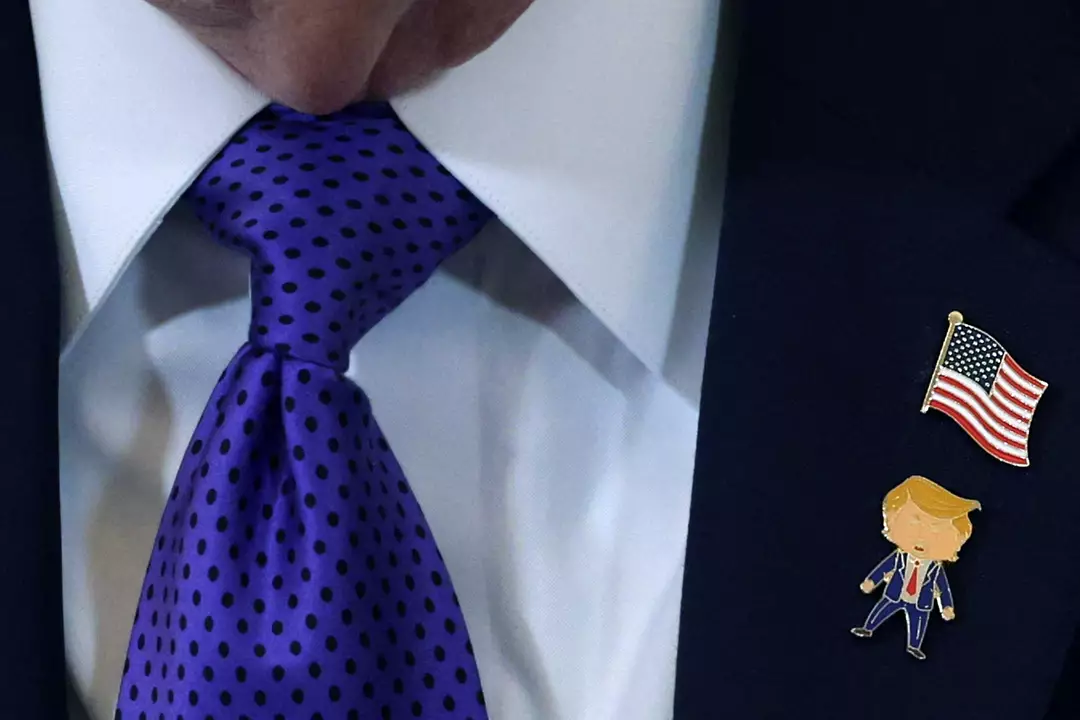
The accessory, named ‘happy Trump’, contrasted with Trump’s own mood after he failed to secure a desired $10 billion investment.
At the meeting, oil and gas companies were hesitant to invest in Venezuela due to the country’s unstable conditions and uncertain returns.
ExxonMobil CEO Darren Woods bluntly assessed the situation, stating, “It’s uninvestible. There are a number of legal and commercial frameworks that would have to be established to even understand what kind of returns we would get on the investment.”
Harold Hamm, an oil investor and significant Trump donor, also expressed caution, commenting: “It’s got its challenges. There’s a huge investment that needs to be done, we’ve all agreed on that, and certainly we need time to see that through.”
The lack of security assurances for safeguarding personnel and equipment in Venezuela was a major concern for investors.
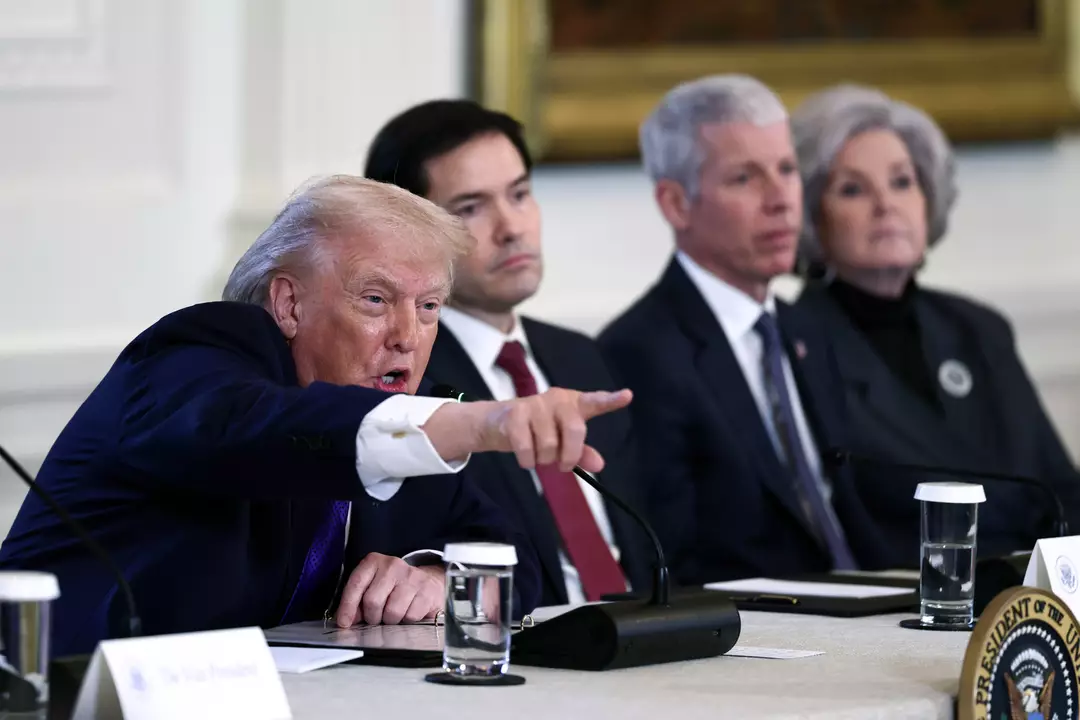
Questions were also raised about the longevity of any potential deals made under Trump’s administration, with doubts about whether they would endure beyond his presidency.
Trump assumed control over Venezuela’s affairs after the capture and extradition of Venezuelan leader Nicolás Maduro and his wife.
Maduro’s arrest was officially attributed to a cocaine-trafficking conspiracy and affiliations with designated terrorist cartels.
However, some critics argue the arrest was less about criminal actions and more about gaining access to Venezuela’s significant mineral and oil resources.
Since then, five Venezuelan tankers have been seized by the U.S., aligning with Trump’s claim that the U.S. is managing the sale of 30 to 50 million barrels of previously sanctioned Venezuelan oil.
While the intention is to ‘return the wealth to the Venezuelan people’, Trump has also indicated a desire to boost U.S. financial interests.