

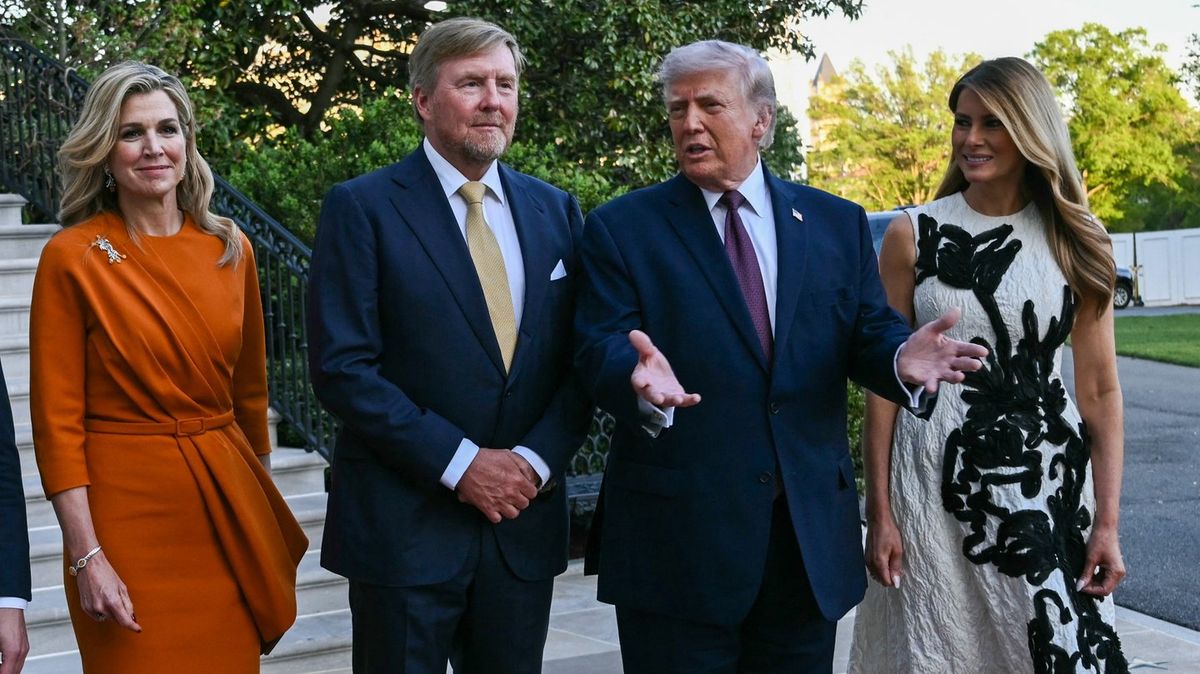
After putting recent NATO withdrawal chatter to rest ahead of hosting the King and Queen of the Netherlands on Monday, Donald Trump was photographed with the visiting royals alongside Melania Trump — and one small detail quickly drew attention.
In what should have been a standard photo moment, Trump appeared to be positioned noticeably closer to the camera than the others. The spacing made some observers question whether his long-stated height of 6’3” still matches reality, particularly because he looked shorter than King Willem-Alexander, who is widely reported to stand around 6’2” to 6’3”.
For years on the campaign trail and during his time in office, Trump has maintained that he is 6 foot 3 inches tall. That measurement has often been cited as placing him among the tallest U.S. Presidents, behind Abraham Lincoln (6’5”) and Lyndon B Johnson (6’4”).
As recently as last April, a White House release tied to the President’s medical evaluation listed his height as 75 inches — which converts to 6’3”. If that figure is correct, he would be expected to appear roughly level with Willem-Alexander in a side-by-side image.
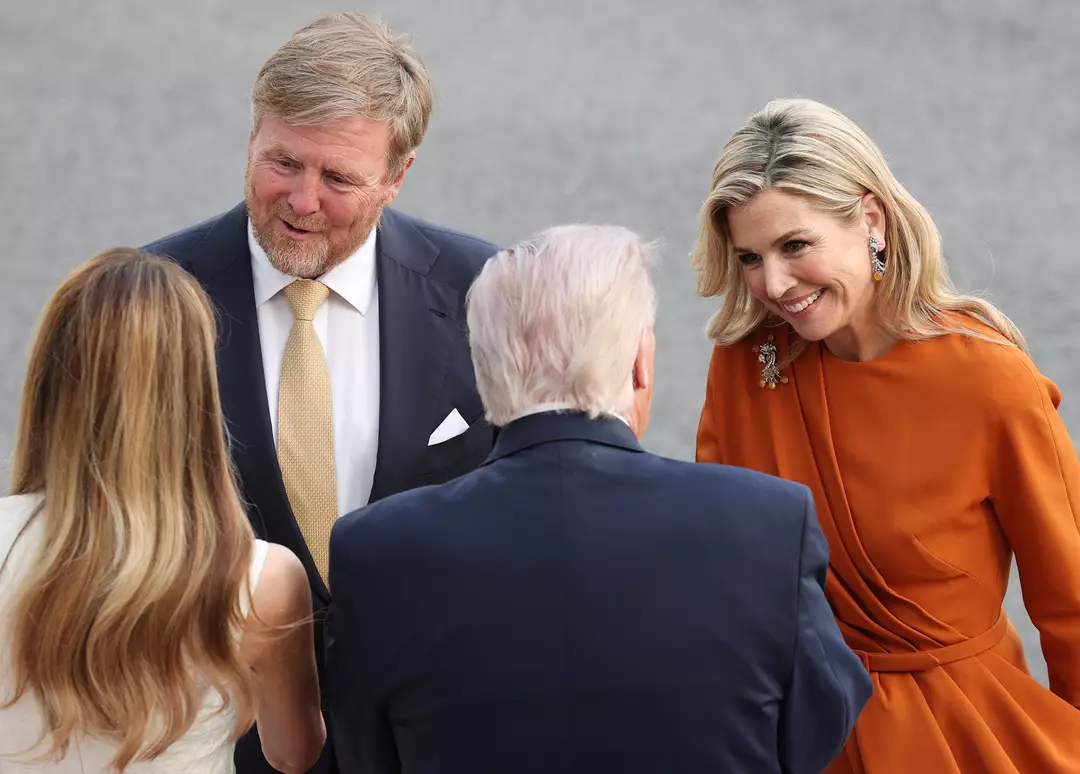
However, the photo taken on Monday didn’t seem to line up with that expectation. In the image, Trump appears around two to three inches shorter than the King.
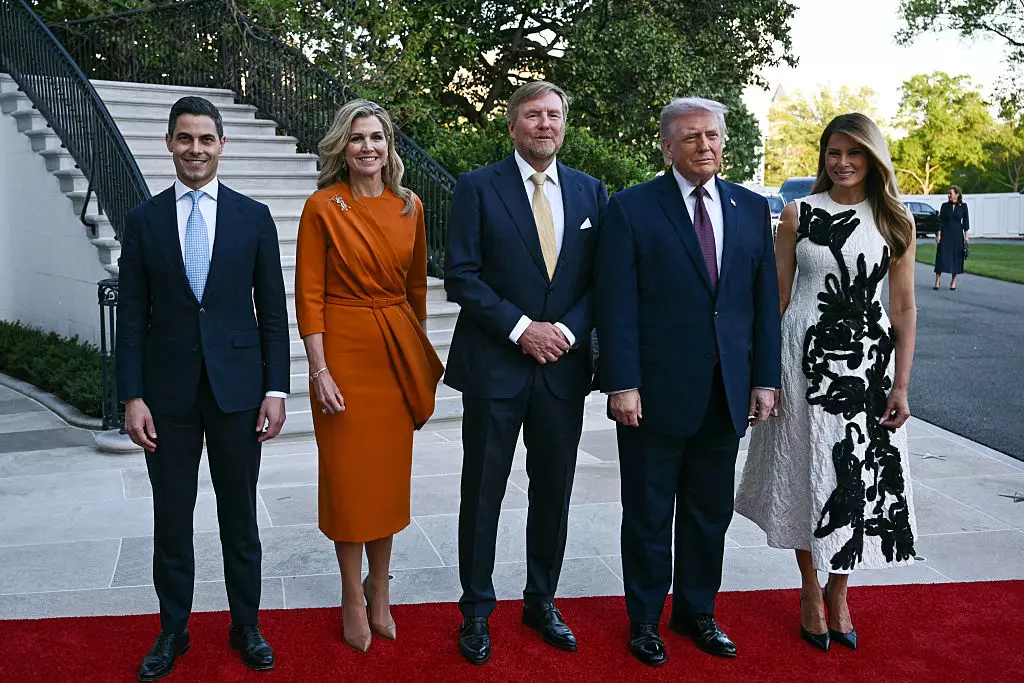
The difference also seemed to be minimized by how the group was arranged: Trump stood roughly 12 inches (about a foot) ahead of Willem-Alexander, Queen Máxima, and Melania, a common camera-angle effect that can change how tall people appear relative to one another.
Height loss can happen gradually with age, and it’s not unusual for older adults to measure a bit shorter than they did decades earlier. Trump turns 80 later this year.
Many age-related changes can start earlier than people expect — sometimes from around age 40 — with an often-cited average loss of roughly 0.5 inches per decade.
They include:
While you can’t fully prevent natural aging, some height reduction linked to posture changes, muscle loss, and spinal compression can be improved. Regular movement and targeted training — such as weight-bearing activity, resistance work, and posture-focused exercises — along with enough protein, calcium, and vitamin D, may help support bone strength and reduce the impact of postural “shrinking.”
Even so, some change is considered normal — but the Cleveland Clinic notes that a loss of 2-4 inches is not typical.