

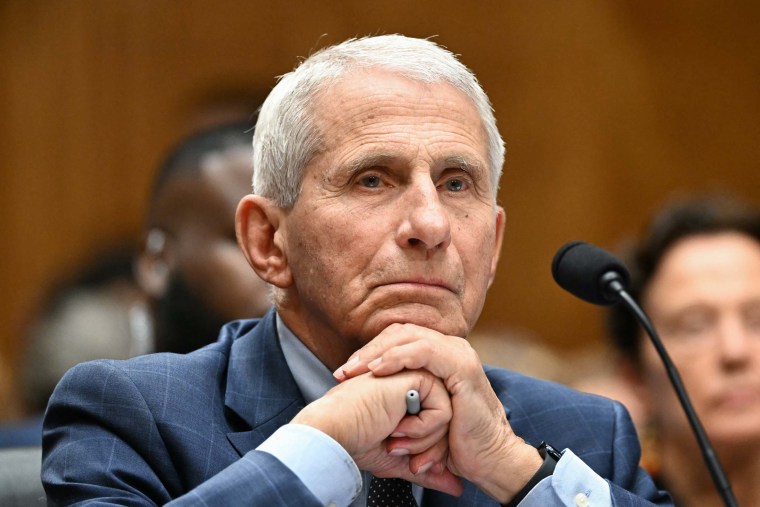
Dr. Anthony Fauci was held in contempt of Congress on Thursday by the Republican-led Senate Homeland Security and Governmental Affairs Committee after he invoked the Fifth Amendment more than 100 times during a hearing last week on his role in the government’s COVID-19 pandemic response. The party-line vote was 8 to 5, with all Democrats opposing the measure.
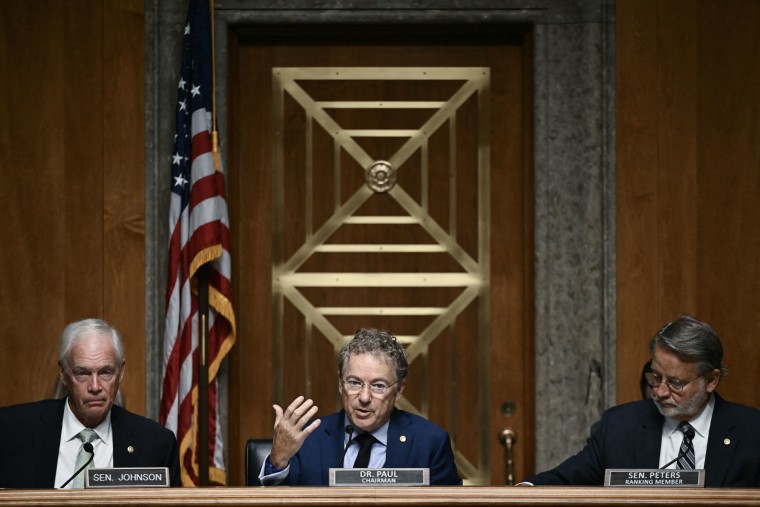
The contempt resolution now faces a critical juncture. The committee is expected to refer the matter directly to the Justice Department for potential criminal prosecution rather than pursuing a full Senate floor vote. Committee Chairman Rand Paul of Kentucky said the committee would hand-deliver the referral to the attorney general. If the Justice Department decides to prosecute, Fauci could face criminal contempt charges, which carry a maximum penalty of up to one year in prison and fines up to $100,000 upon conviction.
The dramatic confrontation stems from a July 29 hearing where Fauci, the former director of the National Institute of Allergy and Infectious Diseases, appeared under subpoena to answer questions about the origins of COVID-19 and the federal government’s pandemic response. Instead of answering lawmakers’ questions, Fauci made a brief opening statement in which he accused Paul of having an “obvious obsession with calling for my prosecution” before invoking his Fifth Amendment right against self-incrimination in response to every question posed to him.
In his opening statement, Fauci said, “Under the advice of my attorneys, I will invoke my right under the Fifth Amendment of the Constitution to refrain from answering your questions.” He explained that he believed the committee’s goal was to elicit testimony that could be used to prosecute him. “The sole reason he is calling me before this committee is to get me to say something that could vindicate his repeated public pledges that I end up, in his words, ‘behind bars,'” Fauci said of Paul.
Paul disputed Fauci’s rationale for invoking the Fifth Amendment. He argued that because former President Joe Biden issued Fauci a preemptive pardon before leaving office in January, covering all federal offenses committed between 2014 and January 2025, Fauci cannot claim a right against self-incrimination. Paul contended that the pardon rendered Fauci’s invocation of the Fifth Amendment “unsupported” and “an unsettled legal question” that may ultimately require court intervention.
The legal argument hinges on whether a pardoned individual can still invoke the Fifth Amendment. Fauci’s attorneys maintained that he was on solid legal ground. His lawyer, David Schertler, said the committee’s contempt vote was “a crude political stunt intended to punish Dr. Fauci for exercising his constitutional rights.” Legal experts have cast doubt on Republicans’ argument. A Georgetown Law professor noted that while the pardon’s scope and limitations raise complex legal questions, the standard practice would have been for any defense counsel to advise Fauci to assert the Fifth Amendment under these circumstances.
Democrats on the committee fought to prevent the vote. Ranking Democrat Gary Peters of Michigan warned that the contempt resolution would not compel Fauci to provide any additional information or documents. “Criminal contempt is punitive,” Peters said. “It does not compel a witness to answer questions. What it will do is create a damaging precedent that future witnesses will use to resist legitimate congressional oversight, and weaken this committee’s ability to compel testimony.”
The contempt resolution also raises the question of whether the pardon protects Fauci’s actions after it was issued. Legal analysts have noted that the pardon covers only conduct before January 19, 2025, potentially leaving Fauci vulnerable to charges related to his recent testimony or statements. Republicans have also questioned whether Biden’s use of an autopen signature device to sign the pardon creates constitutional questions about its enforceability.
The vote marks an escalation in the long-running conflict between Paul and Fauci, a feud that has dominated Republican efforts to investigate the pandemic. Paul has spent years accusing Fauci of misleading the public about the virus’s origins and covering up federal funding of gain-of-function research at a laboratory in Wuhan, China. Ahead of the hearing, Paul released more than 1,000 pages of Fauci’s private diary entries from his time leading the pandemic response.
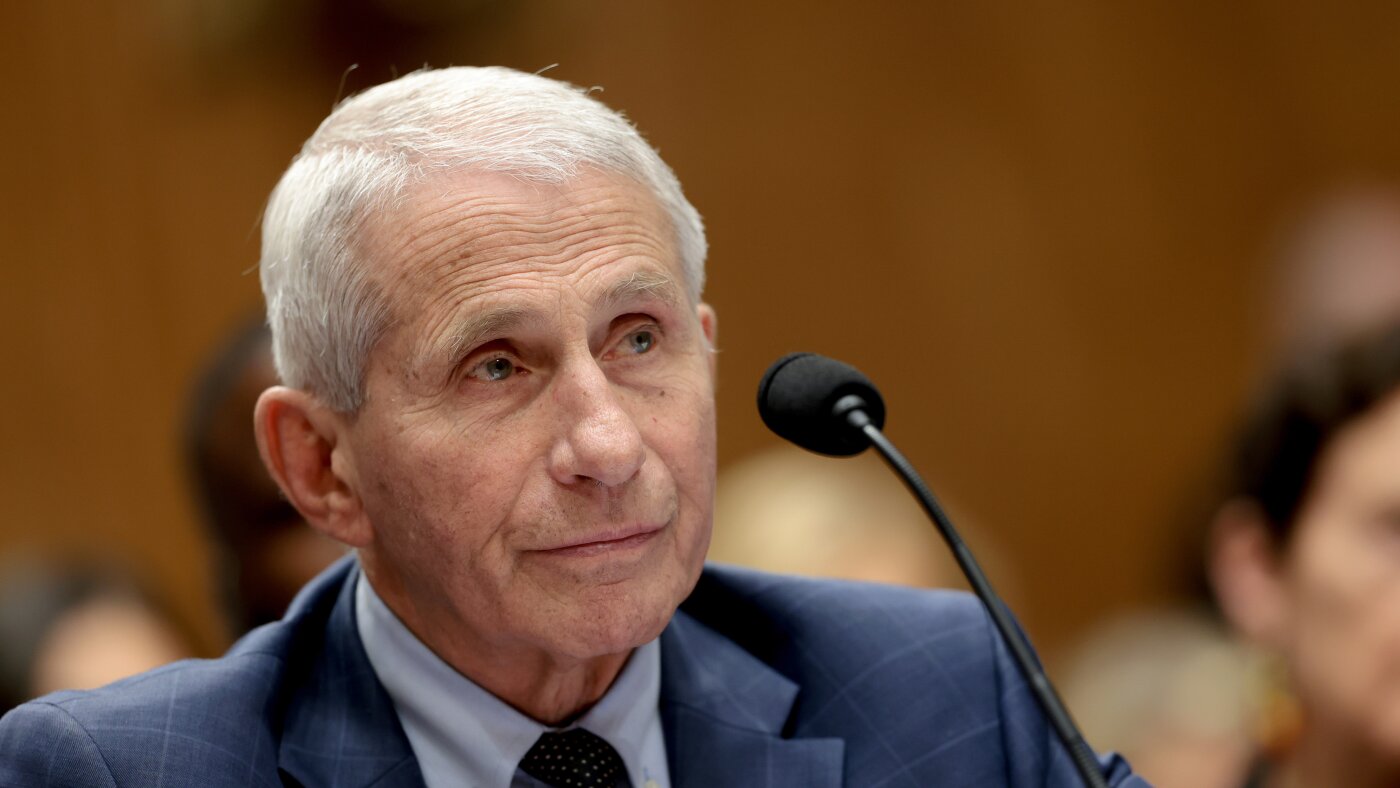
The committee’s action sets up potential prosecution with precedent from recent contempt cases. Steve Bannon and Peter Navarro, both former Trump advisers, were convicted of contempt of Congress in 2023 and 2024 respectively for refusing to comply with House subpoenas related to the January 6 Capitol investigation. Both served prison time, with Bannon receiving a four-month sentence. The cases demonstrated that the Justice Department would pursue criminal contempt charges, though prosecutions remain relatively rare.
Fauci, 85, served as the director of the National Institute of Allergy and Infectious Diseases for nearly four decades, advising seven presidents of both parties. He became the public face of the federal government’s COVID-19 response and retired from government in 2022. His handling of the pandemic has remained deeply divisive, with conservatives criticizing his role in pandemic policies including mask recommendations, vaccines, and school closures, while others have defended his scientific guidance during an unprecedented health crisis.
The matter now rests with the Department of Justice and the Trump administration to decide whether criminal prosecution will move forward.