


Struggling to sleep and wondering if it has something to do with Earth’s “heartbeat”? The explanation is likely more ordinary than it seems.
In recent days, screenshots and live readouts from online tracking tools have appeared to show sudden changes in this natural signal, prompting a wave of discussion and speculation—particularly across social media.
The “heartbeat” being referenced is commonly used as a nickname for the Schumann Resonance: faint electromagnetic vibrations present in the atmosphere.
As claims about it “increasing” circulate, some people have also reported issues such as restless sleep and ringing in the ears, leading to suggestions that the two could be connected.
However, specialists warn that the phenomenon is often misunderstood outside scientific contexts. The Schumann Resonance can shift for a range of natural reasons—especially changes in worldwide lightning activity—and there is currently no established evidence that it directly affects human health.
Under typical conditions, the primary frequency is measured at roughly 7.83 Hertz, alongside other higher-frequency bands that can also be detected.
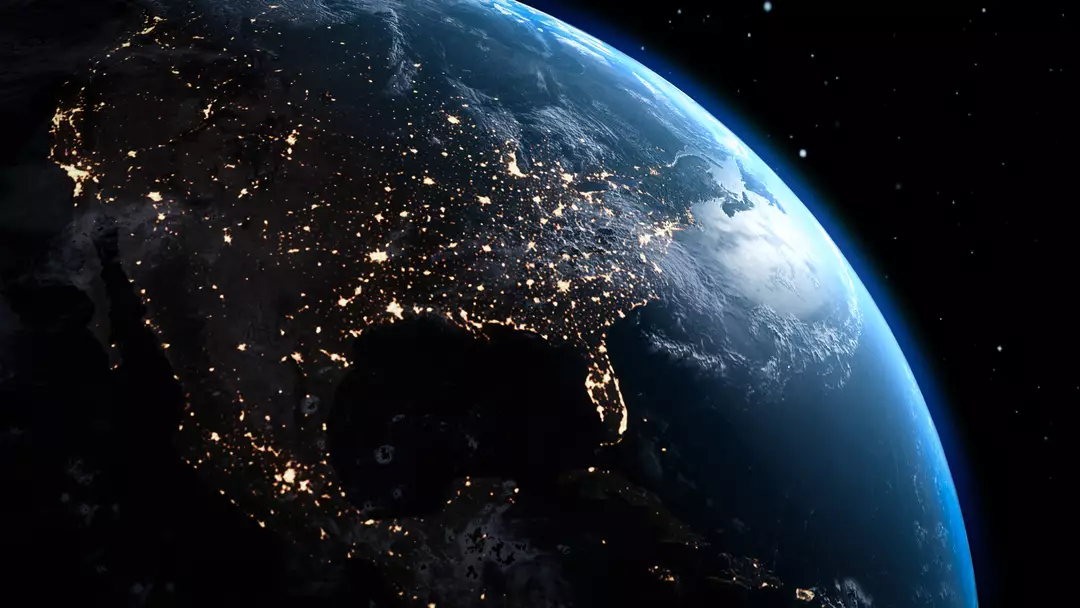
Although some researchers and wellness figures suggest these subtle patterns may loosely overlap with brainwave activity associated with sleep, relaxation, and attention, most scientists say firm proof of any direct biological impact is still lacking.
Even so, the recent interest in reported fluctuations has led some to attribute symptoms—like poor sleep or trouble focusing—to atmospheric changes observed over the last several days.
That chatter intensified after a Thursday update from the space weather monitoring site Schumann Resonance Today, which stated that Earth had been affected by several weak-to-moderate solar flares from April 3 to April 5, followed by another moderate flare on April 8 and a stronger M-class flare early on April 9.

The site characterised the conditions as ‘intense and activating,’ implying that Earth’s electromagnetic activity was running higher than usual.
The Schumann Resonance itself is driven mainly by global lightning. Each lightning strike releases extremely low-frequency electromagnetic waves that move through the gap between Earth’s surface and the ionosphere—a charged atmospheric layer that begins around 60 miles (about 100 kilometres) above the ground. As the waves bounce and interact in this Earth–ionosphere ‘waveguide,; they create a stable set of resonant frequencies. This ongoing signal is sometimes described as a planetary electromagnetic background, and is often referred to metaphorically as the Earth’s ‘heartbeat.’