

A legendary Hollywood estate that housing forecasters feared would be demolished is being preserved as a tribute to the actress who called it home for three decades. Developer Ardie Tavangarian has committed to restoring Elizabeth Taylor’s former Bel Air mansion while expanding it into a sprawling compound, a dramatic reversal from the initial speculation that greeted his purchase of the property five years ago.
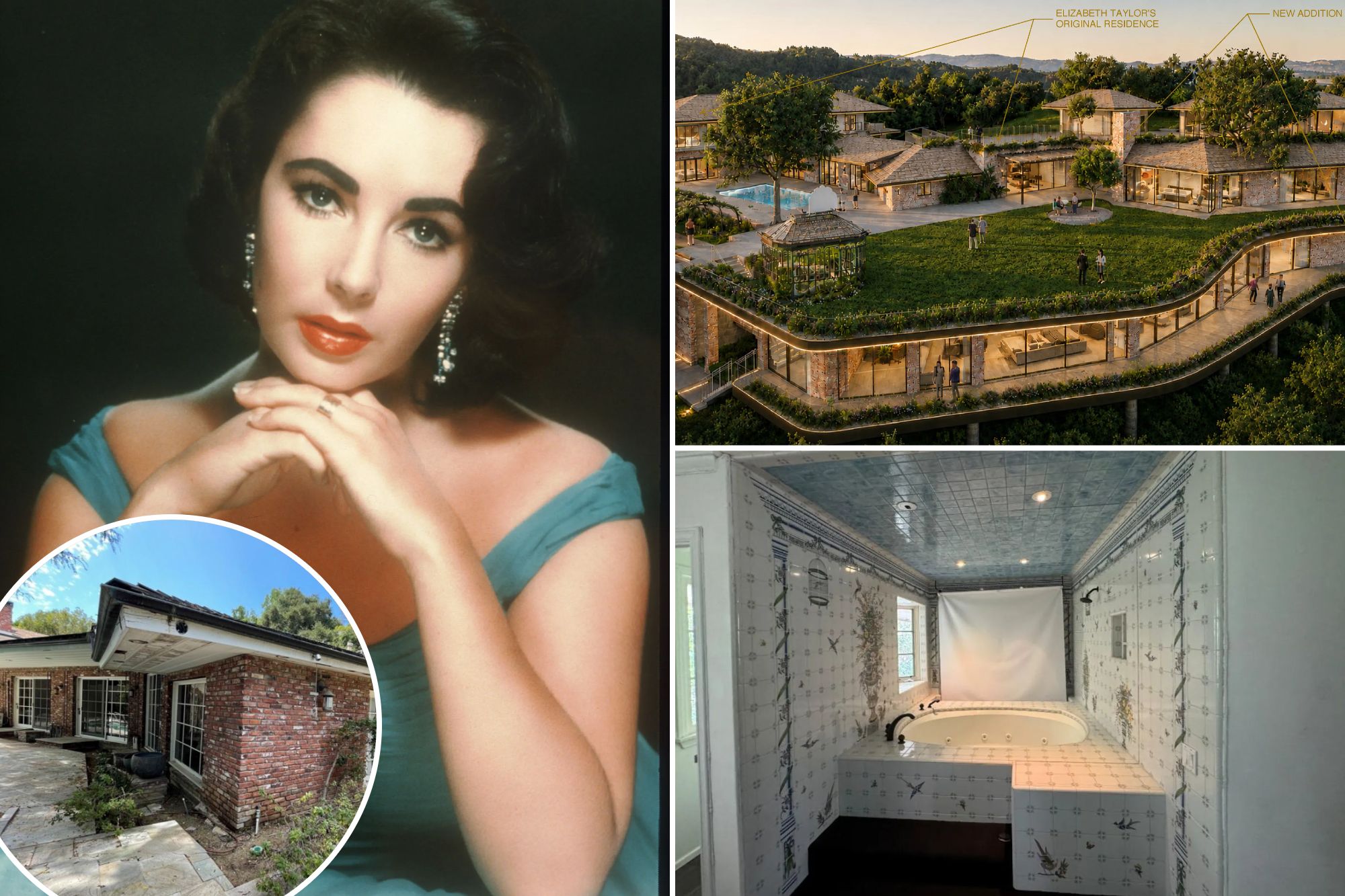
The 1.3-acre property where Taylor lived from 1981 until her death in 2011 is undergoing a comprehensive restoration designed to honor her legacy. Rather than demolishing the original 7,000-square-foot home built in 1960, Tavangarian is preserving much of its interior exactly as Taylor left it, including the cavernous room where she stored her legendary jewelry collection in velvet-lined cases.
When Tavangarian acquired the estate from businessman Rocky Malhotra for $15 million in 2021, preservationists braced for the worst. The developer had built a reputation over four decades constructing massive spec mansions for ultra-wealthy buyers, often with construction costs exceeding $100 million. Early reports suggested the historic home would be razed. Instead, Tavangarian said he is approaching the project as though Taylor herself were his client.
“We’re trying to create something that is a continuation of Elizabeth Taylor and her legacy while creating a phase 2 to enhance the beauty that is already here,” Tavangarian said of the restoration in recent discussions. “It will be a melding from the heart.”
Taylor purchased the ranch-style estate for $2 million in 1981 from Nancy Sinatra, the first wife of Frank Sinatra. The home became her longest-held residence, a stability that was notable for an actress who had moved frequently throughout her career. She designed much of the landscape herself, working with her then-husband Larry Fortensky to add extensive plantings and a koi pond with waterfall.
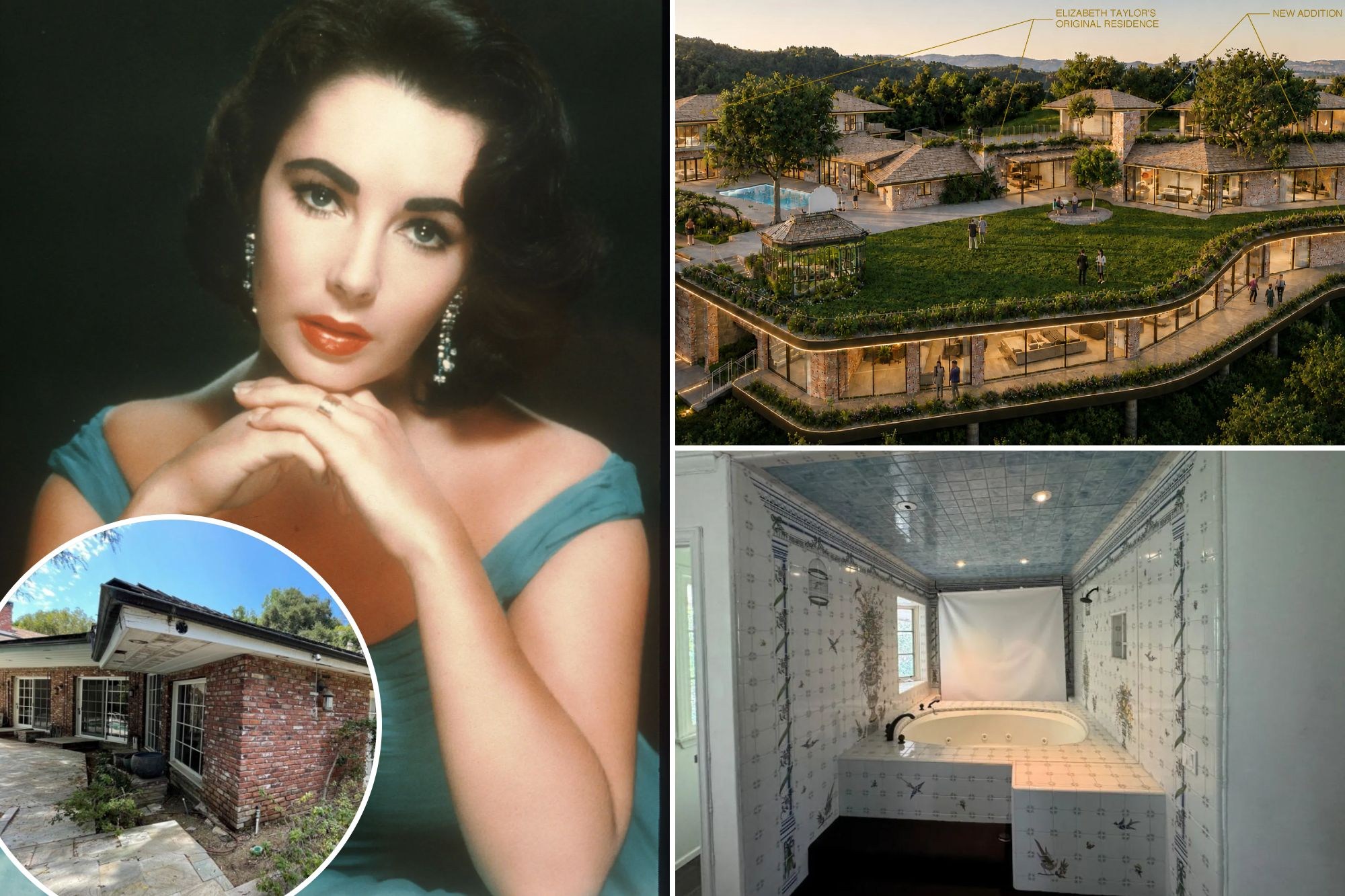
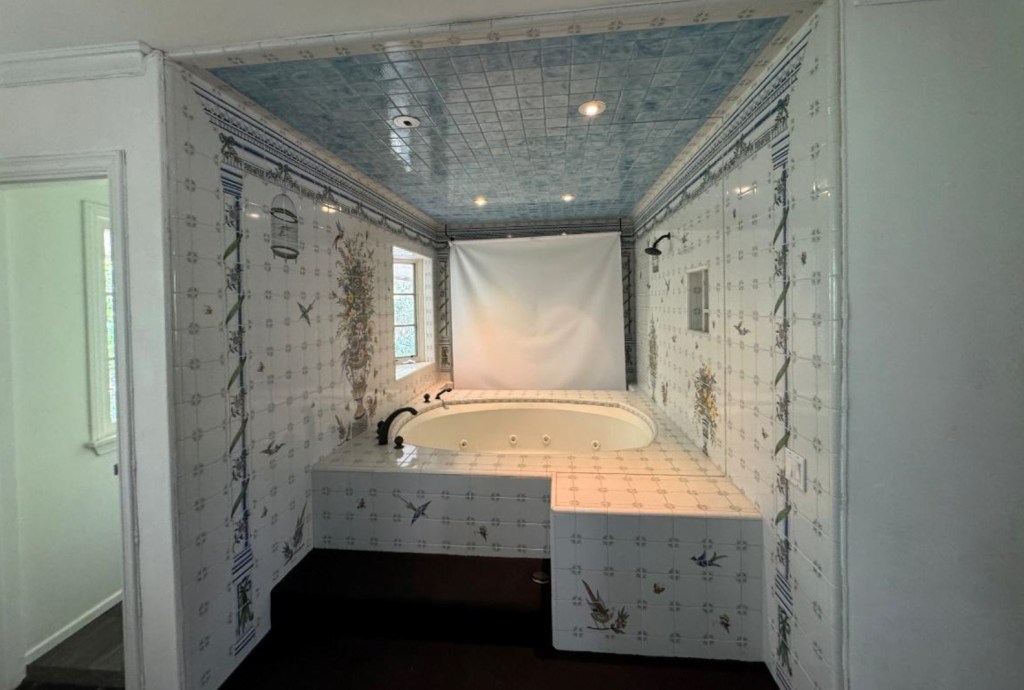
The preservation plan identifies sections of the original home as the “Elizabeth Taylor wing.” Her master bedroom and bathroom are being restored to their original condition, along with her beauty center and other personal spaces. A dedicated gallery filled with Elizabeth Taylor-related artwork will showcase the connection between the actress and the property. The room housing her jewelry collection remains largely untouched, a museum-like space honoring one of her most famous passions.
The restoration required returning certain areas to their original state after they had been converted. A high-end audio and visual firm had rented the property and modified rooms as a showroom, while offices occupied other spaces. Tavangarian’s team is methodically undoing those changes, recovering the home’s authentic character.
What Tavangarian is adding to the property will nearly double its size. A 12,000-square-foot addition will seamlessly connect to the existing home while incorporating his signature architectural elements. To make room for this expansion, crews leveled a substantial hill adjacent to the house, creating space for underground construction with subterranean framing and deep foundation footings designed to hold back thousands of tons of shifting earth—built like a reinforced bunker.
The new structure will stand between two and three stories in some areas and will include three additional bedrooms, a high-end screening room, spa and wellness amenities, and a distinctive “pajama room” where residents can relax with entertainment on an oversized screen while enjoying popcorn from built-in canisters. A 4,500-square-foot retractable roof will open the space to stargazing.
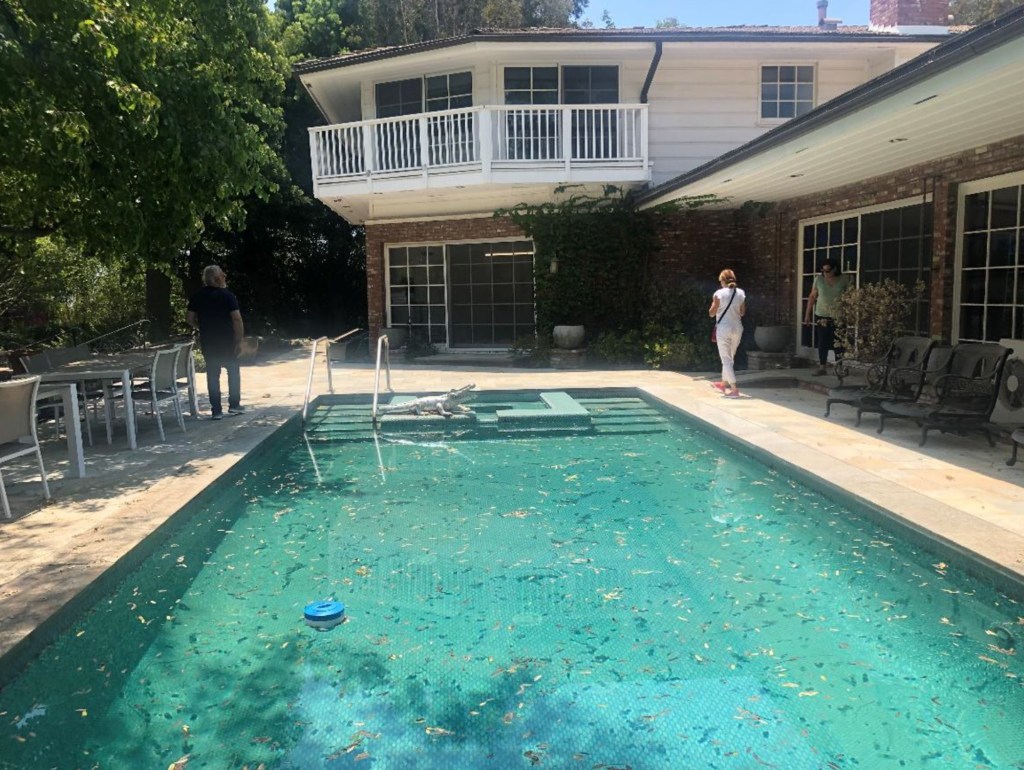
The brick exterior of the original home will extend onto the new structure, creating visual continuity. Tavangarian plans to preserve most of the original landscaping, removing only the thick bamboo that had grown on the now-leveled hill. Taylor’s striking sapphire-colored pool, which reflected her famous violet eyes, will remain a centerpiece of the property. The koi pond and shell-shaped fountain that her nephew built will be restored, while arbors of climbing roses and a bright pink hybrid tea rose variety named “Elizabeth Taylor” will continue to dot the grounds.
Tavangarian said he paid $15 million for the compound and expects to invest at least another $47 million into the rehabilitation and buildout. The project has no buyer lined up, and he declined to disclose what he might list it for upon completion, expected next year. His custom mansions typically command prices exceeding $100 million.
The commitment to preservation marks a shift in how ultra-luxury developers approach iconic properties. Tavangarian indicated this project may represent his swan song as an uber-luxury developer. He cited changing market conditions—the COVID-19 pandemic, devastating Los Angeles fires, and global unrest—as factors making mega-mansion development less viable than it once was.
Instead, Tavangarian said his firm, the Arya Group, will shift focus toward hotel construction and building fire-resistant homes to help rebuild the more than 16,000 structures destroyed or left uninhabitable when fires swept across more than 50,000 acres in the Los Angeles area last year. He has already completed one such protective residence in Pacific Palisades for one of his daughters.
“This is the direction we are headed in,” he said of developing fire-resistant homes. Given the vast need and positive reception to his approach, such projects represent the future of his development company rather than the palace-building enterprises that defined his career.
For now, though, his focus remains on creating a home where Taylor, he believes, “would be comfortable living in.” The restoration demonstrates that Hollywood’s most iconic addresses need not be sacrificed to progress, but can evolve while honoring the legacies of the legendary figures who once inhabited them.