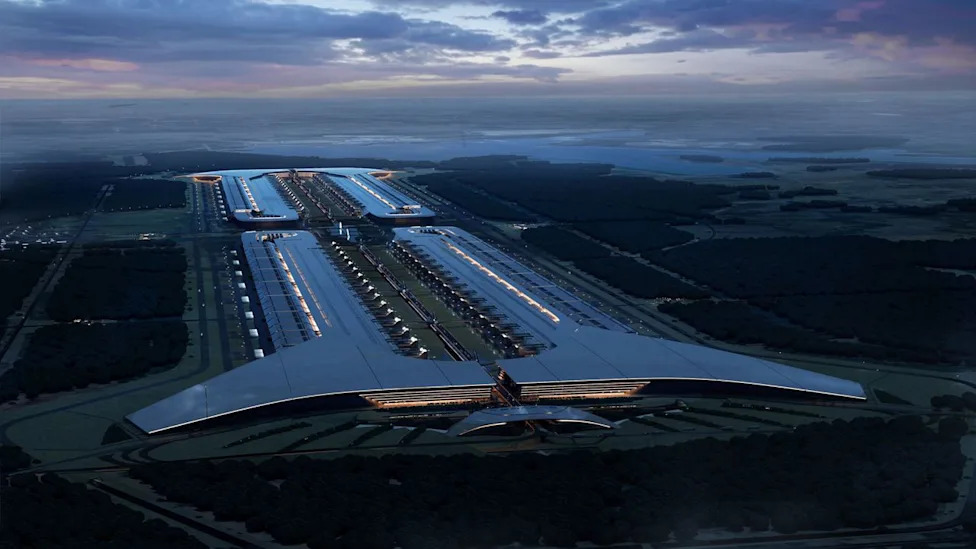
Elon Musk and his companies Tesla and SpaceX announced this week a project that would create the largest building ever constructed on Earth. Called Terafab, the semiconductor megafactory will span more than 100 million square feet when complete, making it larger than the Pentagon, Apple Park and the Mall of America combined, and exceeding China’s New Century Global Center, currently the world’s largest building, by more than five times.
The facility will be built in Grimes County, Texas, about 75 miles northwest of Houston, on a site near the Gibbons Creek Reservoir. SpaceX and Tesla confirmed Thursday that they will launch the initial phase with a $16.8 billion investment, though the total investment across all planned phases could eventually reach as high as $119 billion. Musk, who runs both companies, described the facility as “the largest and most valuable building on Earth by far” and promised it would be “stunningly beautiful,” adding that the design aesthetic would aim for “sci-fi city.”
The project represents an extraordinary commitment to domestic semiconductor manufacturing at a moment when chip production has become critical to American competitiveness. Musk has argued repeatedly that his companies—Tesla, SpaceX, and his AI company xAI—cannot access enough chips through existing suppliers to meet their explosive growth demands. Current global semiconductor production, Musk has said, meets only a fraction of what his companies need for artificial intelligence, robotics, and space infrastructure.
Terafab is designed to produce over one terawatt of computing capacity annually, a staggering output that would equal roughly 70 percent of Taiwan Semiconductor Manufacturing Company’s current global production from a single facility. The name references Musk’s goal of manufacturing chips requiring one terawatt of electricity to operate. The facility will handle the complete semiconductor production chain—logic chips, memory, packaging and testing—all under one roof, rather than farming out different stages to various manufacturers as is standard in the industry.
The chips produced at Terafab will power several of Musk’s most ambitious initiatives. Tesla plans to use them for its Optimus humanoid robots and self-driving Cybercabs. SpaceX will deploy them in space-based data centers and artificial intelligence satellites as part of its constellation project. The company has stated that 80 percent of the facility’s output will be directed toward space-based infrastructure, with the remaining 20 percent serving ground-based applications.
Intel will serve as the primary foundry partner, contributing its design, fabrication, and packaging expertise along with its advanced 14A process technology. The partnership surprised some observers because it marked an unusual collaboration between the legacy chipmaker and Musk’s vertically integrated empire. Intel’s involvement adds established manufacturing capabilities that would otherwise have required years to develop from scratch. Intel CEO Lip-Bu Tan said the project represents exactly the kind of innovation needed in semiconductor manufacturing today.
The project will employ at least 3,000 people, many expected to come from Grimes and neighboring Brazos County. The facility is expected to begin first chip production in late 2027, with full-scale volume production ramping through 2028. That timeline is extraordinarily aggressive for a semiconductor fab, which typically takes three years or more from groundbreaking to producing chips at volume.
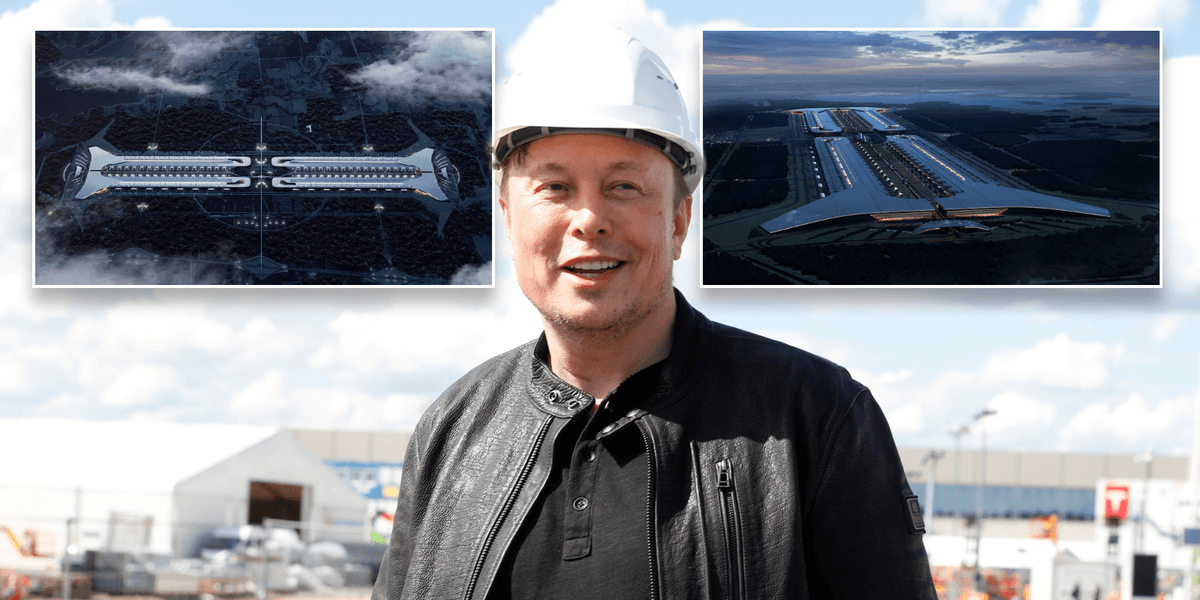
Grimes County, with a population of about 30,000, approved a 100 percent property tax abatement for the project in June. The economic transformation would be dramatic. County assessor records show Grimes County’s current total market value is roughly $13 billion. If the first phase of Terafab is built, that number could jump to $68 billion, vaulting the rural county past the entire Brazos County tax base.
The announcement has generated significant local controversy alongside enthusiasm. Nearly 900 Grimes County residents signed a petition this week demanding stronger environmental and infrastructure protections before the project moves forward. Concerns center on water usage, electricity demand, and the impact on local roads and emergency services. Residents worry about the pace of development and whether adequate environmental studies have been completed.
SpaceX representatives have met directly with residents to address concerns. The company has committed that Terafab will not raise electric bills for local ratepayers, will not deplete groundwater resources, and will not dry up the Navasota River. SpaceX chose the Gibbons Creek site specifically because it can draw water from the reservoir rather than relying on local groundwater supplies. The company has committed to on-site wastewater treatment and compliance with all applicable environmental regulations.
The Terafab announcement comes as part of a broader wave of semiconductor manufacturing expansion in the United States, spurred by federal subsidies through the CHIPS Act and growing concerns about supply chain vulnerability. However, Terafab dwarfs other chip factory projects in both size and ambition, representing a departure from established semiconductor industry practices and a bet-the-company move toward vertical integration.
Musk first introduced the Terafab concept at a Tesla shareholder meeting in November 2025, describing the need for a facility that would be “like Gigafactory, but way bigger.” He formally announced the project in March 2026 with an initial $25 billion price tag, a figure that has since been revised downward to $16.8 billion for the initial phase. The announcement Thursday represents the formal commitment from both SpaceX and Tesla to proceed with construction at the Grimes County site.