

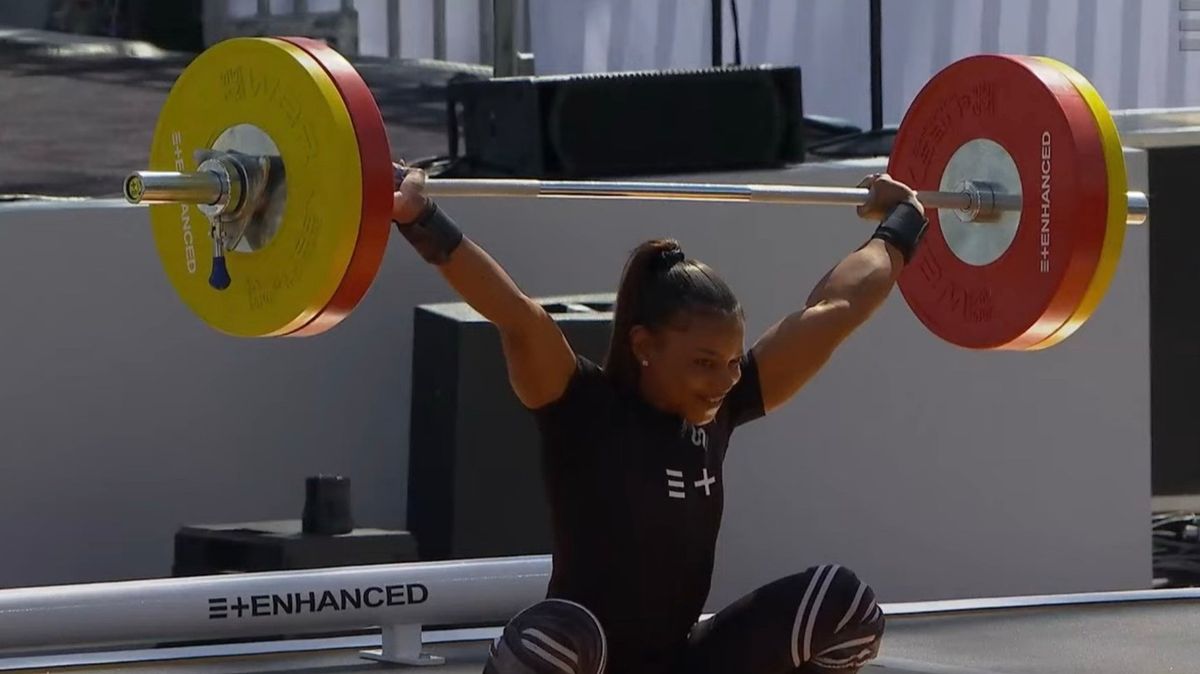
The Enhanced Games opened in messy fashion on Sunday evening, as technical problems struck the official livestream just minutes into the first event, leaving millions of viewers worldwide unable to watch what was happening.
In contrast to the Olympics, which benefits from traditional broadcast TV coverage, the Enhanced Games is carried exclusively online through the official Enhanced Games stream and Roku TV. But while athletes were there to push “enhanced” performance, the broadcast itself struggled to deliver a reliable feed.
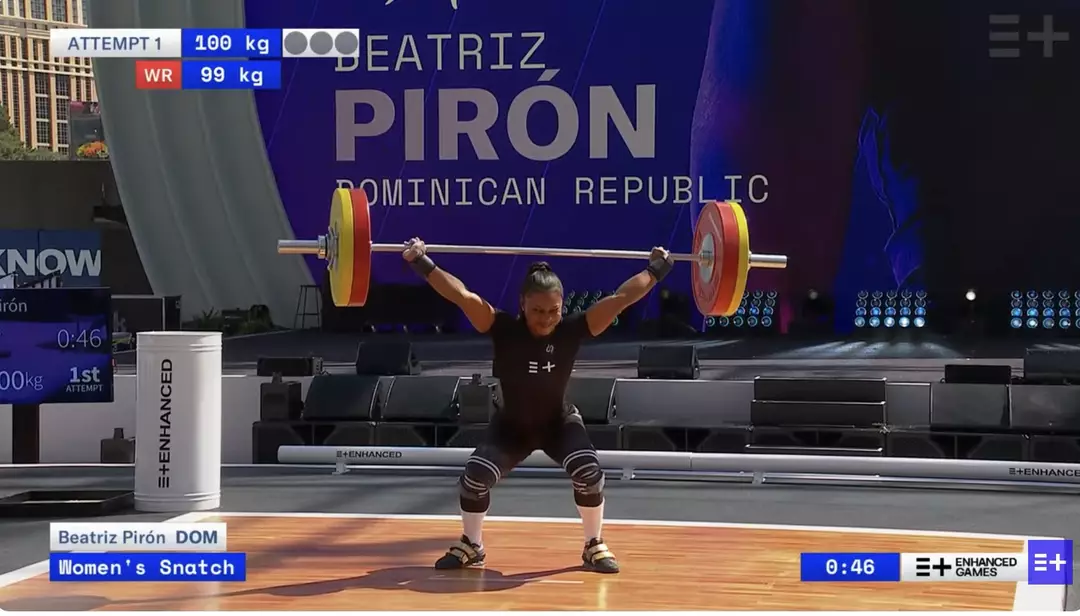
The hiccup hit at the worst possible moment: the first event, the women’s snatch, had just begun. Opening lifter Beatriz Pirón took her first attempt at 100kg. She didn’t complete what would have been a world-record lift, though she came very close. Then, as other competitors prepared to lift, the livestream stalled—prompting an on-screen message from officials: “TECHNICAL DIFFICULTIES. STANDBY PLEASE”
The outage lasted around eight minutes. During that time, the competition continued off-camera, and by the time the feed returned, viewers had already missed key moments from the session.
Making the situation more frustrating, the broadcast did not show replays of what was missed or offer an apology, instead moving on and jumping straight into the men’s event.
It was an unfortunate first impression for a debut competition already drawing scrutiny because of its contentious rules permitting performance-enhancing drug use during active competition.
The Enhanced Games concept dates back to 2023, when Australian entrepreneur Aron D’Souza argued that elite athletes should ‘be in charge of how they look after their bodies, what they eat, and what they put in their bodies’.
From that premise, the Enhanced Games was created as a competition where athletes can use performance-enhancing substances without being subjected to drug tests.
On its website, the organisation says the Games ‘challenge traditional models of sport by embracing science, innovation, and measurable performance enhancement under regulated conditions’.
D’Souza’s plan attracted backing from a venture capital fund that includes Donald Trump Jr—son of the US president—and billionaire entrepreneur Peter Thiel. After first being unveiled as a concept, pitched as a way to pursue ‘world records’ for cash rewards of up to $1 million, the competition has now moved into its first official staging.
The programme includes events across swimming, athletics, and weightlifting. Athletes are permitted to use performance-enhancing drugs that are approved by the United States’ Food and Drug Administration (FDA), though some substances remain forbidden, including heroin and cocaine.
The organisers have also said they will implement certain doping measures under medical supervision.
Although the Enhanced Games allows competitors to use performance-enhancing substances—such as testosterone, anabolic steroids, hormones and growth factors (including HGH and EPO), metabolic modulators and stimulants—there are still restrictions in place.
In other words, the competition is not being run as an anything-goes experiment.
Participants are limited to substances approved by the Food and Drug Administration (FDA), with cocaine, heroin, and other illicit or non-prescription drugs expressly banned.
Medical oversight is also promised for those who choose to use performance-enhancing substances, including ongoing physiological monitoring and medical profiling aimed at reducing the risk of dangerous overuse.
Organisers also stress that competitors are not required to take these substances to participate. “Un-enhanced” athletes can still enter, positioning the format as a comparison between medically augmented performance and entirely natural limits.