

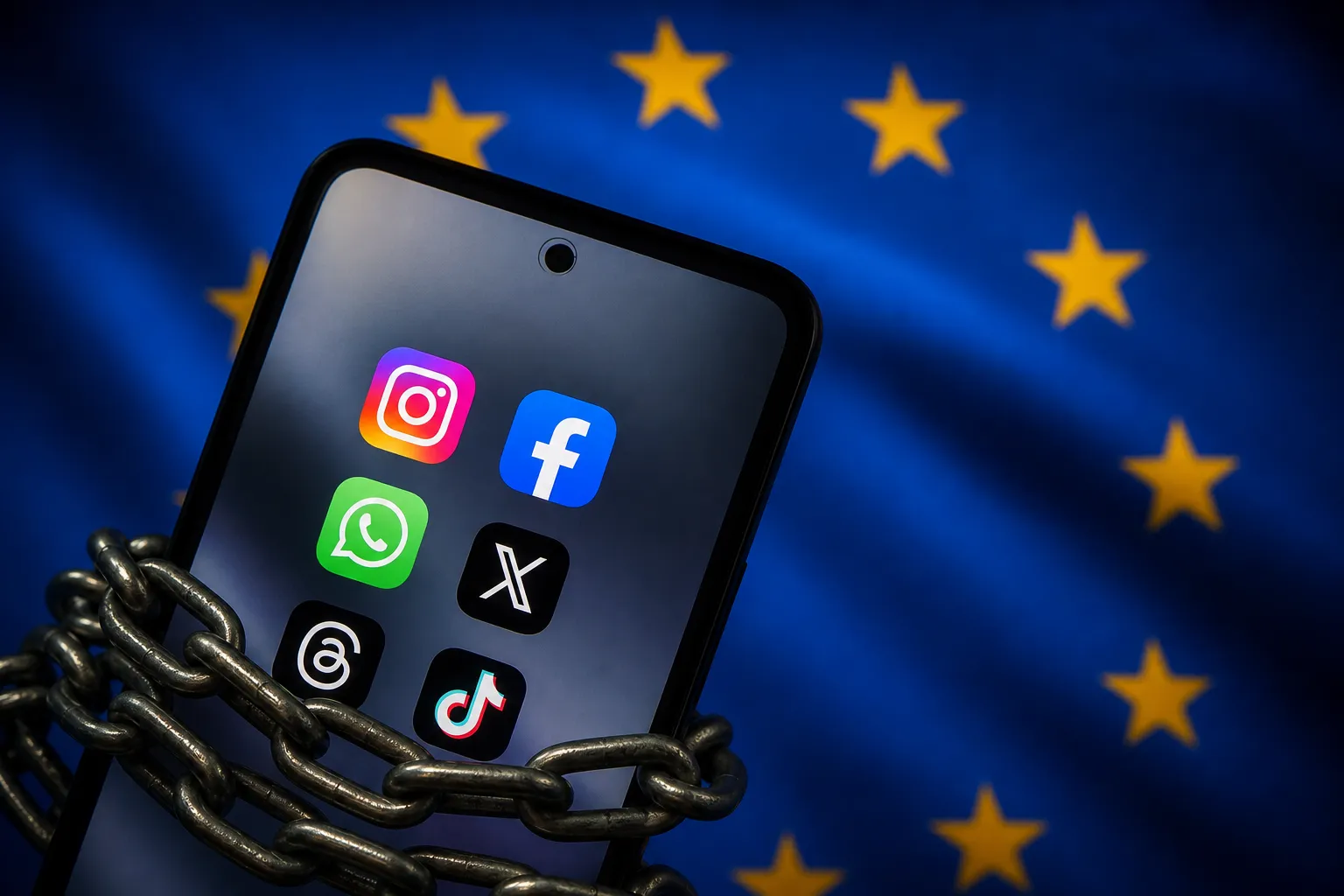
The European Union escalated its regulatory crackdown on social media on Friday, levying preliminary findings that accuse Meta of deliberately designing Facebook and Instagram to be addictive in violation of the bloc’s strict digital rulebook. The preliminary findings, announced by the European Commission, allege that the tech giant failed to properly assess the risks its design features pose to the physical and mental health of users, particularly minors and vulnerable adults.
At the center of the European Commission’s investigation are specific platform features that regulators say fuel compulsive use. Features including infinite scrolling, autoplay videos, push notifications, and highly personalized recommendation algorithms are designed to keep users engaged, according to the preliminary findings. The commission contends these features put users’ brains on “autopilot mode” and contribute to unhealthy habits and compulsive behavior.
The investigation, which began in May 2024, found that Meta disregarded available evidence about how much time teenagers spend on its platforms at night and ignored how content formats like Reels and Stories could encourage excessive or compulsive engagement. Additionally, the commission determined that the company’s existing mitigation measures, such as time management tools and parental controls, are inadequate. The commission found that screen time tools activated by default for teenagers can be “easily dismissed” and do not meaningfully reduce usage, while parental controls require significant technical expertise and effort to implement effectively.
The European Commission has demanded that Meta implement substantial structural changes to both platforms. The changes would include disabling key addictive features such as autoplay and infinite scroll by default, introducing effective screen-time breaks, and modifying the platforms’ recommendation algorithms to make them less engagement-oriented. These preliminary findings set the stage for what could become a landmark regulatory decision with significant financial consequences for the company.

If the European Commission’s preliminary findings are confirmed, Meta faces potential fines of up to 6 percent of its global annual revenue, which could exceed $12 billion based on the company’s 2025 revenues of approximately $201 billion. The fine would be the largest yet imposed under the European Union’s Digital Services Act, which became fully enforceable in February 2024. The law establishes a regulatory framework requiring large online platforms to identify and mitigate systemic risks posed by their services.
Meta has rejected the preliminary findings, arguing that the European Commission has not adequately recognized the company’s efforts to protect younger users. In a statement, Meta said it disagreed with the conclusions, emphasizing steps the company has already taken. The company pointed to Teen Accounts, a feature rolled out after the investigation began, which automatically protects minors and allows parents to block access to Instagram at night and cap daily screen time at just 15 minutes. Meta emphasized that these time limits cannot be changed or dismissed by users under 16.

Despite Meta’s defense, the commission maintained that the company’s protective measures fall short of what is required. The commission also noted that Meta’s safety center page, which provides tips for avoiding harm and links to mental health resources, does not sufficiently mitigate the inherent risks posed by the platforms’ addictive design. A Meta spokesperson stated the company would continue to “engage constructively” with the European Commission on the matter, setting the stage for a formal response period during which the company can examine the commission’s evidence and submit written arguments.
This action represents the second time this year that the European Commission has found Meta in violation of European law. In April, the commission issued preliminary findings that Meta had failed to prevent children under 13, the minimum age for using Facebook and Instagram, from creating accounts on the platforms. That investigation also found the company had not effectively identified and removed underage users after they gained access.
The preliminary findings are part of a broader European push to regulate the impact of social media on younger users. Earlier this year, the commission issued a similar warning to TikTok over its addictive design features, though that investigation remains ongoing. The timing of Friday’s announcement comes just days before an expert panel tasked by European Commission President Ursula von der Leyen is expected to deliver recommendations on Monday regarding how the European Union can better protect children from harmful online content. Several EU member states, including France, Italy, and Spain, are already developing plans for potential social media bans for minors, building pressure on Brussels to coordinate a unified approach.
The Digital Services Act has proven to be an increasingly potent enforcement tool for European regulators. In May, the European Commission imposed a 200-million-euro fine on e-commerce platform Temu for failing to adequately assess and mitigate systemic risks on its platform, marking the highest fine issued under the law to date. In December, the commission fined Elon Musk’s X social media platform 120 million euros under the Digital Services Act for breaching transparency obligations. Meta itself has already faced significant EU fines, including a 200-million-euro penalty in 2025 under the Digital Markets Act for its “pay or consent” data sharing model.
The case against Meta reflects a broader regulatory shift in Europe, where policymakers are increasingly focusing on design itself as a systemic risk rather than regulating content alone. Regulators argue that certain features are inherently problematic because they are engineered to maximize user engagement at the expense of user wellbeing. This approach represents a departure from how social media has traditionally been regulated, placing responsibility on platforms to fundamentally reimagine how their products work rather than simply policing what users see or share.
Meta now has the opportunity to formally respond to the preliminary findings by examining the commission’s investigation files and submitting a written defense. The company’s response will be crucial, as the European Commission has indicated it is open to resolving such matters through commitments and behavioral changes. However, if the commission confirms the preliminary findings after reviewing Meta’s response, the regulatory path toward a substantial fine appears likely. The outcome of this case could have far-reaching implications for how technology companies worldwide design social media platforms, as other jurisdictions watch closely to see how the EU enforces its digital rulebook.