


Though many of us consider ourselves tech-savvy and believe we know how to protect our gadgets, there are certain actions we might unknowingly take that can jeopardize our smartphone’s security.
Billions of people worldwide rely on smartphones daily, and unfortunately, malicious activities are a constant threat.
In 2024, statistics shared by Certo revealed that 83 percent of phishing scams were specifically directed at cellphones, and 6.3 percent of smartphones had some form of malicious app installed.
Recently, there has been growing concern about the encrypted messaging service Signal, which reportedly boasts up to 70 million monthly users.
Earlier this year, the National Security Agency (NSA) released a report highlighting a ‘vulnerability’ discovered on Signal, as reported by CBS News, prompting warnings against sending any ‘compromising’ information through the app.
Beyond ensuring the safety of our messaging services, there are additional steps we can take to protect our smartphones and personal data. Simply turning off these three settings can make a difference.
The NSA advises against using public Wi-Fi whenever possible and recommends opting for personal or corporate Wi-Fi connections for enhanced security.
“If users choose to connect to public Wi-Fi, they must take precautions,” the NSA warned in a report. “Data sent over public Wi-Fi—especially open public Wi-Fi that does not require a password to access—is vulnerable to theft or manipulation.”
“Even if a public Wi-Fi network requires a password, it might not encrypt traffic going over it,” the agency added.
A practical way to avoid accidentally connecting to public Wi-Fi is by disabling the ‘auto-join’ feature on many smartphones.
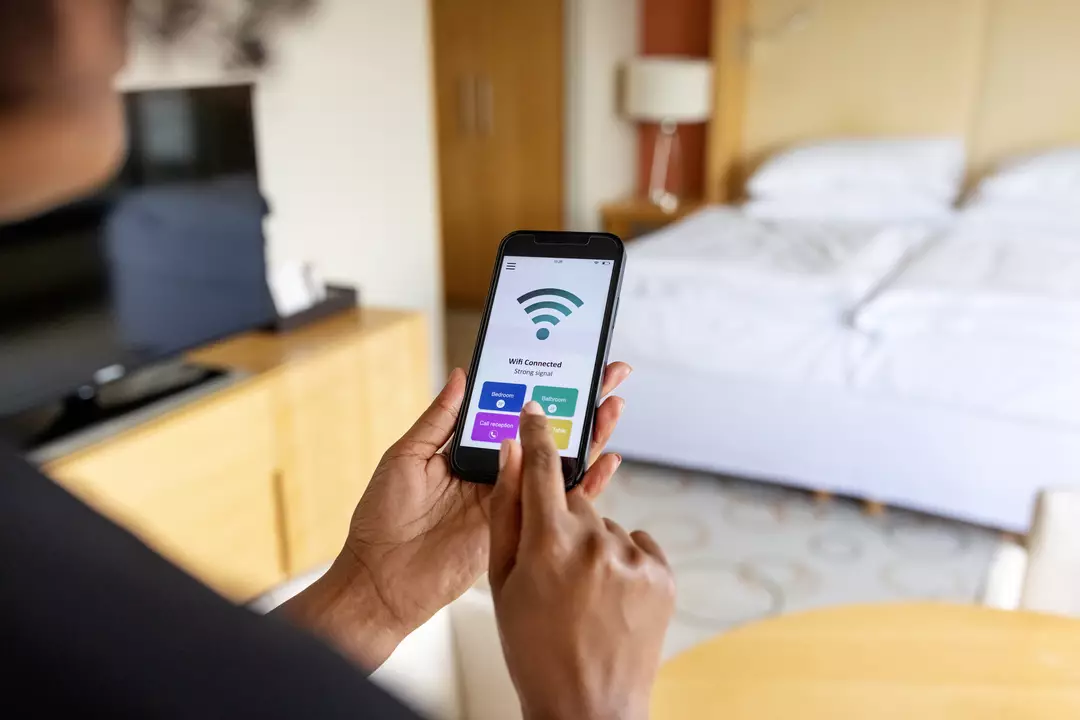
The NSA also advises that keeping a device’s Bluetooth enabled in public places can present cybersecurity risks. “Malicious actors can scan for active Bluetooth signals, potentially giving them access to information about the targeted device,” cautions the agency.
Essentially, remember to turn off your Bluetooth when in public areas.
NFC, or Near Field Communication, is a short-range wireless technology used for secure data exchange, with Apple Pay being a well-known example.
While NFC’s range is limited, as suggested by its name, the NSA still advises caution when using it.
The agency notes, “Due to NFC range limitations, opportunities to exploit vulnerabilities may be limited. However, NSA advises being aware of security risks with the technology and if possible, disable the function when it is not in use.”